
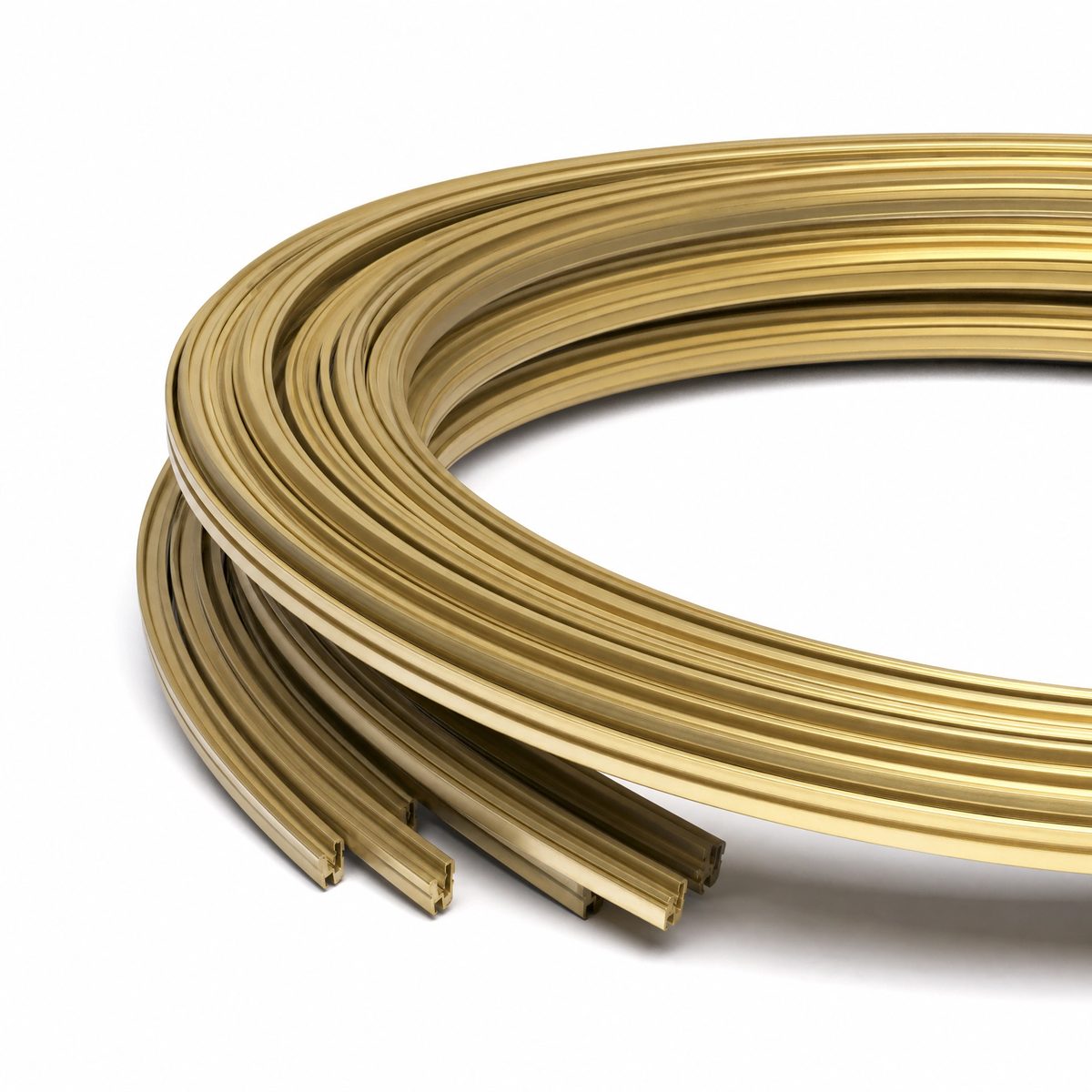
Aluminum Profile Bending
Colour Bending of Aluminum Profiles - Bend Then Coat
Bent profiles with powder coating, coloured anodising or e-coat: ΔE ≤1.0, adhesion ≥4B, and a note on how cure temperature affects T6 strength.
Product Details
Colour bending is bending plus a coating, and the interesting part is not the colour. It is the sequence. A bent part that is coated afterwards looks right and may be weaker than the drawing assumed, because the coating's curing temperature is close to the aging temperature of the alloy. That is a materials fact, and it is rarely mentioned in a coating brochure.
We bend and coat L, U, Z, right-angle and arc forms in 6063-T5 and 6061-T6, with an angular tolerance of ±1°, a radius error of ±0.4 mm, a batch colour difference of ΔE ≤ 1.0, and coating adhesion tested to cross-hatch ≥ 4B. Here is what sits behind those numbers.
Sequence first: bend, machine, then coat
There is only one correct order, and it is worth stating plainly because it is sometimes reversed to save a handling step.
| Sequence | What happens | Verdict |
|---|---|---|
| Bend → machine → coat | Coating covers the finished geometry uniformly, including the bend | Correct |
| Coat → bend → machine | Coating cracks on the outer fibre; machining cuts through the coating at every machined edge | Wrong; visible cracks and bare edges |
| Bend → coat → machine | Machining exposes bare aluminium on functional faces unless they are masked and re-coated | Only with masking and a touch-up step |
The middle row is the one that gets attempted, usually on a pre-coated profile that someone wanted to use up. It produces a part that looks acceptable at a glance and has a crack line along the outside of every bend, which opens further with thermal cycling.
The curing temperature problem
This is the point most worth understanding. Powder coating cures at around 180–200 °C for 10–20 minutes of metal temperature. Artificial aging of 6061 and 6063 is carried out at around 175 °C. Those two numbers are close, and that is not a coincidence — both are chosen because that is where the precipitation kinetics of these alloys are useful.
The consequence: a T6 or T5 part that goes through a standard powder cure is being aged a second time, at a temperature where overaging begins. The effect is a reduction in yield strength, typically in the range of 5 to 15 percent depending on the alloy, the temperature and the dwell. It is not dramatic, it is not visible, and it is not in the coating specification.
What to do about it depends on the part:
- If the part is not structurally critical (a cover, a guard, a frame that carries only its own weight), accept it and specify the alloy with margin.
- If the part is structural, ask for a low-temperature cure powder. Formulations curing at 140–160 °C exist and reduce the overaging substantially. They cost more and the colour range is narrower.
- If the strength is genuinely critical, use anodising instead of powder coating. Coloured anodising is a room-temperature electrochemical process and does not affect temper at all.
- If neither works, design the section for the post-cure strength rather than the mill temper. That is a calculation, not a hope.
We will tell you which of these applies to your part when you send the drawing and say the coating is for a structural component. What we will not do is imply that a powder-coated T6 part still has its full mill properties.
Coverage at the bend: the Faraday cage effect
Electrostatic powder spraying works by charging the powder and attracting it to a grounded part. In a concave corner — which is exactly what the inside of a bend is — the electric field is shielded, and less powder reaches the surface. The result is a thinner coating in the inside corner than on a flat face.
On a bend, this matters more than elsewhere because the inside corner is where the material wrinkled during forming. A thin coating over a wrinkled surface is where a bare spot or an early corrosion site appears.
The controls are practical: spray the inside corners first with a closer gun distance and a lower powder velocity, use a powder with good Faraday penetration, and check film thickness at the bend rather than only on a flat test panel. This is process discipline, and it is the difference between a batch that passes a salt spray test and one that does not.
Colour consistency: what ΔE ≤ 1.0 actually requires
A batch colour difference of ΔE ≤ 1.0 is achievable, and it is not achieved by choosing a colour from a card. Four things have to be held:
One powder lot. Different production lots of the same RAL number can differ slightly. For a project with several batches, reserve powder from one lot.
One film thickness. Colour depends on thickness, particularly for light colours over a bright aluminium substrate. A 60 µm coat and an 90 µm coat of the same powder are visibly different shades.
One cure. Under-cured powder is duller and less resistant; over-cured powder yellows, which shifts light colours. Cure time and temperature have to be logged, not estimated.
One substrate. For anodising, the alloy and the temper affect the colour because the anodic layer grows from the metal. Two alloys in the same dye bath give different shades. For powder coating the substrate effect is smaller but not zero.
The honest limitation: ΔE ≤ 1.0 is a batch-to-batch figure for parts produced together. If parts are produced months apart, or by different coating lines, the guarantee weakens. For a visible assembly where all parts are seen together, order them together.
Specifications
| Item | Reference value |
|---|---|
| Bend types | L, U, Z, right-angle, arc, contoured |
| Angular tolerance | ±1° |
| Radius error | ±0.4 mm |
| Maximum length | 6,500 mm |
| Coatings | Powder coating, coloured anodising, electrophoretic coating, fluorocarbon coating |
| Colour matching | RAL card, or matching to a physical sample |
| Gloss | Matte, satin, high gloss |
| Batch colour difference | ΔE ≤ 1.0 |
| Adhesion | Cross-hatch ≥ 4B; impact test with no cracking or peeling |
| Alloys | 6063-T5, 6061-T6 |
| Standard | GB/T 6892-2023, ISO 9001 |
Four coating processes, four different trades
| Process | Character | Effect on temper | Best for |
|---|---|---|---|
| Powder coating | Wide colour range, good adhesion, economical | Yes: cure at 180–200 °C overages the alloy | Equipment frames, enclosures, guards |
| Coloured anodising | Metallic appearance, hard surface, excellent corrosion resistance | None: room-temperature process | High-end equipment, visible structural parts |
| Electrophoretic coating | Very even coverage including recesses, high gloss | Yes, but at a lower cure temperature than powder | Appearance parts with complex geometry |
| Fluorocarbon coating | Excellent weather resistance, self-cleaning | Yes: high cure temperature | Outdoor equipment |
The third row is worth knowing about. Electrophoretic coating deposits from a bath by electrophoresis rather than by electrostatic spray, so it reaches recesses that powder cannot — including the inside of a bend. For a part with deep recesses and a colour requirement, it solves the Faraday cage problem by changing the physics.
The fourth row carries a warning: fluorocarbon coatings cure at higher temperatures than powder, so the overaging effect is larger. On a structural outdoor part, that has to be in the calculation.
Where it does not fit
- The part is structural and must keep full T6 properties after coating. A standard powder cure will overage it. Use coloured anodising, or a low-temperature cure powder, or design for the post-cure strength.
- The colour has to match an existing assembly produced months ago. Powder lots and cure conditions drift. If the match is critical, send a physical sample and expect a trial.
- The visible face is the inside of a tight bend. Faraday shielding thins the coating exactly there. Electrophoretic coating or anodising is a better route.
- The profile is already coated and you want it bent. The coating cracks on the outer fibre. Bend first.
- You need a Class A automotive-grade finish on an extruded surface. Extrusion lines, die marks and handling marks show through a thin coating. Automotive Class A usually means a machined or a filled and sanded surface, which is a different process.
- The part is huge. Coating line length is a real constraint: 6,500 mm is available, longer needs a purpose-built line. Tell us the length at enquiry.
What to send for a quote
Send the section drawing, the bend geometry, the alloy and temper, the colour reference (RAL number or a physical sample), the gloss level, the quantity, and whether the part is structural. Say whether it will be used outdoors, because that changes the coating recommendation. Tell us the maximum length, since it decides which line the part can run on.
We will reply with the recommended sequence and coating, the effect of the cure on your alloy's properties if the part is structural, the achievable colour tolerance, and the adhesion test result we will report against. If the coating you asked for will compromise the strength you need, that goes in the reply rather than in a test report.
FAQ
What is the difference between colour bending and ordinary bending?
The coating. Ordinary bending delivers a bare aluminium part with a bend geometry. Colour bending delivers the same geometry with a specified colour, gloss and adhesion, and it requires the sequence to be bend, machine, then coat — plus an understanding of what the coating process does to the alloy's temper.
Which coatings are available?
Powder coating (widest colour range, most economical), coloured anodising (metallic appearance, no effect on temper), electrophoretic coating (best coverage in recesses), and fluorocarbon coating (best weather resistance, highest cure temperature). The choice is driven by the environment and by whether the part is structural.
Can the colour be customised?
Yes: to a RAL number, or matched to a physical sample. Matching a sample is a trial process and may take a colour chip and an approval round. RAL is faster and cheaper, with the caveat that a RAL number does not fully define the appearance — gloss level and texture also matter.
Does the coating affect the strength of the part?
Yes, if it is a thermal cure. Powder coating cures at around 180–200 °C, which is close to the aging temperature of 6xxx alloys, so the part is effectively aged a second time and yield strength typically drops by 5–15 percent. Coloured anodising is a room-temperature process and has no such effect. This is why we ask whether the part is structural.
How is colour difference controlled?
By holding four variables: one powder lot, one film thickness, one cure schedule, and one substrate alloy. ΔE ≤ 1.0 is achievable within a batch. Across batches produced months apart, the guarantee weakens — so for a visible assembly, order all parts together.
How is adhesion tested?
Cross-hatch to ≥ 4B, plus an impact test with no cracking or peeling. The test is done on production parts, not only on test panels, because the bend geometry is where adhesion is most likely to fail. On dimensional acceptance, the reference values in this page are capability references: the value on your order is set by your drawing, and we confirm the achievable radius and angle for your section in writing before you order.
How is it priced?
On the bending complexity, the coating process, the colour customisation and the quantity. A custom colour match, a low-temperature cure powder and a large part all add cost that is real work, not margin. The bending and the coating are quoted separately so you can see which one is driving the price.
Send your drawing
Email the section drawing, the bend geometry, the colour reference and whether the part is structural to linjunbing@truetrustlv.com, or send it on WhatsApp at +86 136 6644 0600. You will get a sequence recommendation, a note on the cure's effect on your temper, and a written tolerance statement.
GET A QUOTE
Once you have submitted your requirements, we will contact you as soon as possible regarding your product inquiry.:Colour Bending of Aluminum Profiles - Bend Then Coat