
Automated logistics
3C Electronics AGV Light-Duty Rail Aluminum Profiles
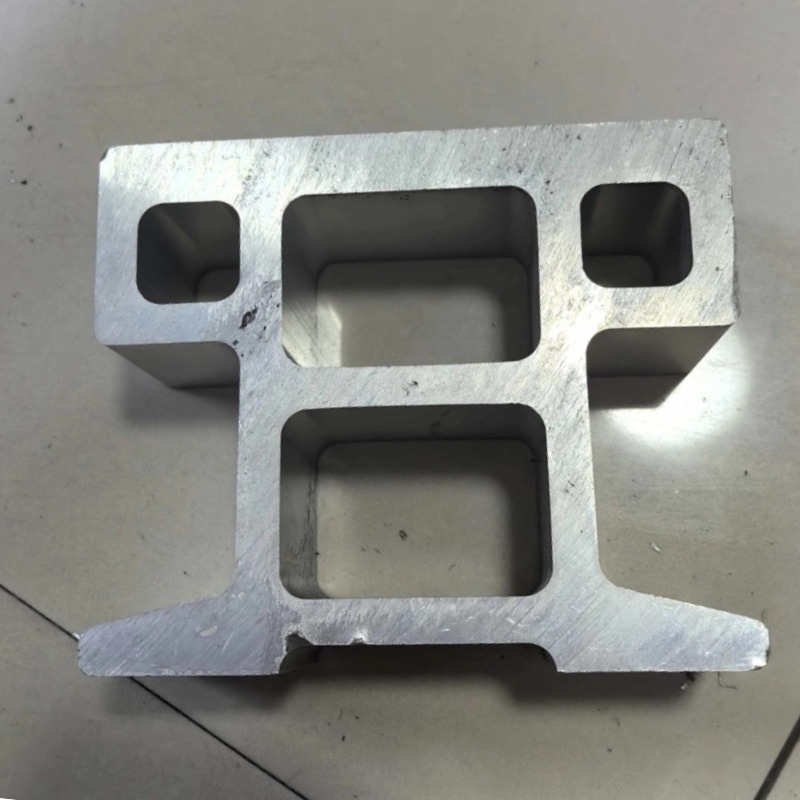
Light duty AGV rails in 6063-T5 for 3C and cleanroom lines, straightness 1.0 mm over 10 m, +/-3 mm repeat, radius from 1000 mm. Per drawing.
Product Details
Short answer: a light-duty 3C AGV rail is a slim aluminum track for vehicles up to about 300 kg, sized for the narrow aisles and clean floors of electronics, SMT and pharmaceutical plants. Working reference: 6063-T5, straightness within 1.0 mm over 10 m, machined features at ±0.02–0.04 mm, repeat positioning within ±3 mm, bend radius from 1000 mm. Section and tolerance are set by your drawing.
What it is used for
It goes into 3C electronics plants, SMT and final assembly shops, semiconductor back-end lines, pharmaceutical cleanrooms, medical device production, laboratory automation and any compact line where a small vehicle shuttles between closely spaced stations.
The load is modest but the frequency is not. A vehicle in an SMT hall may make hundreds of trips a shift over a route that is only a few tens of meters long, stopping at stations spaced a metre apart. The rail has to be short, tight, clean and repeatable rather than massive.
These lines are also where the floor is already finished and expensive: epoxy, raised floor or a cleanroom panel. Cutting a track into it is not an option, and bolting a heavy steel rail to it is usually not welcome. A light aluminum track is the practical answer.
Specifications
| Item | Working reference | How it is set |
|---|---|---|
| Alloy | 6063-T5 | Chosen against your vehicle load |
| Load | Up to about 300 kg | Set by your vehicle and payload |
| Straightness | ≤1.0 mm over 10 m | Set by your drawing |
| Machined tolerance | ±0.02–0.04 mm | Set by your drawing |
| Repeat positioning | ≤ ±3 mm | Set by your station requirement |
| Minimum bend radius | 1000 mm | Set by your layout |
| Surface | Clear anodized, sealed | Set by your cleanliness requirement |
| Section | Low-profile, narrow, with cable or tape slots | Set by your drawing |
| Service life reference | Ten years or more indoors in a clean environment | Conditional on the duty and environment |
How it is made
- The section is extruded in 6063-T5 with a low profile, so the track does not become a trip hazard or a barrier in a narrow aisle.
- It is machined in one pass where possible, so the running face, the slots and the fixing holes come from the same setup.
- Bent sections are roll bent to the layout radius and checked before the running face is finished.
- Edges are deburred and the running face finished smooth, because a burr in a cleanroom is both a wear point and a particle source.
- Clear anodizing is applied and sealed, with the film checked for continuity since a porous film in a cleanroom is a contamination path.
Where this fits
It fits when the aisle is narrow, the floor is finished, the load is under 300 kg, and the line needs a defined route that vehicles can repeat without accumulating position error.
Where it does not fit: if the vehicle runs free on a slab that is already flat and clean enough, tape on the floor may be sufficient and a rail is unnecessary. If the load is over 300 kg, the section has to move to 6061-T6 and the light-rail family no longer applies. And if the route is re-planned frequently, a rail is harder to move than tape.
Why a light rail is not a small version of a heavy one
The constraint is space, not strength. On a heavy rail the design question is how much material is needed. On a 3C line it is how little: the aisle may be 1.2 m wide with equipment on both sides, the vehicle has centimetres of clearance, and a track that stands 100 mm proud is a barrier to people and to manual carts. A low-profile section with the running geometry and the cable or tape slot packed into a shallow envelope is the actual design problem, and it is a different problem from the heavy-rail one.
Light load does not mean loose tolerance. The stations on an SMT line are close together and the vehicle docks to them, so ±3 mm repeatability is often tighter than a warehouse vehicle needs over a much longer aisle. The paradox is that the lightest rail in the range frequently carries the tightest positioning requirement, because the process is fine and the distances are short. Judging a light rail by its load rating misses this entirely.
Cleanliness is a mechanical property here. In a cleanroom or an SMT hall, a coating that chalks or a running face that smears produces particles that settle on product. Clear anodizing helps in two ways: it hardens the surface so it wears more slowly, and it gives a sealed, low-friction face that generates less debris than bare aluminum. The sealing step is not cosmetic. An unsealed anodic film is porous and can hold contamination and then release it, which is worse than a plain surface in some clean environments.
And the aluminum track can carry the static drain. Electronics lines are ESD-controlled, and an aluminum rail is conductive, continuous and fixed to the structure. Where the design allows it, the rail can be part of the ground path for the vehicle and the track, which is a benefit a plastic guide strip or a taped floor cannot offer. It has to be designed as a bonded path with continuity checked, not assumed, and it is worth raising early because retrofitting a ground bond to a finished line is awkward.
The track also protects the route. Tape on a cleanroom floor is driven over, cleaned aggressively and lifted at the edges by cleaning machines. A rail with a slot keeps the guide line where it was installed and makes it replaceable without shutting the line. On a line that runs two or three shifts, that is the practical argument for the rail even where the floor is flat enough without one.
What to send for a quote
- The section drawing, or the vehicle wheel and guide interface if the section is open
- Vehicle and payload weight, and the wheel arrangement
- Aisle width and the height the track may stand above the floor
- Positioning requirement at the stations
- Cleanroom class, ESD requirement and the cleaning method used on the floor
FAQ
What straightness and tolerance can you hold?
Straightness within 1.0 mm over 10 m and machined features at ±0.02–0.04 mm are our reference values, with repeat positioning within ±3 mm. The value on your order is set by your drawing, and on a light rail the profile height and the slot positions are usually the tighter constraints rather than the load rating.
How long does a light rail last?
Ten years or more is realistic indoors in a clean environment at a modest load, with clear anodizing on the running face. The figure depends on the cycle count and on whether the environment is actually clean; in a shop with abrasive dust the same rail wears faster regardless of the alloy.
What is the minimum turning radius?
1000 mm as a standard, with larger or smaller radii produced to the layout. A smaller radius is possible within the section's bending limit, but on a tight 3C line the constraint is usually the vehicle's own steering envelope, not the rail.
Why not just lay guide tape on the floor?
You can, and on a flat, clean floor that is often enough. The rail earns its place where the tape would be driven over, cleaned aggressively or lifted at the edges, or where the vehicle needs a defined running surface so its sensor height stays constant. It also makes the route replaceable without stopping the line.
Can the rail be part of the ESD ground path?
Yes, where it is designed as a bonded, continuous path and the continuity is verified. Aluminum is conductive and the rail is fixed to the structure, so it can serve as a drain. It must not be assumed: a coating at the fixing points can break continuity, and that has to be handled on the drawing.
What does the customer need to provide?
The section drawing or the vehicle interface, the load, the aisle width and height limits, the positioning requirement, and the cleanroom or ESD requirement. From those we can propose a section and a finish.
Next step
Send the section drawing or the vehicle interface with the aisle constraints and the station tolerances. We will come back with a section, a finish and a tolerance statement against your drawing.
Email: linjunbing@truetrustlv.com | Call or WhatsApp: +86 136 6644 0600
GET A QUOTE
Once you have submitted your requirements, we will contact you as soon as possible regarding your product inquiry.:3C Electronics AGV Light-Duty Rail Aluminum Profiles