
Automated logistics
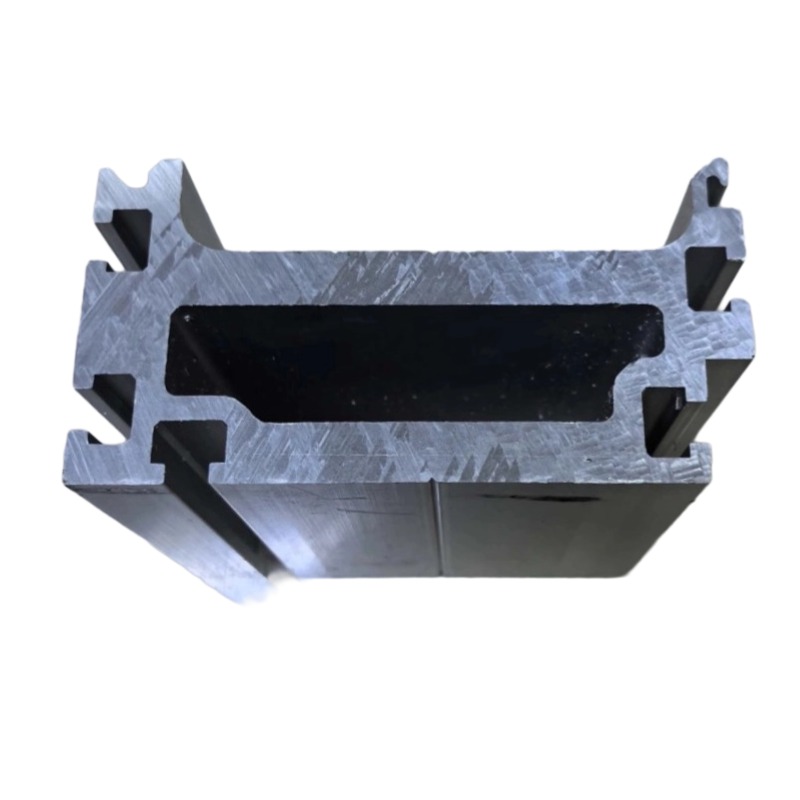
Parent-Child Shuttle Car Guide Rail Aluminum Profiles
Shuttle car guide rails, straightness 1.0 mm over 10 m, +/-0.02-0.04 mm machined, HV300 hard anodized, 10-2000 kg, stable at -25 C. Per drawing.
Product Details
Short answer: a parent-child shuttle rail is the track pair that lets a mother car travel a main aisle and a child car run into the racking. The two rails are different parts with different duty, not one section used twice. Working reference: straightness within 1.0 mm over 10 m, machined features at ±0.02–0.04 mm, running face hard anodized to HV 300 or above, car weight from 10 kg to 2000 kg. Section and tolerance are set by your drawing.
What it is used for
It goes into dense-storage and shuttle warehouses, cold-chain storage, automated racking where a satellite car enters each level, and any system built on a two-level vehicle arrangement: a mother car that moves along the aisle, and a child car that transfers into the channel to place or retrieve a pallet.
The loads span a wide range because the two vehicles are not the same. A child car carrying a light tray in a dense rack may weigh tens of kilograms loaded. A mother car moving pallets across a long aisle can be over 2000 kg with the load. Between them sits the whole range, and a single section cannot serve both ends of it.
Specifications
| Item | Working reference | How it is set |
|---|---|---|
| Alloy | 6063-T5 for light cars, 6061-T6 for 500–2000 kg | Chosen against your load case |
| Straightness | ≤1.0 mm over 10 m | Set by your drawing |
| Machined tolerance | ±0.02–0.04 mm | Set by your drawing |
| Running face hardness | Hard anodized, HV 300 or above | Set by your duty cycle |
| Wear resistance | About three times plain anodizing | Result of the hard anodizing |
| Car weight range | 10–2000 kg | Set by your vehicle design |
| Cold-store operation | Stable at -25 °C | Material property plus the design |
| Machining | Cut, milled, drilled, running face finished | Per your drawing |
How it is made
- The section is extruded in the alloy your load case needs, with the running face shaped for the wheel geometry.
- Lengths are cut and the ends machined, then the running face is milled or planed to the straightness call.
- Holes and mounting features are machined on the same datum as the running face, since a rail that is straight but drilled from a different reference will install crooked.
- Hard anodizing is applied to the running face, with the mounting and electrical contact areas masked.
- Straightness is checked on the finished length over the full span, not on a sample cut.
Where this fits
It fits when the warehouse runs dense racking with satellite or shuttle vehicles, when the aisle is long enough that straightness accumulates into a real alignment problem, and when the environment is cold or humid enough that steel becomes a maintenance item.
Where it does not fit: if the storage is a simple pallet rack served by a forklift, there is no rail to supply. If the vehicle runs on a floor slab rather than on a mounted track, the floor flatness governs and a rail is the wrong approach. And if the load is beyond the practical range of an aluminum section, steel is the correct answer and we will say so.
Four things that decide the outcome
The mother rail and the child rail are not the same part. The mother car runs long distances at higher speed with a heavy load, so it needs stiffness and a section that resists bending over the support spacing. The child car runs short distances, starts and stops constantly, and enters the rack channel, so it needs a compact section, a precise running face and a wear-resistant surface. Designing one section to do both usually means it is too heavy for the child and too flexible for the mother.
Cold storage is where aluminum is the better material, not just the lighter one. This runs against the usual instinct that steel is stronger and therefore safer. Steel has a ductile-to-brittle transition, and at -25 °C a low-carbon structural steel is much closer to it than at room temperature, so impact toughness falls. Aluminum is face-centered cubic and does not have that transition: it keeps its toughness at -25 °C and its strength actually rises slightly as temperature drops. Add the corrosion resistance in a wet cold room and the case is clear. The rail does not become brittle in the freezer, which is not something that can be said for every material.
Ice, not cold, is the real enemy in a cold store. Every time the door opens, warm moist air enters and condenses on the coldest surfaces, which are the rails. It freezes, and over many cycles a layer builds. That layer changes the running height, makes the wheels slip on acceleration and can jam a child car in a channel. The countermeasures are design decisions: a hard anodized face with a low surface energy so water beads instead of wetting, drainage or relief features so melt water leaves rather than pooling, and in severe cases a trace-heated section. A rail specified only for strength will still ice up.
Straightness over 10 m is an alignment number. A rail that is straight to 1.0 mm over 10 m still accumulates if the supports are set from a different reference, and the symptom is uneven guide wheel wear on one side. That is why the straightness call and the mounting datum have to be defined together, and why we machine the mounting features from the running face rather than the other way round.
What to send for a quote
- The rack layout and the vehicle drawings for both the mother and the child car
- Loaded weight of each vehicle and the wheel arrangement
- Operating temperature and humidity, and whether the store is a freezer
- The straightness and alignment you need over the full aisle length
- Whether the rails carry any electrical function or a positioning target
FAQ
What straightness and tolerance can you hold?
Straightness within 1.0 mm over 10 m and machined features at ±0.02–0.04 mm are our reference values on this family, with the running face hardness at HV 300 or above after hard anodizing. The value on your order is set by your drawing, and on long lengths we state how the straightness is measured so the figure means the same thing to both sides.
Why hard anodizing instead of ordinary anodizing?
Because the running face is a wear surface. Hard anodizing gives an oxide layer at HV 300 or above, roughly three times the wear resistance of plain anodizing, on a shuttle that starts and stops thousands of times a shift. Ordinary anodizing protects against corrosion but wears through where the wheel runs.
Is aluminum suitable for a -25 °C freezer?
Yes, and in some ways more suitable than steel. Aluminum does not have a ductile-to-brittle transition, so it keeps its toughness in the cold and gains a little strength. Steel at -25 °C is closer to its transition and loses impact toughness. The remaining cold-store problem is ice on the running face, which is solved by surface and drainage design.
How do the mother and child rails differ?
In section, in support spacing and in surface treatment. The mother rail carries the heavier load over a longer span and needs stiffness. The child rail is compact, enters the rack channel, and is optimized for a precise running face and wear life under frequent starts and stops.
What is the difference from a stacker floor rail?
Similar material and similar machining precision, but a different cross-section and a different installation method, because a shuttle car enters the rack and a stacker runs in an aisle. The two are not interchangeable even though the tolerance language looks the same.
How is the rail fixed down?
According to your drawing. What matters from our side is that the mounting features are machined from the running face datum, so that fixing the rail down does not put a bend into a part that was straight when it left.
Next step
Send the rack layout and both vehicle drawings with the loads and the operating temperature. We will come back with a section for each rail, an alloy and surface recommendation, and a straightness statement against your drawing.
Email: linjunbing@truetrustlv.com | Call or WhatsApp: +86 136 6644 0600
GET A QUOTE
Once you have submitted your requirements, we will contact you as soon as possible regarding your product inquiry.:Parent-Child Shuttle Car Guide Rail Aluminum Profiles