
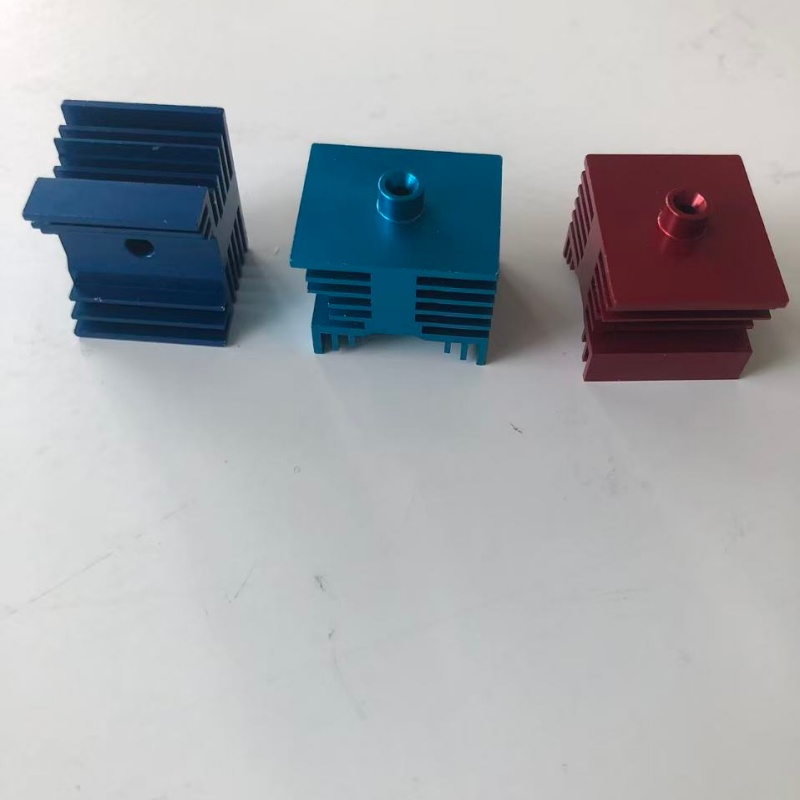
Aluminum Product Processing
Aluminum Profile CNC Batch Machining - CPK 1.33 Consistency
Batch CNC machining of aluminium profiles: CPK ≥1.33 consistency, 4-20 parts per clamping, 500-2,000 pcs/month, ±0.01-0.05 mm.
Product Details
Batch machining is not single-part machining done more times. It is a different problem with a different objective: not to make one part accurate, but to make every part the same. That distinction shows up in the fixture, in the inspection plan, and in a number most buyers never ask for — the process capability.
We run CNC batch production for aluminium profile parts at 500–2,000 pieces a month depending on complexity, to ±0.01–0.05 mm, with a batch consistency of CPK ≥ 1.33, using multi-station fixtures that hold 4–20 parts per clamping, on machines up to 6,500 × 550 × 500 mm.
What CPK 1.33 actually means
This is worth explaining because it is the number that separates a real batch process from a series of individually acceptable parts.
If a dimension has a tolerance of ±0.05 mm, a batch with CPK 1.33 has a process spread about three-quarters of that tolerance band, centred. In practical terms: the parts are not distributed across the whole tolerance — they are clustered in the middle, and the edge of the tolerance is not being touched.
Why that matters:
- Parts from different batches will assemble with each other. If batch A sits at the top of the tolerance and batch B at the bottom, a mixed assembly can be out. A capable process keeps both batches in the middle.
- The process survives small disturbances. A tool wears, a coolant temperature shifts, a new material lot arrives. A process with 25 percent margin absorbs those; a process running at the tolerance limit does not.
- Inspection can be sampled rather than 100 percent. A capable process supports sampling. A process at the limit requires full inspection, which is expensive and still does not prevent escapes.
So the question to ask a supplier is not "can you hold ±0.05 mm" but "what is your capability on this dimension". The first is answered by a single good part; the second is answered by data.
The fixture is the process
In batch work, most of the variation comes from the setup, not from the cutting. Every time a part is clamped, it enters the machine in a slightly different position, and those differences accumulate into the batch spread.
The answer is a multi-station fixture: a plate that holds 4–20 parts in fixed pockets, machined once to a known datum. Every part sits in a pocket that is in the same relationship to the machine as every other pocket. The spread between pockets is built into the fixture and is measurable; the spread from clamping is removed.
What this buys, in order of importance:
- Fewer setups. Twenty parts per clamping instead of one means the setup error is amortised over twenty parts rather than repeated twenty times.
- Shorter cycle per part. The tool moves between adjacent pockets instead of returning to a load station — the non-cutting time per part drops sharply.
- Consistent clamping force. A fixture with fixed stops clamps the same way every time, where a vice adjusted by hand does not.
| Batch size | Fixture approach | What to balance |
|---|---|---|
| 100–500 pieces | Multi-station fixture plus program optimisation | Fixture investment against per-part cost |
| 500–2,000 pieces | Multi-station fixture plus automatic loading | Efficiency first; lowest per-part cost |
| 2,000+ pieces | Dedicated fixture and dedicated line scheduling | Scale; the fixture is fully amortised |
| Long-term repeat orders | Dedicated fixture, material stocking | Stable lead time rather than lowest unit price |
The break-even is real and it can be calculated. A multi-station fixture costs several times a simple one, but it can cut the cycle time by half and remove a whole class of variation. Below a few hundred pieces the fixture cost dominates; above that, it pays for itself quickly.
The batch problem specific to extrusions
Machining a batch of parts from bar stock is one thing. Machining a batch from extruded profiles adds a variable that bar stock does not have: the incoming extrusion varies between lots.
Two extrusion lots of the same profile and temper can differ in straightness, in twist, and in wall thickness by a few hundredths of a millimetre. If the fixture assumes a nominal section, a lot that is slightly bowed will not seat, and the machined features end up in a different relationship to the outside of the part.
Three ways to handle it:
Locate on machined features, not on the as-extruded surface. Cut and face the ends first, then locate from those faces in the second operation. The extrusion variation then affects only the unmachined surfaces, which is usually acceptable.
Use a compliant or self-adjusting clamp that holds the part without forcing it straight. Forcing a bowed part into a rigid pocket induces stress that releases when the part is unclamped, and the machined features move with it.
Specify the incoming extrusion tolerance. A straightness and twist specification on the profile, quoted in the extrusion price, is often cheaper than absorbing the variation in the machining fixture.
Inspection across a batch
A batch is inspected on a plan, not on a feeling. The plan that works has four elements:
First article, full dimensional. Every dimension on the drawing, against the datum, before the run proceeds. This is where a program error is caught — after which it would be caught 500 times.
Patrol inspection. A defined set of critical dimensions at a defined interval through the run. The interval is set by how fast the process drifts: a tool that wears quickly needs a short interval.
Last article. Confirms the process held to the end, which catches tool wear and thermal drift through the shift.
Sampling of the full dimension set at a lower frequency. Catches a feature that was not in the patrol set.
The critical dimensions in the patrol set are not the tightest ones on the drawing. They are the ones most likely to drift — a bore depth controlled by tool wear, a position controlled by fixture wear. Choosing them well is what makes the plan cheap and effective.
Specifications
| Item | Reference value |
|---|---|
| Monthly capacity | 500–2,000 pieces, depending on complexity |
| Batch machining accuracy | ±0.01 to ±0.05 mm |
| Batch consistency | CPK ≥ 1.33 |
| Maximum machining envelope | 6,500 × 550 × 500 mm |
| Multi-station fixture | 4–20 parts per clamping, depending on part size |
| Alloys | 6061-T6, 6063-T5, 6005-T6, 6082-T6, 7075-T5 |
| Surface treatment | Anodising, hard anodising, sandblasting, brushing, powder coating, conductive oxidation |
| Quality control | First article, patrol, last article, plus dimensional sampling |
| Batch minimum | 100 pieces or 500 kg |
| Sample lead time | 3–7 days |
| Batch lead time | 7–20 days after sample approval |
| Partial delivery | Supported |
| Standard | GB/T 6892-2023 high precision grade |
Where it does not fit
- The quantity is under about 100 pieces. Fixture investment does not amortise, and a single-part process is cheaper and faster. We say so rather than quoting a batch price.
- The design is still changing between batches. A fixture is made for a drawing. If the drawing moves, the fixture is scrap. Freeze the design first.
- The tolerance is tighter than ±0.01 mm across a batch. At that level, process capability on an extrusion is limited by the incoming material and by thermal effects. It can be done in a temperature-controlled environment with sorting; it is not a standard batch process.
- The part has a feature that requires 100 percent inspection by its nature — a sealing face, a critical bore — and the drawing does not say so. Sampling will not guarantee it. Tell us and we will plan a full inspection of that feature only.
- You need the lowest piece price and are willing to accept variation. Then the fixture can be simpler and the inspection lighter. Say that explicitly rather than assuming the default is the cheapest.
- The extrusion has no straightness specification and the part has a tight relationship to its outside faces. The incoming variation will consume the tolerance. Add the profile specification.
What to send for a quote
Send the part drawing with the tolerances and the datum scheme, the section drawing, the annual and per-batch quantity, the alloy, the surface finish, and which dimensions are critical to function. Tell us if any dimension needs a capability figure rather than a pass/fail — that decides how the process is planned and what data we report.
We will reply with the fixture approach, the stations per clamping, the cycle estimate, the capability we expect on your critical dimensions, the inspection plan, and the sample and batch lead times. If the quantity does not justify the fixture, we will quote a single-part route instead.
FAQ
What accuracy and consistency can you hold in batch production?
Reference ±0.01 to ±0.05 mm depending on the feature, with a batch consistency of CPK ≥ 1.33 on the critical dimensions. Those are capability references: the value on your order is set by your drawing, and we confirm in writing which dimensions can carry a capability figure and which will be inspected pass/fail. On a batch, the capability matters more than the tolerance.
What is the difference between batch customisation and single-part sampling?
The objective. Single-part work optimises for speed to a first article. Batch work optimises for consistency: a fixture that holds many parts identically, a program optimised for cycle time, and an inspection plan based on drift rather than on a single check. The per-part accuracy is similar; the spread between parts is not.
What is the minimum batch?
Reference 100 pieces or 500 kg, because below that the fixture cost per part becomes the dominant number. Below the threshold we will quote a single-part route, which is honest rather than loss-making for both sides.
Is there an accuracy difference between batch and single-part work?
Not in the nominal accuracy, and yes in the consistency. A single part can be measured and adjusted until it is right. A batch is right when the process is right, which is why the fixture and the inspection plan matter more than the machine's specification.
How long does a batch take?
Reference 3–7 days for the sample and 7–20 days for the batch after you approve it, depending on complexity, quantity and current load. Partial delivery is supported, which is often more useful than a single date for a ramp-up.
Is the per-part cost much lower than single-part?
Substantially, and the reason is setup amortisation rather than faster cutting. The fixture, the program and the first-article inspection are fixed costs; spread over 1,000 parts they are negligible, over 10 parts they dominate. That is also why the price per part falls steeply and then flattens.
Can you hold a batch of mixed parts?
Yes, and a family fixture is often the best answer: one fixture with pockets for several variants, so the setup is shared. It requires the variants to share a common envelope, which is worth checking at design stage rather than at quotation.
Send your drawing
Email the part drawing, the section drawing, the quantities and the critical dimensions to linjunbing@truetrustlv.com, or send it on WhatsApp at +86 136 6644 0600. You will get a fixture approach, a capability estimate and a written inspection plan.
GET A QUOTE
Once you have submitted your requirements, we will contact you as soon as possible regarding your product inquiry.:Aluminum Profile CNC Batch Machining - CPK 1.33 Consistency