
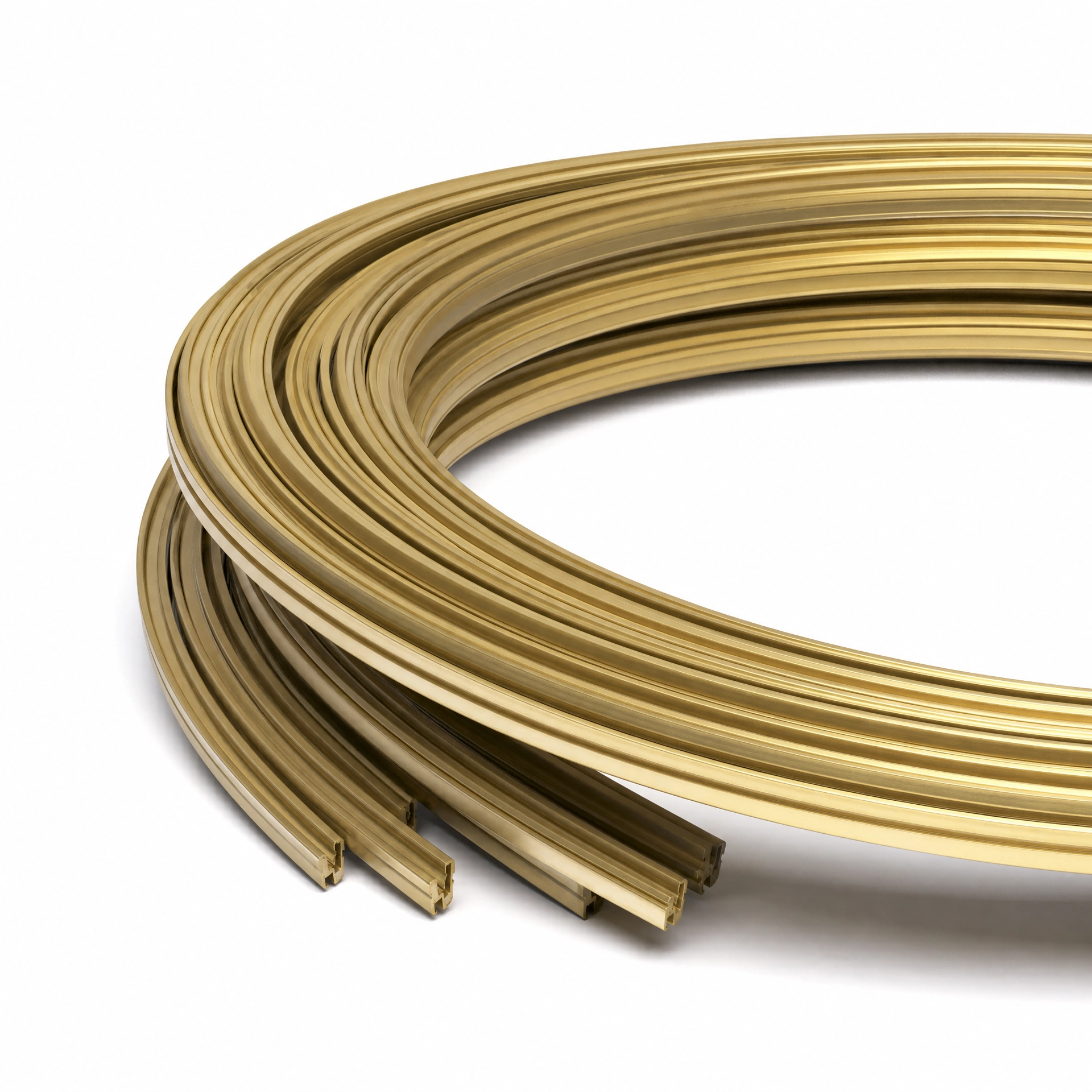
Aluminum Profile Bending
Color Bending of Aluminum Profiles
Color bending of aluminum profiles adds a colored surface treatment after precision bending, so that bent structural parts combine precise bend dimensions with a custom appearance color. Widely used in high-end equipment frames, custom-color cabinet enclo
Product Details
Color bending of aluminum profiles adds a colored surface treatment after precision bending, so that bent structural parts combine precise bend dimensions with a custom appearance color. Widely used in high-end equipment frames, custom-color cabinet enclosures, brand-color equipment bezels, and other applications requiring color consistency.
The difference between color bending and ordinary bending is that color coating/anodizing is applied after bending, so the coating must cover the bends evenly - no bare spots, no color difference - and the color must match the equipment's overall appearance perfectly. Colors support RAL card customization or sample color matching, with gloss customizable to customer needs (matte / satin / high-gloss).
Color bending process flow:
Extrusion -> precision bending -> pre-treatment (degreasing/cleaning) -> color coating/anodizing -> curing/sealing -> full inspection and shipment
Shanghai Chuangsi Aluminum provides a full-process one-stop service from extrusion and bending to colored surface treatment, with angle tolerance ±1 degree, bend-radius error ±0.4mm, max. machining length 6500mm, and suitable alloys 6063-T5 and 6061-T6.
01 Quality Starts from Raw Materials
Produced from A00 primary aluminum ingot with no scrap aluminum, ensuring good ductility and coating adhesion.
02 Precision Bending
Angle tolerance ±1 degree, bend-radius error ±0.4mm, max. machining length 6500mm; bending precision ensures even coating adhesion with no bare spots.
03 Color Coating/Anodizing Process
Supports RAL custom colors or sample color matching, with powder coating, colored anodizing, electrophoretic coating (e-coat), and fluorocarbon coating among the options; gloss customizable (matte / satin / high-gloss).
04 Color Difference and Adhesion Control
We strictly apply film color-difference control standards (batch color difference ΔE ≤1.0); adhesion passes the cross-hatch test at ≥4B grade and impact testing, ensuring the coating does not peel, crack, or expose the substrate.
Color bending vs. ordinary bending:
| Comparison item | Ordinary bending | Color bending |
|---|---|---|
| Surface state | Natural aluminum finish | Custom colored coating |
| Coating at bends | None | Even coverage, no bare spots |
| Color customization | Not supported | RAL card / sample color matching |
| Gloss options | None | Matte / satin / high-gloss |
| Application | General structural parts | High-end equipment, custom appearance |
Comparison of surface treatment processes:
| Process | Features | Application |
|---|---|---|
| Powder coating | Rich colors, cost-effective, strong adhesion | Equipment frames, cabinet enclosures |
| Colored anodizing | Strong metallic feel, good corrosion resistance | High-end equipment, appearance parts |
| Electrophoretic coating (e-coat) | Even coating, high gloss | High-requirement appearance parts |
| Fluorocarbon coating | Excellent weatherability, good self-cleaning | Outdoor equipment |
Machining capability parameters:
| Item | Parameter/Description |
|---|---|
| Bending type | L-bends, U-channels, Z-bezels, right-angle bends, arc bends, contoured bends |
| Angle tolerance | ±1° |
| Bend-radius error | ±0.4mm |
| Max. machining length | 6500mm |
| Surface treatment process | Powder coating, colored anodizing, electrophoretic coating (e-coat), fluorocarbon coating |
| Color customization | RAL card customization, sample color matching |
| Gloss | Matte / satin / high-gloss (custom as needed) |
| Batch color difference | ΔE≤1.0 |
| Coating adhesion | Cross-hatch test ≥4B grade; impact test shows no cracking or peeling |
| Applicable alloys | 6063-T5 / 6061-T6 |
| Executive standard | GB/T 6892-2023, ISO9001 |
| Production location | Qingpu, Shanghai |
Color customization process:
(1) Customer provides color code (RAL/Pantone) or physical color sample
(2) We tone the color and produce a sample for confirmation
(3) Batch coating/anodizing production
(4) Full color-difference meter inspection to ensure no color difference
Typical applications:
-
Colored frames for high-end equipment
-
Custom-color cabinet enclosures
-
Brand-color equipment bezels
-
Colored structural parts for display equipment
-
Custom-appearance equipment
FAQ (Frequently Asked Questions)
Q1: What is the difference between color bending and ordinary bending of aluminum profiles?
A: Ordinary bending only forms the profile angles, leaving a natural aluminum finish. Color bending adds a colored surface treatment after precision bending, so bent parts combine precise bend dimensions with a custom appearance. The core difference: color bending requires the coating to cover the bends evenly after bending, with no bare spots, no color difference, and no cracks. When ordinary bent parts are coated afterward, the bends easily develop uneven coating or bare spots - which is exactly the problem our color bending technology solves.
Q2: Which surface treatment processes does color bending support?
A: Four processes: powder coating (rich colors, cost-effective), colored anodizing (strong metallic feel, good corrosion resistance), electrophoretic coating/e-coat (even coating, high gloss), and fluorocarbon coating (excellent weatherability, good self-cleaning). Customers choose the best process based on application, budget, and appearance requirements.
Q3: Can the color for color bending be customized?
A: Yes. Colors support RAL card customization or sample color matching, with gloss customizable (matte / satin / high-gloss). The process: customer provides color code or sample -> we tone and produce a sample for confirmation -> batch production -> full color-difference meter inspection, batch color difference ΔE ≤1.0, indistinguishable to the eye.
Q4: How is the coating adhesion for color bending?
A: Coating adhesion passes the cross-hatch test at ≥4B grade; the coating does not crack, peel, or blister after impact testing. Color bending applies coating after bending, so it covers both the outer stretched zone and inner compressed zone of the bend evenly, and adhesion is unaffected by bending. Each batch undergoes adhesion sampling.
Q5: How is color difference controlled in color bending?
A: We control color difference through three gates: first, color toning - precise matching to the RAL card or sample; second, coating/anodizing - strict process-parameter control; third, inspection - full color-difference meter check each batch, with batch color difference ΔE ≤1.0, ensuring consistent color within the batch.
Q6: How is color bending priced?
A: Priced by bending complexity, surface treatment process, and color-customization difficulty. Standard RAL colors are priced normally; special toning requires an extra evaluation. Free evaluation and quotation on samples. Contact Manager Du at 13611846009.
Q7: What are the MOQ and lead time for color bending?
A: MOQ is 50kg. Sample lead time is 7-10 days (including color toning and sample), and batch lead time is 10-20 days after sample confirmation. Because color bending involves toning and coating/anodizing, lead time is slightly longer than ordinary bending; we recommend discussing color needs in advance so toning samples can be scheduled early.

GET A QUOTE
Once you have submitted your requirements, we will contact you as soon as possible regarding your product inquiry.:Color Bending of Aluminum Profiles