Custom Aluminum Profiles
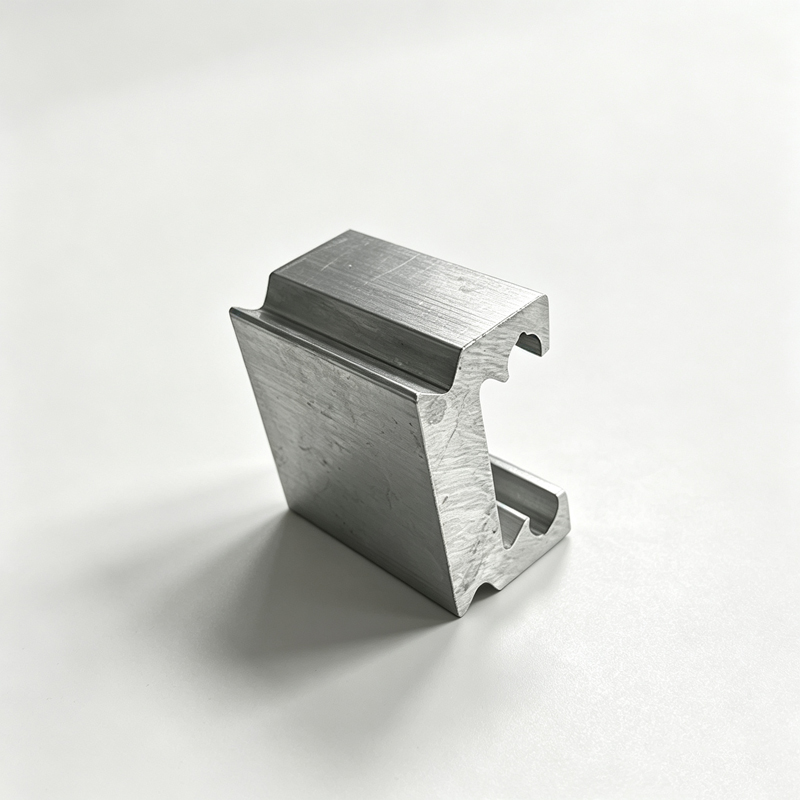
Robot structural part molding
Product applications: industrial robot arm booms, collaborative robot main structures, SCARA robot structural parts, AGV
Product Details
Product applications: industrial robot arm booms, collaborative robot main structures, SCARA robot structural parts, AGV/AMR body frames, robot bases and beams, robot walking shaft profiles, positioner structural parts, special robot frames, service robot main structures, robot workstation frames, automation equipment bearing beams
Processes: extrusion, mold opening, CNC finishing, welding assembly, surface treatment
Extrusion length: 20M
Standard: GB/T 6892-2023 Ultra-high precision, ISO9001
Product Details:
Robot structural components are the robot's "skeleton"—the core load-bearing structures such as the robotic arm, base, beam, cantilever, and support arm. Their rigidity, lightweight design, and internal stress control level directly determine the robot's operational accuracy, dynamic response speed, and long-term stability. As industrial robots develop toward higher speed, higher precision, and higher load capacity, the performance requirements for aluminum profiles in robot structural components are becoming increasingly stringent.
This product focuses on the core performance requirements of robotic structural parts for aluminum profiles: "high rigidity, lightweight design, low inertia, high precision, and low internal stress," providing a full-process one-stop service from cross-sectional topology optimization design, mold development, high-precision extrusion forming to CNC precision machining and multi-stage stress relief treatment.
01 Quality starts from raw materials using A00 primary aluminum ingots for production, contains no scrap aluminum, and features a pure material with a dense structure. Depending on the force conditions of the robot's structural parts, 6061-T6 high-strength aluminum alloy (for general-purpose industrial robots), 6082-T6 high-rigidity aluminum alloy (heavy-duty robots), and 7075-T6 aerospace-grade aluminum alloy (for extreme working robots) can be selected.
02 Topological Optimization Cross-Section Design Combined with robot kinematic mechanics simulation, topology optimization design is carried out for cross-sectional design. Through reasonable arrangement of multiple cavities and irregular ribs, while meeting bending, torsional rigidity, and load requirements, the robot minimizes its own weight, lowers its moment of inertia, and improves the robot's dynamic response performance and energy efficiency ratio.
03 Multi-stage stress relief process adopts a multi-stage stress relief process of "online quenching + dual-stage constant temperature aging + natural aging" to maximize the elimination of internal residual stress in profiles. The residual stress relief rate ≥ 85%. After precision machining, the warping and springback deformation of the profile are controlled at the micron level, ensuring the accuracy and stability of the robot's long-term reciprocating movement.
04 High-precision CNC machining equipped with five-axis CNC machining centers and other precision equipment, capable of completing advanced processes such as precise boring for joint mounting positions, end face grinding, coaxiality correction, and keyway machining. The accuracy of joint assembly reference positions can reach the micron level, perfectly meeting the installation requirements of core components such as reducers and servo motors.
05 Small-batch rapid response deeply adapts to the robot industry's characteristics of "multi-variety, small batch, fast iteration," opening exclusive R&D prototype production channels, prioritizing small-batch orders for production scheduling, and quickly responding to new product iteration and testing needs. We can provide on-site technical support for on-site assembly needs in Shanghai and the Yangtze River Delta region.
06 Full-process quality control The production stage is equipped with multiple quality control nodes, providing coordinate measuring full-scale inspection reports and material inspection reports for each batch. Strictly implement the ISO9001 quality management system.
Machining capability parameters:
| Project | Parameters/Description |
|---|---|
| Applicable scenarios | Industrial robot robotic arms, collaborative robot main structures, AGV/AMR body frames |
| Optional materials | 6061-T6 high-strength aluminum alloy, 6082-T6 high-rigidity aluminum alloy, 7075-T6 aerospace-grade aluminum alloy |
| Extrusion equipment | 600T-12500T extruders |
| The largest circumscribed circle | 600-700mm |
| Dimensional tolerances | ± 0.02mm to ±0.04mm |
| Key joint assembly position tolerances | ≤±0.03mm |
| Straightness | ≤0.2mm/m |
| Coaxiality | ≤0.05mm |
| Flatness | ≤0.06mm/300mm |
| CNC machining accuracy | ±0.01-0.005mm |
| Maximum processing length | 6500mm |
| Residual stress elimination rate | ≥85% |
| Surface treatment | Anodizing, hard oxidation, powder coating |
| Implement standards | GB/T 6892-2023 Ultra-high precision, ISO9001 |
| Mold opening cycle | Conventional structures emerge in 8-12 days |
| Bulk delivery times | Samples are delivered 12-18 days after confirmation |
| Minimum order quantity | Supports 50kg scale R&D prototyping |
| Production area | Qingpu, Shanghai |
Reference for selecting aluminum profiles for robot structural parts:
| Types of robots | Recommended materials | Key requirements |
|---|---|---|
| Industrial robot robotic arms | 6061-T6 / 6082-T6 | High rigidity, low inertia, and repeatable positioning accuracy |
| The main structure of collaborative robots | 6061-T6 | Lightweight, low stress, and stable long-term precision |
| SCARA robot structural components | 6061-T6 | High rigidity, high-speed response, low vibration |
| AGV/AMR body frame | 6061-T6 / 6005-T6 | Lightweight, impact-resistant, and long-dimensional straightness |
| Heavy-duty robot structural components | 6082-T6 / 7075-T6 | Ultra-high strength, fatigue resistance, and high load capacity |
Typical application scenarios:
Industrial robot robotic arm arm arm
The main structure of collaborative robots
SCARA robot structural components
AGV/AMR body frame
Robot base and beam
Robot walking shaft profiles
Positioner structural components
Special robot frames
The main structure of the service robot
Robot workstation framework
Automated equipment bearing beams
FAQ: Q1: What are the advantages of aluminum profiles in robot structural parts compared to traditional steel structures? A: Compared to traditional steel structures, aluminum profiles for robot structural components have four core advantages: First, lightweight and weight-reducing — aluminum profiles have a density only one-third that of steel. Through optimized cross-sectional topology design, weight can be reduced by 30%-50% while meeting bending, torsional rigidity, and load requirements, effectively lowering robot motion inertia and improving dynamic response speed; Second, controllable precision—aluminum profiles undergo extrusion forming + CNC precision machining, resulting in dimensional consistency superior to steel structures, and long-term stability can be ensured through multi-stage stress relief processes; Third, corrosion resistance—aluminum profiles can be anodized on the surface, preventing rust and requiring no coating or maintenance over long-term use; Fourth, short delivery times—aluminum profile structural parts take 8-18 days from mold opening to delivery, while steel structures usually take 20-30 days. Q2: What is the precision of aluminum profiles in robot structural parts? A: The precision indicators achievable for aluminum profiles of robot structural parts: Key joint assembly position dimensional tolerance ≤±0.03mm (suitable for core components such as reducers and servo motors), straightness ≤0.2mm/m, coaxiality ≤0.05mm (ensuring joint rotational accuracy), flatness ≤0.06mm/300mm, CNC machining accuracy ±0.01-0.005mm. Specific accuracy should be evaluated based on the type of structural component and the load condition. Q3: How can aluminum profiles of robot structural parts ensure long-term dimensional stability? A: The long-term dimensional stability of robot structural components directly determines the robot's repeat positioning accuracy and service life. Our company ensures long-term dimensional stability through three steps: First, a multi-stage stress relief process—using a multi-stage stress relief process of "online quenching + dual-stage constant temperature aging + natural aging," with a residual stress elimination rate of ≥85%. After precision machining, warping and rebound deformation of the profile are controlled at the micron level; Second, material selection — using aluminum alloys such as 6061-T6 and 6082-T6 heat-treated with T6, which have stable microstructure and extremely low long-term dimensional change rate; Third, precision machining control—using a five-axis CNC machining center, machining accuracy ± 0.01-0.005mm, with multiple inspection nodes set for key processes. Q4: What materials can be used for aluminum profiles in robot structural parts? A: Three materials can be selected based on the type of robot and the load-bearing condition: 6061-T6 high-strength aluminum alloy—excellent overall performance, suitable for general industrial robots, collaborative robot main structures, AGV/AMR body frames, and is the most commonly used material for robot structural components; 6082-T6 high-rigidity aluminum alloy—yield strength ≥ 300MPa, better rigidity than 6061-T6, suitable for heavy-duty robots and positioner structural parts; 7075-T6 aerospace-grade aluminum alloy—yield strength ≥ 500MPa, suitable for extreme working conditions, aerospace robots, and other scenarios with extremely high strength requirements. Q5: What is the mold opening cycle and minimum order quantity for aluminum profiles of robot structural parts? A: The standard mold opening cycle for structures is 8-12 days, and 12-18 days after batch delivery confirmation. Deeply adapted to the robot industry's characteristics of "multiple varieties, small batches, fast iteration," supports prototype-level small-batch customization, prioritizes production for small-batch orders, and quickly responds to new product iteration and testing needs. Mass production projects can lock in dedicated production capacity. The specific mold opening cycle depends on the complexity of the cross-section: simple cross-sections (single cavity, symmetrical structure) take 8-9 days to produce samples; For medium-complex cross-sections (dual-cavity, asymmetric), samples emerge in 9-11 days; Complex cross-sections (multi-cavity, thin-walled large cross-sections, topology-optimized sections) are ready in 11-12 days. The mold opening fee uses H13 hot work mold steel, with a mold lifespan of ≥50,000 cycles. If the agreed mass production quantity is reached, the full mold opening fee can be refunded.
GET A QUOTE
Once you have submitted your requirements, we will contact you as soon as possible regarding your product inquiry.:Robot structural part molding