
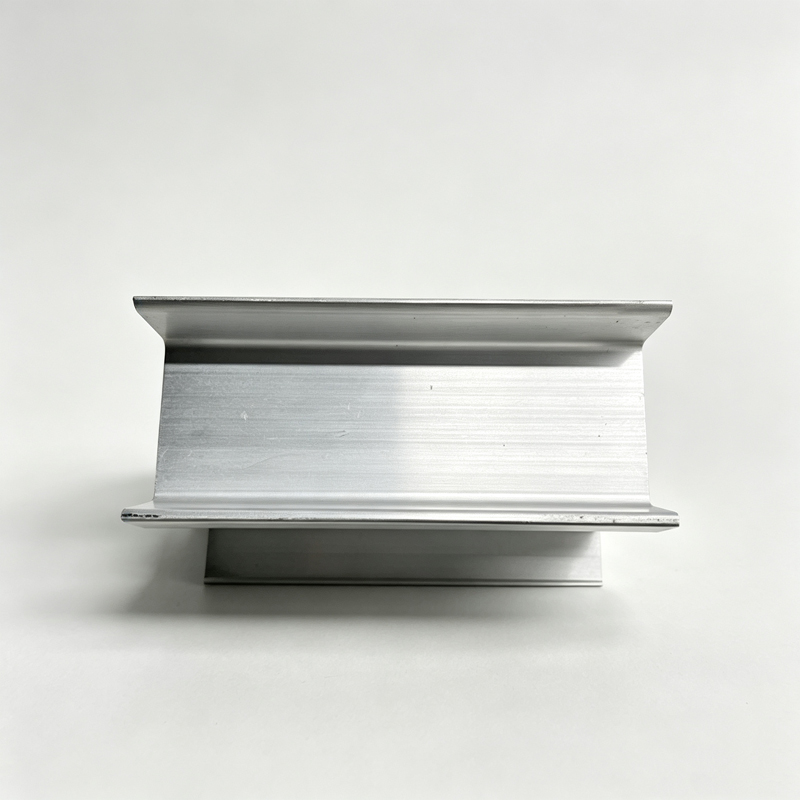
Custom Aluminum Profiles
Automated equipment frame mold making
Product applications: automation equipment frames, industrial robot workstation frames, conveyor line support structures
Product Details
Product applications: automation equipment frames, industrial robot workstation frames, conveyor line support structures, inspection equipment frames, non-standard automation equipment frameworks, precision instrument frames, semiconductor equipment frames, medical equipment structural parts, new energy equipment frames, laboratory equipment frames, automated production line module brackets, AGV cart frames
Processes: extrusion, mold opening, CNC finishing, welding assembly, surface treatment
Extrusion length: 20M
Standards implemented: GB/T 6892-2023, ISO9001
Product Details:
The automation equipment framework is the basic framework for industrial equipment such as automated production lines, inspection equipment, and robot workstations. Aluminum profile frames, with their light weight, high strength, assembly, and corrosion resistance, have become the preferred solution for structural components in automation equipment. Compared to traditional carbon steel welded frames, aluminum profile frames can reduce weight by more than 35%, while maintaining high-strength load-bearing performance through formula optimization and structural design to meet the load requirements of different scenarios. Lightweighting not only reduces logistics labor costs for equipment transfer and installation, but also lessens the load-bearing pressure on the plant's foundation, adapting to more usage scenarios.
This product focuses on the core requirements of automated equipment frameworks for aluminum profiles characterized by "high strength, high precision, lightweight design, and customization," providing a full-process one-stop service from cross-section design, mold development, extrusion forming to CNC precision machining, welding assembly, and surface treatment. It can undertake mold opening and precision machining of aluminum profiles for various non-standard equipment frames, including automation equipment frames, robot workstation frames, conveyor line support structures, inspection equipment frames, semiconductor equipment frames, and new energy equipment frames.
01 Quality starts from raw materials: produced using A00 primary aluminum ingots, free of scrap aluminum, with pure material and stable mechanical properties. Selected high-quality aluminum alloy profiles such as 6061-T6 and 6063-T5 ensure the strength and long-term stability of the frame structural components. In high-end manufacturing fields such as automated production lines, new energy equipment, and medical devices, industrial aluminum profiles are evolving from general-purpose profiles toward lightweight, high precision, and customization.
02 Large-tonnage extrusion and high-precision control: Extrusion machines ranging from 600T to 12,500T have been built and put into operation, capable of producing extra-large materials with circumferential diameters of 600-700mm. The extrusion process is closed to control temperature and extrusion speed, paired with a manual aging process to release internal stress, ensuring controllable straightness and flatness of frame profiles. Dimensional tolerances are stably controlled between ± 0.02mm and ±0.04mm, meeting the high-precision assembly requirements of automated equipment.
03 One-stop deep machining is equipped with precision equipment such as five-axis CNC machining centers, with machining accuracy reaching ±0.01-0.005mm. It can perform full-process deep machining including precision cutting, drilling and tapping, end face milling, and groove machining of frame profiles. It is also equipped with professional welding and assembly capabilities, capable of precise welding and modular assembly of aluminum profile frames, with finished products delivered directly to customers for assembly and use.
04 Full-process Quality Control Strictly implemented ISO9001 Quality management system, with self-management throughout the entire process—from raw material intake, extrusion production, CNC machining, to welding and assembly and surface treatment. Each batch provides material inspection reports and dimensional inspection reports, with all key dimensions tested and recorded.
Machining capability parameters:
| Project | Parameters/Description |
|---|---|
| Applicable scenarios | Automation equipment frames, robot workstation frames, conveyor line support structures, inspection equipment frames, semiconductor equipment frames |
| Optional materials | 6061-T6, 6063-T5, 6005A-T6, 7075-T6 |
| Extrusion equipment | 600T-12500T extruders |
| The largest circumscribed circle | 600-700mm |
| Dimensional tolerances | ± 0.02mm to ±0.04mm |
| CNC machining accuracy | ±0.01-0.005mm |
| Maximum processing length | 6500mm |
| Surface treatment | Anodizing, hard oxidation, powder coating |
| Supporting processing | CNC precision milling, drilling and tapping, end face milling, grooving machining, welding assembly |
| Implement standards | GB/T 6892-2023, ISO9001 |
| Mold opening cycle | Standard structures take 7-10 days to emerge |
| Bulk delivery times | Delivery takes 10-15 days after sample confirmation |
| Minimum order quantity | Supports 50kg scale R&D prototyping |
| Production area | Qingpu, Shanghai |
Reference for selecting aluminum profiles for automation equipment frames:
| Equipment type | Recommended materials | Key requirements |
|---|---|---|
| Automation equipment racks | 6061-T6 | High strength, high rigidity, and long-term stability |
| Robot workstation framework | 6061-T6 / 6005A-T6 | Fatigue resistance, vibration resistance, and high precision |
| Conveyor line support structure | 6063-T5 | Lightweight, long-dimensional straightness |
| Testing equipment frame | 6063-T5 | High precision, low distortion, stable and reliable |
| Semiconductor equipment framework | 6061-T6 | High precision, suitable for cleanrooms |
Typical application scenarios:
Automation equipment racks and bases
Industrial robot workstation framework
Conveyor line support structure
Testing equipment frame
Non-standard automation equipment framework
Precision instrument frames
Semiconductor equipment framework
Medical equipment structural components
New energy equipment racks
Laboratory equipment frame
Automated production line module brackets
FAQ Q1: What is the precision of aluminum profiles for automation equipment frames? A: Key assembly position dimensional tolerances can be controlled between ±0.02mm and ±0.04mm, with CNC machining accuracy reaching ±0.01-0.005mm. The specific accuracy depends on three aspects: First, the complexity of the section—controlling precision for complex sections such as multiple cavities and thin walls is more difficult and requires CAE simulation to optimize mold design; Second, material selection—after heat treatment, 6061-T6 has better dimensional stability than 6063-T5, making it suitable for high-precision frames; Third, frame size—large frames must consider the effects of thermal expansion and contraction, with expansion margin reserved during design. It is recommended to provide drawings or technical requirements; after evaluation by our engineering department, the optimal precision plan will be provided. Conventional frame delivery standards are executed according to GB/T 6892-2023 High Precision; higher precision requirements can be negotiated for customization. Q2: What are the advantages of aluminum profile frames compared to steel welded frames? A: Compared to steel welded frames, aluminum profile frames have four core advantages: first, lightweight—aluminum profile density is only one-third that of steel, allowing frames to reduce weight by more than 35%, lowering equipment transfer and installation costs, and lessening the load-bearing pressure on plant foundations; Second, controllable precision—aluminum profile frames are processed through extrusion forming + CNC precision machining, resulting in dimensional consistency superior to steel welded frames, but welded frames suffer from thermal deformation and stress release issues; Third, corrosion resistance—aluminum profiles can be anodized on the surface, preventing rust and requiring no coating or maintenance over long-term use; Fourth, short delivery times—aluminum profile frames use modular designs, taking 7-15 days from mold opening to delivery, while steel welded frames usually take 15-30 days. For scenarios requiring precision and delivery time, such as automation equipment and robot workstations, aluminum profile frames are the optimal choice. Q3: What is the mold opening cycle and minimum order quantity for aluminum profiles for automated equipment frames? A: The standard cross-section mold opening cycle takes 7-10 days for sample release, and after batch delivery and sample confirmation, it takes 10-15 days. Supports 50kg-class R&D prototyping, with mass production projects locking exclusive capacity. The specific mold opening cycle depends on the complexity of the cross-section: simple cross-sections (single cavity, symmetrical structure) take 7-8 days to produce samples; Medium complex cross-sections (dual-cavity, asymmetric) can be sampled in 8-10 days; Samples for complex cross-sections (multi-cavity, thin-walled large cross-section) can be produced in 10-12 days. The mold opening fee uses H13 hot work mold steel, with a mold lifespan of ≥50,000 cycles. If the agreed mass production quantity is reached, the full mold opening fee can be refunded. Q4: What cross-sectional shapes can be customized for aluminum profiles of automation equipment frames? A: Various cross-sectional shapes can be customized, including standard square/rectangular pipes (suitable for equipment frame columns and beams), C-shaped/U-shaped channel steel (suitable for conveyor line support structures), multi-chamber integrated cross-sections (suitable for structures requiring wiring and installation simultaneously), special-shaped asymmetric sections (suitable for special equipment requirements), and thin-walled large cross-sections (suitable for lightweight, high-rigidity frames). Customers provide cross-sectional drawings or equipment structure requirements. Our company offers sectional optimization suggestions based on force conditions and usage scenarios to ensure that the frame structure achieves lightweight design while meeting load-bearing requirements. Q5: Can aluminum profiles for automation equipment frames be welded and assembled? A: Yes, you can. Our company is equipped with professional welding and assembly capabilities, capable of performing various welding processes for aluminum profile frames, including MIG/TIG argon arc welding and gas shielded welding, as well as precision welding and modular assembly of aluminum profile frames. The core challenge in welding aluminum alloy frames lies in controlling welding deformation—aluminum has high thermal conductivity and a large coefficient of thermal expansion, so heat concentration during welding can easily lead to profile deformation. Our company effectively controls welding deformation by optimizing welding sequences (using segmented skip welding and symmetrical welding), controlling welding heat input (adjusting welding voltage, current, and welding speed), and rigid fixing methods (using specialized tooling fixtures to secure weldments). Welded finished products can be delivered directly to customers for assembly and use, with welding quality inspection reports provided for each batch.
GET A QUOTE
Once you have submitted your requirements, we will contact you as soon as possible regarding your product inquiry.:Automated equipment frame mold making