
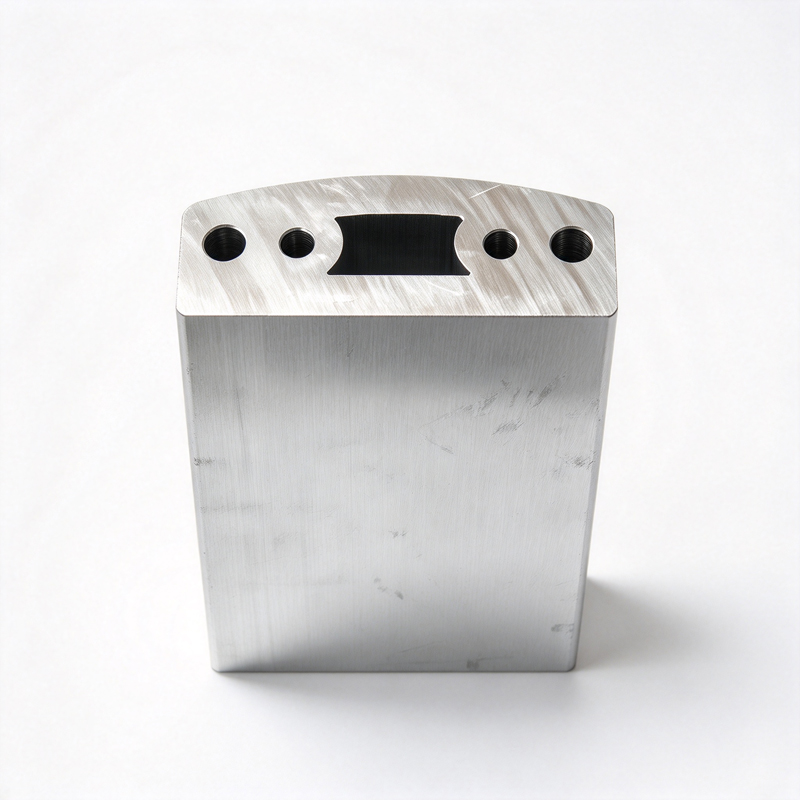
Custom Aluminum Profiles
Ultra high strength aluminum profile mold opening
Custom-made ultra-high strength aluminum profiles are designed for fields with extreme requirements for material perform
Product Details
Custom-made ultra-high strength aluminum profiles are designed for fields with extreme requirements for material performance, such as aerospace, defense equipment, and high-end heavy-duty structures. Series 7 (7075/7050/7005) and Series 2 (2024/2A12) aluminum alloys are currently the strongest series among commercial aluminum alloys and are widely used in key load-bearing components such as aircraft structural components, spacecraft, drones, and defense equipment.
7075-T6 is an Al-Zn-Mg-Cu superhard aluminum alloy, known as the "aviation aluminum alloy". After T6 solution and artificial aging, the tensile strength at room temperature reached 524MPa, the 0.2% yield strength was stable at 455MPa, and the hardness was 150HB. 7075 is known as an ultra-high strength aluminum alloy with a yield strength close to tensile strength, a high yield ratio, and high specific strength. It maintains high strength below 150°C and has particularly good low-temperature strength. 7075-T6 is comparable in strength to ordinary steel, making it an ideal material for ultra-high-strength applications such as aircraft structural components, wing main beams, and drone landing gear.
7050 aluminum alloy is a high-grade improved version of 7075, with a tensile strength of 500-562MPa and a yield strength of 434-490 MPa. 7050 is a high-strength heat-treatable alloy, an aerospace superhard aluminum alloy with extremely high strength and resistance to peeling corrosion and stress corrosion fracture. It is commonly used in aircraft structural parts, medium and thick plate extrusions, free forgings and die forgings. 7050 has better hardenability on thick plates and large diameter bars. More than 50% of the aluminum used in the fuselage of the C919 large passenger aircraft is made of 7050 aluminum alloy.
2A12 (2024) is an Al-Cu-Mg cemented carbide with a tensile strength of over 420 MPa and a yield strength of over 265 MPa. 2A12 alloy has excellent fatigue resistance, and its fatigue strength under alternating loads is significantly higher than that of 6-series and 5-series aluminum alloys, making it suitable for components that can withstand long-term vibration or cyclic stress. This alloy has good heat resistance. When the operating temperature is <150℃, and the temperature is higher than 125℃, the strength of 2024 alloy is even higher than that of 7075 alloy.
01 Quality starts with raw materials
High-purity special aluminum alloy produced using A00 virgin aluminum ingots, containing no waste aluminum, with pure materials, dense structure, and stable mechanical properties. Ultra-high strength aluminum alloys such as 7075, 7050, 7005, and 2A12 have extremely high requirements for the purity of raw materials.
02 Exclusive extrusion process for ultra-high strength alloys
The extrusion difficulty of 2-series and 7-series aluminum alloys is much higher than that of 6-series aluminum alloys—high deformation resistance, narrow extrusion temperature range, and serious wear on the die. Optimize extrusion temperature, speed, and cooling parameters for the characteristics of different alloy grades. 7075-T6 adopts the "online quenching + two-stage aging" process; 7050 adopts T74/T7351 special aging system to ensure stress corrosion resistance; 2A12 was treated with solid solution plus artificial aging. Each ultra-high strength alloy cross-section is independently designed with its own mold.
03 High-precision CNC machining
Equipped with precision equipment such as a five-axis linkage CNC machining center, it can complete deep machining processes such as precision cutting, end face milling, precision boring, drilling and tapping of ultra-high strength alloy profiles. The machining accuracy is ±0.01-0.005mm, and the dimensional tolerance of key assembly positions is stably controlled between ≤±0.02mm and ±0.03mm. Multiple imported machine tools and ultra-long aluminum profile processing centers have a travel distance of up to 6.5 meters.
04 Quality System and Flaw Inspection
It can meet the requirements of AMS (Aerospace Materials Specification) and GJB (National Military Standard) quality management systems. It can be combined with non-destructive testing methods such as ultrasonic flaw detection and penetration flaw detection to ensure that there are no defects such as cracks, pores, or inclusions inside the profile. Each batch provides a three-coordinate full-size inspection report, a material inspection report, and a mechanical property inspection report.
Processing capacity parameters:
| Project | Parameters/Description |
|---|---|
| Optional materials | 7075-T6, 7050, 7005, 2A12 (2024) |
| 7075-T6 Tensile Strength | ≥524MPa |
| 7075-T6 Yield Strength | ≥455MPa |
| 7075-T6 Hardness | 150th |
| 7050 tensile strength | 500-562MPa |
| 2A12 tensile strength | ≥420MPa |
| Execution Standards | GB/T 6892-2023 Ultra-high precision, compatible with AMS/GJB |
| Critical assembly position tolerance | ≤±0.02mm to ±0.03mm |
| conventional dimensional tolerances | ±0.02mm to ±0.04mm |
| CNC machining accuracy | ±0.01-0.005mm |
| maximum circumscribed circle | 600-700mm |
| Maximum machining length | 6500mm |
| surface treatment | Anodic oxidation, hard oxidation, conductive oxidation, aluminum plating treatment |
| Supporting testing | Three-coordinate detection, ultrasonic flaw detection, penetration flaw detection (can be combined) |
| extrusion equipment | 600T-12000T (cooperative production line) |
| mold opening cycle | Sampling for conventional structures takes 8-12 days. |
| Batch delivery time | 12-18 days after sample validation |
| minimum order quantity | Supports 50kg R&D prototyping |
| Production origin | Shanghai Qingpu |
Ultra-high strength aluminum alloy selection reference:
| Alloy grade | tensile strength | key characteristics | typical application |
|---|---|---|---|
| 7075-T6 | ≥524MPa | One of the strongest commercial aluminum alloys, with strength comparable to steel. | Aircraft structural components, wing main beams, landing gear, drones |
| 7050 | 500-562MPa | Excellent resistance to stress corrosion, peeling corrosion, and good hardenability | Aircraft airfoil walls, stringers, and key load-bearing components |
| 7005 | 400-450MPa | Weldable, good corrosion resistance and wide quenching range | High-strength structures requiring welding, rail transit |
| 2A12 (2024) | ≥420MPa | Excellent fatigue resistance and good heat resistance | Aircraft skin, wing ribs, anti-fatigue structure |
Typical application scenarios:
Aerospace: Aircraft fuselage frame and rib profiles, wing main beams and wall panels, landing gear support structures
Drones: Industrial drone arms, landing gear
Spacecraft and launch vehicles: rocket body load-bearing frame, module structural components, satellite support
Defense equipment: defense industry structural components, special vehicle body structures
High-end equipment: precision machinery spindles, high-end mold guide columns
High-performance sports equipment: high-performance bicycle racks, golf ball heads
Airborne equipment: radar antenna structural components, missile nacelles and airfoil profiles
FAQ (Frequently Asked Questions)
Q1: What are the differences between ultra-high strength aluminum profiles and 6 series ordinary aluminum profiles?
A: Ultra-high strength aluminum profiles (7 series/2 series) are currently the strongest series among commercial aluminum alloys. 7075-T6 has a tensile strength of ≥524MPa and a yield strength of ≥455MPa, which is comparable to ordinary steel and far exceeds 6 series aluminum alloys (6061-T6 has a tensile strength of ≥260MPa). The yield strength of ultra-high strength aluminum alloy is close to the tensile strength, with a high yield ratio and high specific strength. However, the difficulty of extrusion is much higher than that of 6 series-large deformation resistance, narrow extrusion temperature range and serious wear on the die. It is suitable for fields with extreme requirements for material performance, such as aerospace, defense equipment, and high-end heavy-duty structures.
Q2: How to choose 7075-T6, 7050, 7005, 2A12?
A: 7075-T6 is one of the strongest commercial aluminum alloys, with a tensile strength of ≥524MPa and strength comparable to ordinary steel. It is known as an "aerospace aluminum alloy" and maintains high strength below 150℃ and has particularly good low-temperature strength. 7050 is an advanced version of 7075, with a tensile strength of 500-562MPa. It has extremely high strength, resistance to peeling corrosion and stress corrosion fracture, and good hardenability. More than 50% of the aluminum used in the fuselage of the C919 large aircraft comes from 7050. 7005 has good welding performance and is suitable for high-strength structures that require welding. 2A12 (2024) has a tensile strength of ≥420MPa, excellent fatigue resistance, and good heat resistance (<150℃). When the temperature is higher than 125℃, the strength of the 2024 alloy is even higher than 7075, making it suitable for fatigue resistance structures such as aircraft skins and wing ribs.
Q3: Why is the extrusion difficulty of ultra-high strength aluminum profiles higher than that of the 6 series?
A: 7-series and 2-series aluminum alloys have high deformation resistance, narrow extrusion temperature range, and severe mold wear. 6-series alloys have a wide extrusion temperature window, good fluidity, and relatively low extrusion difficulty. Ultra-high strength alloys (especially 7075) require strict control of aluminum bar temperature, extrusion cylinder temperature, die temperature, and extrusion speed. Even slight deviations can lead to uneven microstructure, substandard mechanical properties, or early die failure. Our company has optimized the extrusion process for the characteristics of different alloy grades: 7075-T6 adopts the "online quenching + two-stage aging" process; 7050 adopts T74/T7351 special aging system to ensure stress corrosion resistance; 2A12 was treated with solid solution plus artificial aging.
Q4: How accurate can ultra-high strength aluminum profiles be?
A: The dimensional tolerance of key assembly positions is stably controlled within ≤±0.02mm to ±0.03mm, the conventional dimensional tolerance is ±0.02mm to ±0.04mm, and the CNC machining accuracy is ±0.01-0.005mm. It can meet the requirements of AMS (Aerospace Materials Specification) and GJB (National Military Standard) quality management systems. Each batch provides a three-coordinate full-size inspection report, a material inspection report, and a mechanical property inspection report.
Q5: What is the maximum cross-section of ultra-high strength aluminum profiles?
A: It can produce super-large materials with a circumscribed circle diameter of 600-700mm. Large-section ultra-high strength alloy profiles are more difficult to extrude. Our company uses large-tonnage extrusion equipment and dedicated die design to ensure the structural density and dimensional stability of large-section profiles.
Q6: What are the supporting tests for ultra-high strength aluminum profiles?
A: It can meet the requirements of the AMS (Aeronautical Materials Specification) and GJB (National Military Standard) quality management systems. It can be combined with non-destructive testing methods such as ultrasonic flaw detection (detecting defects such as internal cracks, pores, and inclusions) and penetration flaw detection (detecting surface opening defects). Each batch provides a three-coordinate full-size inspection report, a material inspection report, and a mechanical properties inspection report (tensile strength, yield strength, elongation, hardness, etc.).
Q7: What is the minimum order quantity and delivery time for ultra-high strength aluminum profiles?
A: The minimum order quantity supports 50kg-level R&D sampling. The conventional structural mold opening cycle is 8-12 days for sampling, and the batch delivery date is 12-18 days after the sample is confirmed. Ultra-high strength alloys have a longer delivery time than ordinary 6-series profiles due to their high extrusion difficulty and complex heat treatment process. It is recommended to communicate the material, cross-section complexity, and testing requirements in advance.
GET A QUOTE
Once you have submitted your requirements, we will contact you as soon as possible regarding your product inquiry.:Ultra high strength aluminum profile mold opening