
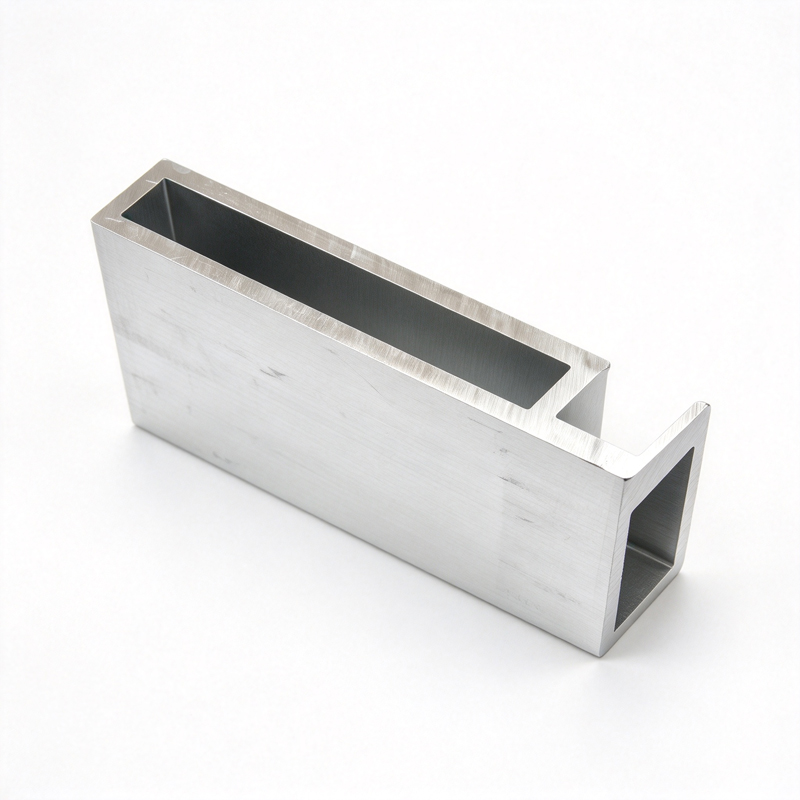
Custom Aluminum Profiles
Special equipment aluminum profile mold opening
Service OverviewWe provide custom aluminum profile die design and extrusion for specialized equipment in aerospace and d
Product Details
Service Overview
We provide custom aluminum profile die design and extrusion for specialized equipment in aerospace and defense — sectors where material performance, machining precision, and quality-management rigor leave no room for compromise. Aluminum alloy is the most widely used metallic structural material in today's military industry, valued for its low density, high strength, excellent corrosion resistance, and outstanding machinability. In aerospace, it serves as a critical material for launch-vehicle and spacecraft structural components; in defense, it has been proven in specialized platforms such as infantry fighting vehicles and armored transport vehicles.
01 · Quality Starts with Raw Materials
We use high-purity specialized aluminum alloys produced from A00 primary (virgin) ingots — zero recycled content, delivering a pure, fine, and dense microstructure with stable mechanical properties. Alloys are selected to match the service conditions of the target equipment:
2xxx-series high-strength alloys (2024 / 2A12) — superior fatigue resistance and fracture toughness; well suited to fatigue-critical applications such as fuselage skin and wing ribs.
7xxx-series ultra-high-strength alloys (7075 / 7050) — tensile strength ≥ 524 MPa, comparable to conventional structural steel; ideal for aircraft structural components, wing main spars, and landing gear.
02 · Dedicated Die Design & Precision Extrusion
For every specialized-equipment structural component, we design a dedicated die matched to its loading characteristics and dimensional-tolerance requirements. Each die is fabricated from high-grade die steel and machined by slow-wire EDM followed by mirror polishing to guarantee accuracy on complex cross-sections. During extrusion, temperature and extrusion speed are managed under closed-loop control. The facility can produce extra-large profiles with circumscribed diameters of 600 – 700 mm, while dimensional tolerances on critical mating features are stably held to ±0.02 mm to ±0.03 mm.
03 · High-Precision CNC Machining
Our five-axis simultaneous CNC machining centers and other precision equipment perform precision cutting, end-face square milling, precision boring, drilling, and tapping on extruded profiles. CNC machining accuracy ranges from ±0.01 mm to ±0.005 mm. Multiple imported machine tools and ultra-long profile machining centres — with travel up to 6.5 m — meet the stringent assembly tolerances demanded by aerospace and defense structural components.
04 · Quality Management & NDT
Specialized-equipment programs require rigorous quality and process controls. We operate in accordance with:
GJB (Chinese National Military Standard) quality-management-system requirements
AS9100 aerospace quality-management-system requirements
Available non-destructive testing (NDT) methods include ultrasonic testing (UT) and liquid-penetrant testing (PT) to confirm the internal integrity of profiles — free of cracks, porosity, or inclusions.
Each shipment is accompanied by:
A full-dimension CMM (Coordinate Measuring Machine) inspection report
A material-composition test report
A mechanical-property test report
Processing Capability Parameters
Parameter | Specification |
Target applications | Aerospace structural components, defense-industry equipment, UAVs / space vehicles, specialized vehicles |
Available alloys | 2xxx (2024 / 2A12), 7xxx (7075 / 7050), 6061-T6 |
Governing standard | GB/T 6892-2023 ultra-high-precision grade; GJB / AS9100 support available |
Tolerance – critical mating locations | ±0.02 mm to ±0.03 mm |
Tolerance – general dimensions | ±0.02 mm to ±0.04 mm |
CNC machining accuracy | ±0.01 mm to ±0.005 mm |
Maximum circumscribed diameter | 600 – 700 mm |
Maximum machining length | 6 500 mm |
Surface treatments | Anodizing, hard anodizing, conductive anodizing |
NDT (available on request) | CMM inspection, ultrasonic testing, liquid-penetrant testing |
Extrusion presses | 600 T – 12 000 T (partner production lines) |
Die lead time | 8 – 12 days to first sample for standard structural sections |
Bulk delivery | 12 – 18 days after sample approval |
MOQ | From 50 kg for R&D prototyping |
Production location | Qingpu, Shanghai |
Alloy Selection Guide for Specialized Equipment
Alloy | Key Characteristics | Typical Applications |
7075-T6 | Ultra-high strength; tensile ≥ 524 MPa | Aircraft structural components, wing main spars, landing gear |
2024 / 2A12 | Excellent fatigue performance; high fracture toughness | Fuselage skin, wing ribs, fatigue-critical structures |
7050 | Very high strength; superior stress-corrosion resistance | Aircraft structural extrusions, load-bearing structures |
6061-T6 | Well-balanced general properties | UAV airframes, general-aviation structures |
Typical Application Scenarios
Aerospace — Aircraft fuselage frames and wing-rib profiles; landing-gear support structures
UAVs — Airframe arms and landing gear for industrial drones
Spacecraft & Launch Vehicles — Rocket-body load-bearing rings, module structural components, satellite mounting frames
Defense Industry — Structural components for infantry fighting vehicles and armored transport vehicles; radar-antenna structural members
Specialized Vehicles — Light armored-vehicle body structures
Avionics — Airborne equipment frames; ground-support equipment structures
FAQ
Q1 · How does specialized-equipment aluminum profile differ from ordinary industrial aluminum profile?
It differs in three respects. First, material grade: we use high-strength 2xxx (2024 / 2A12) and 7xxx (7075 / 7050) alloys with tensile strengths of 420 – 562 MPa, far exceeding 6xxx alloys. Second, precision: tolerances on critical mating locations are stably held to ±0.02 mm or tighter, and CNC accuracy reaches ±0.01 mm to ±0.005 mm. Third, quality system: we can operate under GJB (Chinese military standard) and AS9100 aerospace QMS requirements, with NDT capabilities including ultrasonic and liquid-penetrant testing.
Q2 · Which alloys can be used for specialized-equipment profiles?
Selection depends on service conditions. 2xxx-series (2024 / 2A12) — high fatigue resistance and fracture toughness; suited to fuselage skin, wing ribs, and other fatigue-critical structures. 7xxx-series (7075 / 7050) — ultra-high strength (≥ 524 MPa); suited to aircraft structural components, wing main spars, and landing gear. 6061-T6 — well-balanced properties; suited to UAV airframes and general-aviation structures.
Q3 · What level of precision can be achieved?
Tolerances on critical mating locations: ±0.02 mm to ±0.03 mm. General dimension tolerances: ±0.02 mm to ±0.04 mm. CNC machining accuracy: ±0.01 mm to ±0.005 mm. Each cross-section has a dedicated die designed to match the loading characteristics and precision requirements of the target structural component.
Q4 · Which quality-management systems can be supported?
We can align with GJB (Chinese National Military Standard) quality-management requirements and AS9100 aerospace quality-management requirements. NDT options include ultrasonic testing and liquid-penetrant testing. Each shipment includes a CMM full-dimension inspection report, a material-composition report, and a mechanical-property report.
Q5 · What is the maximum cross-section size?
We can produce extra-large profiles with circumscribed diameters of 600 – 700 mm. Closed-loop control of extrusion temperature and speed ensures tolerances on critical mating features stay within ±0.02 mm to ±0.03 mm. Monolithic (single-piece) extrusion of large structural components reduces the number of welded splices, improving structural integrity and reliability.
Q6 · What are the MOQ and lead times?
The minimum order quantity supports 50-kg R&D prototyping. Die lead time for standard structural sections is 8 – 12 days to first sample; bulk delivery is 12 – 18 days after sample approval. Because specialized-equipment profiles use higher-grade alloys (2xxx / 7xxx extrusion is more demanding), have tighter tolerances, and require more complete quality documentation, lead times are longer than for standard industrial profiles. We recommend agreeing alloy, section complexity, and quality-system requirements in advance.
GET A QUOTE
Once you have submitted your requirements, we will contact you as soon as possible regarding your product inquiry.:Special equipment aluminum profile mold opening