
Automated logistics
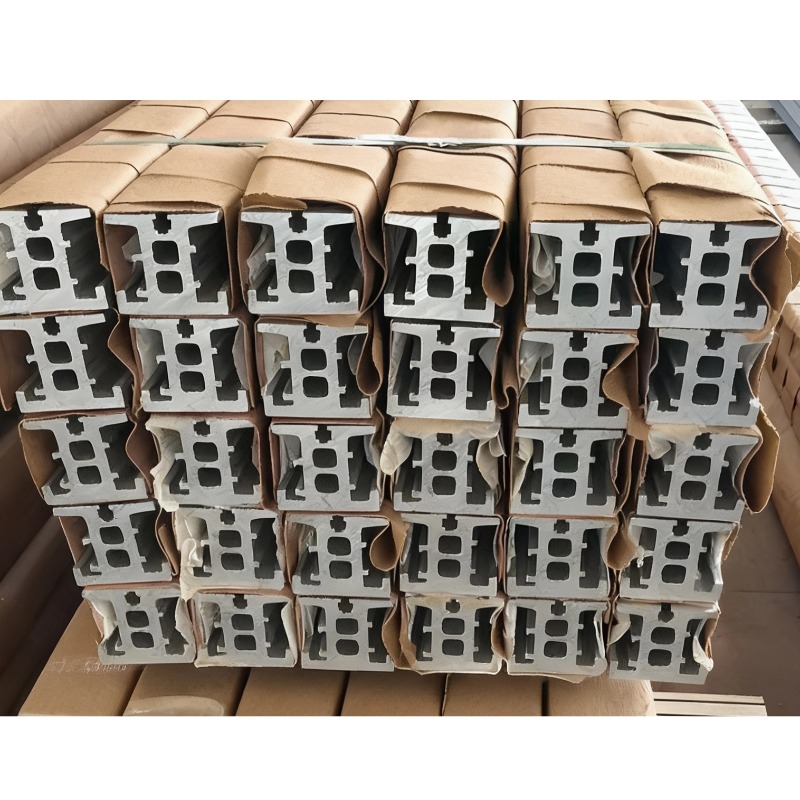
Heavy-Load RGV Track
Heavy-load RGV vehicles carry hundreds of kilos to ton-scale loads, but the track deforms because it is not strong enough? At high speed the track lacks precision, so the vehicle wobbles and positioning deviates? Ordinary anodizing is not wear-resistant,
Product Details
Heavy-load RGV vehicles carry hundreds of kilos to ton-scale loads, but the track deforms because it is not strong enough? At high speed the track lacks precision, so the vehicle wobbles and positioning deviates? Ordinary anodizing is not wear-resistant, and the running surface wears out quickly?
Choose the wrong heavy-load track, and the vehicle won't run steadily, won't stop accurately, and won't last.
RGV (rail-guided vehicle) and AGV (automated guided vehicle) are core handling equipment in intelligent warehousing and automated logistics systems. Heavy-load RGV/AGV tracks carry hundreds of kilos to ton-scale loads, and track precision and strength directly determine whether vehicles run steadily, position accurately, and last.
Material selection6061-T6 high-strength aluminum alloy, after T6 heat treatmentyield strength ≥240MPa,with strong impact resistance, suiting 500kg-1000kg heavy RGV/AGV and stacker crane operation. We can customize thickened heavy-load track cross-sections integrating guide grooves and mounting positions. 5-axis CNC one-piece finishing,straightness ≤1.5mm/10m,double-rail parallelism ≤±0.8mm/10m,dimensional tolerance±0.02mm to ±0.04mm,running positioning accuracy≤±3mm. The running surface can be hard-anodized to suit2.5m/s high-speed runningand high-frequency reciprocating handling.
Core advantages at a glance:
| Advantage dimension | Technical metric | Customer value |
|---|---|---|
| 💪 High strength | 6061-T6, yield≥240MPa | No deformation at 500-1000kg heavy load |
| 🎯 High precision | Positioning accuracy≤±3mm, straightness ≤1.5mm/10m | Precise positioning of heavy-load vehicles |
| 🔧 Double-rail parallelism | ≤±0.8mm/10m | Eliminates lateral force, reduces wheel wear |
| 🚀 High-speed compatible | Travel speed≤2.5m/s | Meets high-efficiency logistics scenarios |
| 🛡️ Hard anodizing | Thick film, high hardness, good wear resistance | Long life in high-frequency heavy-load conditions |
| 📐 Large-section customization | 200x100mm thickened heavy-load section | Strong load capacity, sufficient rigidity |
| ⚡ Fast delivery | Samples in 7-10 days for standard sizes, MOQ 50kg | Predictable project timeline |
Heavy-load RGV track vs. light-load RGV track:
| Comparison dimension | Heavy-load RGV track | Light-load RGV track |
|---|---|---|
| Applicable load | 500kg-1000kg | ≤300kg |
| Alloy material | 6061-T6 | 6063-T5 |
| Yield strength | ≥240MPa | ≥170MPa |
| Cross-section size | 200x100mm thickened heavy-load section | 40×40mm/60×60mm |
| Surface treatment | Hard anodizing | Ordinary anodizing |
| Travel speed | ≤2.5m/s | ≤1.5m/s |
| Application | Heavy automated warehouses / stacker cranes / heavy conveying | Light shuttles / electronics assembly lines |
Aluminum heavy-load track vs. steel heavy-load track:
| Comparison dimension | Aluminum heavy-load track | Steel heavy-load track |
|---|---|---|
| Density | 2.7g/cm³ | 7.8g/cm³ |
| Weight | Light (1/3 of steel) | Heavy |
| Yield strength | ≥240MPa(comparable to steel) | 235-355MPa |
| Corrosion resistance | Excellent(hard anodized) | Poor (needs periodic oiling to prevent rust) |
| Installation convenience | High | Low (requires lifting equipment) |
| Maintenance cost | Low(maintenance-free) | High (periodic rust prevention) |
| Full-life-cycle cost | Low | High |
Selection reference:
| Application | Recommended alloy | Recommended cross-section | Key requirements |
|---|---|---|---|
| RGV tracks for heavy automated warehouses | 6061-T6 | 200×100mm | Yield ≥240MPa, positioning accuracy ≤±3mm |
| Stacker crane floor-rail systems | 6061-T6 | 200×100mm | Double-rail parallelism ≤±0.8mm/10m |
| Heavy automated conveyor lines | 6061-T6 | 200×100mm | High speed 2.5m/s, hard anodized |
| Large logistics sorting centers | 6061-T6 | 200×100mm | High-frequency running, good wear resistance |
| New-energy battery warehousing and logistics | 6061-T6 | 200×100mm | Corrosion-resistant, lightweight |
| Heavy conveying on vehicle final assembly lines | 6061-T6 | Non-standard customization | High strength, long-term stability |
Typical applications:
-
RGV shuttle tracks for heavy automated warehouses
-
Stacker crane floor-rail systems
-
Heavy automated conveyor lines
-
Tracks for large logistics sorting centers
-
Conveying tracks for new-energy battery warehousing and logistics
-
Heavy conveying tracks for vehicle final assembly lines
FAQ (Frequently Asked Questions)
Q1: Why use 6061-T6 rather than 6063-T5 for heavy-load tracks?
A: After T6 heat treatment, 6061-T6 has yield strength ≥240MPa, with impact and fatigue resistance far exceeding 6063-T5 (yield about 170MPa). Heavy RGV/AGV and stacker cranes carry large loads (500kg-1000kg) with strong impacts, so 6061-T6 effectively resists deformation and fatigue damage from long-term running. 6061-T6 is standard for heavy-load scenarios.
Q2: What is the difference between hard anodizing and ordinary anodizing?
A: Hard anodizing is performed at low temperature and high current density, producing an oxide film of 40-60μm (vs. 10-15μm for ordinary anodizing), surface hardness HV≥300 (vs. HV100-150), and 3x or more wear resistance. After the running surface is hard-anodized, the track suits 2.5m/s high-speed running and high-frequency reciprocating handling, with significantly extended service life. Hard anodizing is recommended as standard for heavy-load scenarios.
Q3: How long is the service life of a heavy-load track?
A: Under normal conditions (load ≤1000kg, speed ≤2.5m/s, periodic maintenance), a 6061-T6 track with hard anodizing lasts 10+ years. The hard-anodized layer on the running surface is the key determinant of life; we recommend periodic inspection of surface wear and timely removal of debris and dust.
Q4: What is the mold-development lead time and delivery for 200x100mm large-section track?
A: For standard large-section track (200x100mm), mold development takes 7-10 days for samples, and batch delivery is 10-15 days after sample confirmation. Large-section track die design is CAE-simulated to ensure uniform wall thickness and stable dimensions.
Q5: What double-rail parallelism can you guarantee for heavy-load tracks?
A: 5-axis CNC one-piece finishing ensures uniform overall track precision, with double-rail parallelism error ≤±0.8mm/10m, ensuring RGV/AGV stability and positioning accuracy over long travel. We recommend laser alignment calibration during installation to meet design parallelism.
Q6: What special installation precision is needed for heavy-load tracks at 2.5m/s?
A: Heavy-load tracks suit 2.5m/s and demand higher installation precision than standard-speed tracks: track straightness must be ≤1.0mm/10m (vs. 1.5mm/10m), since small deviations are amplified at speed; double-rail parallelism ≤±0.5mm/10m (vs. ±0.8mm/10m); joint height difference ≤0.2mm (vs. 0.3mm) and gap ≤0.3mm (vs. 0.5mm). We recommend laser-tracker calibration throughout installation and a 2.5m/s trial run after installation.
Q7: What are the MOQ and lead time for heavy-load tracks?
A: MOQ50kg. Standard sizessample in 7-10 days,and batch lead time after sample confirmation is10-15 days.Large-section heavy-load tracks require CAE simulation; we recommend discussing load requirements and cross-section dimensions in advance.
Get a solution now
Call Manager Du:13611846009
Provide heavy-load RGV/AGV specs or layout drawings, and our engineering teamwithin 2 hourswill deliver a heavy-load track solution assessment.
Free technical consultation | Heavy-load track solution design | Direct from source factory

GET A QUOTE
Once you have submitted your requirements, we will contact you as soon as possible regarding your product inquiry.:Heavy-Load RGV Track