
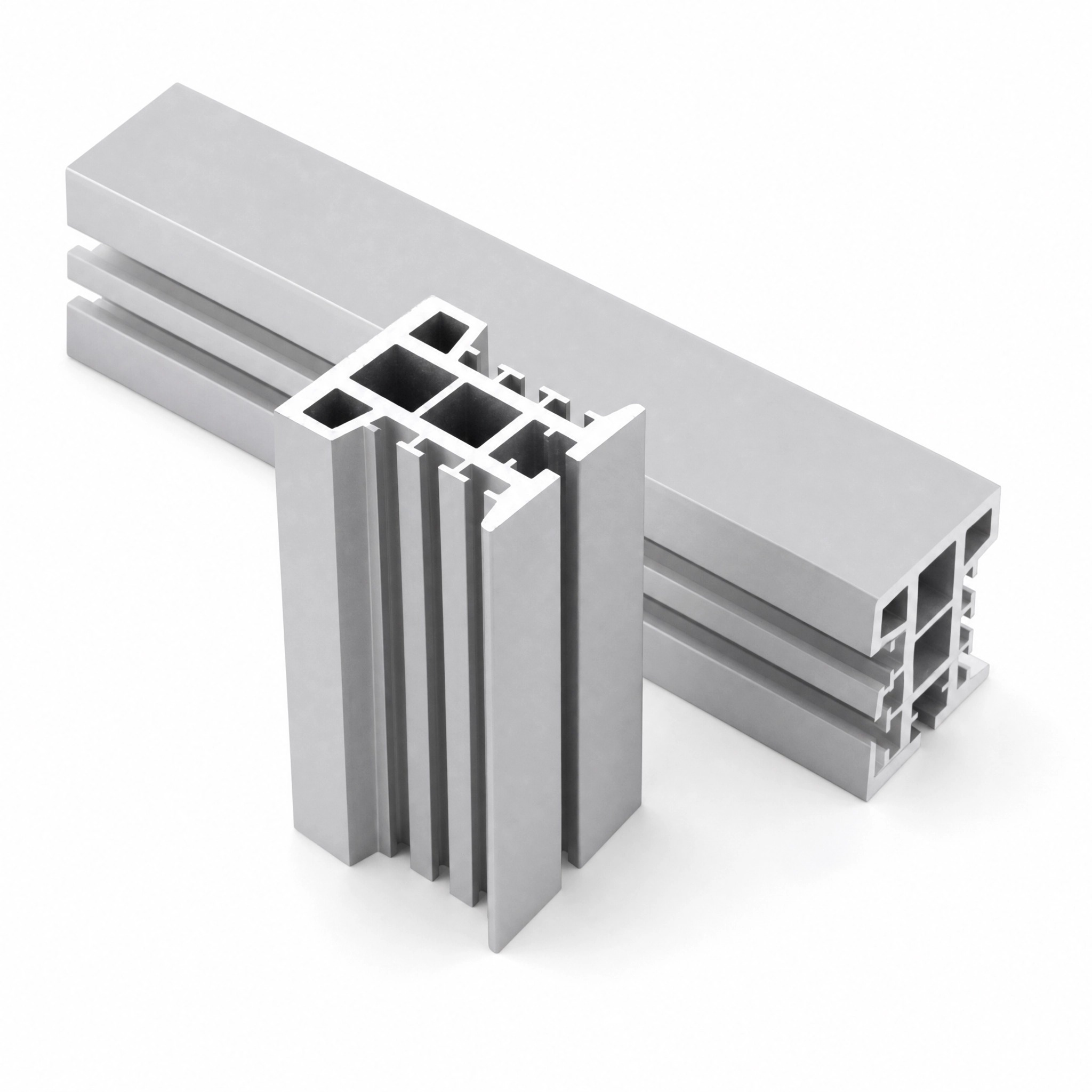
Automated logistics
Semiconductor OHT Overhead Rail
In a 12-inch fab, the AMHS system handles over 100,000 transfers per day. How is high-speed, high-precision handling of FOUPs ensured in the cleanroom environment? As OHT vehicles run at high speed on the rail, will vibration affect the wafer microenviron
Product Details
In a 12-inch fab, the AMHS system handles over 100,000 transfers per day. How is high-speed, high-precision handling of FOUPs ensured in the cleanroom environment? As OHT vehicles run at high speed on the rail, will vibration affect the wafer microenvironment? How does the rail on the cleanroom ceiling achieve low particle generation?
The OHT rail must solve all these problems.
OHT (Overhead Hoist Transport) is the core equipment of the AMHS (Automatic Material Handling System) automated material transport system in semiconductor fabs. The OHT system runs suspended from a cleanroom ceiling rail, directly picking up and carrying FOUPs (front-opening unified pods) to process tools via a lifting mechanism, achieving fully automated overhead "Tool-to-Tool" logistics.
The OHT system effectively uses the space above process equipment without occupying cleanroom floor space. Rail length can extend from hundreds of meters to tens of kilometers, configured per customer needs to connect transport across process zones or between fabs. The OHT overhead hoist system is the logistics core of 300mm wafer fabs, automatically transporting FOUPs via elevated rails with over 100,000 transfers per day.
The OHT rail is the core load-bearing component of this system. The rail is extruded from high-strength aluminum alloy, offering lightweight, high precision, and wear resistance; surface anodizing effectively reduces particle generation,meeting cleanroom Class100 standard requirements. The rail cross-section can integrate functional structures such as contactless power supply and communication network components, formed in one extrusion. Suitable for OHT overhead hoist rails in 12-inch fabs, FOUP overhead transport systems, inter-tool material transport in semiconductor front-end and back-end processes, and overhead transport in panel fab cleanrooms.
Core advantages at a glance:
| Advantage dimension | Technical index | Customer value |
|---|---|---|
| 🏗️ High-speed operation | Straight section≤6m/s | Ensures fab AMHS transport efficiency |
| 🎯 Ultra-high positioning accuracy | ≤±1mm | FOUP precisely docked to process tools |
| 📐 Low vibration control | <0.25g | Ensures advanced-node chip yield |
| 🧹 Cleanroom suitable | Class100 | Anodized, low particle generation |
| 🔌 Functional integration | Contactless power supply + communication waveguide mounting positions | Integrated power supply and communication for vehicle running |
| ⚡ Fast delivery | Samples in 10-15 days for standard specs, MOQ 50kg | Project timeline under control |
OHT rail vs ordinary EMS hoist rail:
| Comparison dimension | OHT rail | Ordinary EMS hoist rail |
|---|---|---|
| Cleanliness requirements | Class100 cleanroom | No special requirements |
| Positioning accuracy | ≤±1mm | ±3-5mm |
| Straight-line speed | ≤6m/s | ≤2m/s |
| Vibration control | <0.25g | No special requirements |
| Load range | ≤40kg (FOUP pod) | 500kg-2000kg |
| Functional integration | Contactless power supply + communication waveguide | Sliding-contact power supply |
| Applicable industry | Semiconductor wafer fabs | General industry |
Aluminum alloy OHT rail vs steel rail:
| Comparison dimension | Aluminum alloy OHT rail | Steel rail |
|---|---|---|
| Density | 2.7g/cm³ | 7.8g/cm³ |
| Weight | Light | Heavy |
| Particle generation | Low(anodized) | High (rust and flaking) |
| Cleanroom suitable | Suitable | Not suitable |
| Corrosion resistance | Excellent | Poor |
| Ease of installation | High | Low |
| Maintenance cost | Low | High |
Applicable scenarios (find your match):
| Application field | Typical use | Key requirements |
|---|---|---|
| Semiconductor wafer fabrication | AMHS OHT overhead hoist rail | Cleanliness Class100, positioning accuracy ±1mm |
| 12-inch wafer fab | OHT overhead hoist rail | Speed 6m/s, vibration <0.25g |
| FOUP overhead transport | Wafer pod automatic transport rail | Low particle, high precision |
| Panel fab cleanroom | Overhead transport rail | Cleanliness, low vibration |
| Semiconductor front-end and back-end processes | Inter-tool material transport rail | High precision, reliability |
01 A00 primary aluminum ingot—the quality source of OHT rails
Produced fromA00-grade primary aluminum ingot, containing no scrap aluminum, with uniform material and stable mechanical properties, ensuring the fatigue resistance of the OHT rail under long-term high-speed running conditions. The anodized aluminum material reduces particle generation, meeting cleanroom environmental requirements.
02 High-strength aluminum alloy extrusion—integrated functional design
Extruded from high-strength aluminum alloy, the rail surface isanodized, offering corrosion resistance, wear resistance, and low particle generation.
The rail cross-section can integrate three major functional structures:
-
Sliding-contact power supply mounting slot: for installing contactless power supply coils or sliding-contact conductors
-
Communication waveguide mounting position: for installing communication waveguides or leaky feeders
-
Guide slot: precise guidance for vehicle running wheels
Formed in one extrusion, reducing post-processing steps and ensuring the positional accuracy of functional structures.
03 High-precision machining and cleanroom compatibility
ThroughCNC precision machining, the rail surface is flat and burr-free.
-
Positioning accuracy≤±1mm
-
Travel positioning accuracy≤±3mm
-
Straight-section running speed≤6m/s
-
Curved-section running speed≤1m/s
-
Vibration control<0.25g
-
Rail joints are flat with no step, so vehicles run smoothly
04 Anodized surface treatment—cleanroom Class100 standard
The surface isanodized, forming a dense oxide film on the rail surface that effectively reduces particle generation and shedding,meeting cleanroom Class100 standard requirements.
-
No particle shedding, does not contaminate the clean environment
-
Corrosion-resistant and wear-resistant, extending service life
-
Meets the strict cleanliness requirements of semiconductor wafer fabs
05 Full-process one-stop delivery—deal with only one window
From mold development, extrusion to CNC finish machining and surface finishingone-stop delivery, so customers only deal with one supplier. Rail cross-section dimensions, rail length, and turning radius can all be custom-made to drawings, reducing on-site processing steps.
Complete machining capability parameters:
| Item | Parameter / Description |
|---|---|
| Applicable scenarios | AMHS systems in semiconductor wafer fabs, overhead transport in panel fab cleanrooms |
| Alloy material | 6063-T5 / 6061-T6 |
| Surface treatment | Anodizing (reduces particle generation, meets cleanroom Class100) |
| Straight-section running speed | ≤6m/s |
| Curved-section running speed | ≤1m/s |
| Positioning accuracy | ≤±1mm |
| Travel positioning accuracy | ≤±3mm |
| Vibration control | <0.25g |
| Applicable environment | Cleanroom (Class100) |
| Load capacity | ≤40kg (for 12-inch FOUP) |
| Dimensional tolerance | ±0.02mm to ±0.04mm |
| Functional integration | Sliding-contact power supply mounting slot, communication waveguide mounting position, guide slot |
| Extrusion length | Up to20M |
| Extrusion equipment | 600T-12000T (partner production lines) |
| Machining equipment | CNC machining centers |
| Executive standard | GB/T 6892-2023, ISO9001 |
| MOQ | 50kg |
| Production location | Qingpu, Shanghai |
Typical application scenarios:
-
AMHS systems in semiconductor wafer fabs
-
OHT overhead hoist rails in 12-inch wafer fabs
-
FOUP overhead transport systems
-
Inter-tool material transport in semiconductor front-end and back-end processes
-
Overhead transport in panel fab cleanrooms
-
Cross-zone connected transport of wafer pods
FAQ (Frequently Asked Questions)
Q1: What is the difference between OHT rail and ordinary EMS hoist rail?
A: OHT rail is an overhead rail system dedicated to the semiconductor industry, with four core differences from ordinary EMS hoist rails: first, cleanliness requirements—the OHT rail surface is anodized to reduce particle generation, meeting cleanroom Class100 standards; second, accuracy requirements—positioning accuracy ±1mm, straight-line speed 6m/s, vibration control <0.25g; third, load characteristics—load capacity ≤40kg (for FOUP pods), light-load, high-speed, high-precision; fourth, functional integration—can integrate contactless power supply and communication network functions. We can custom-make both.
Q2: Why does OHT rail require ±1mm positioning accuracy?
A: The OHT vehicle needs to travel along the rail to a designated process tool position, pick up the FOUP (wafer pod) via the lifting mechanism, and precisely place it into the tool. A 12-inch wafer pod holds 25 wafers and is extremely valuable; any positioning deviation could cause wafer damage or failed tool docking. The ±1mm positioning accuracy is the standard requirement of semiconductor AMHS systems.
Q3: Why does OHT rail vibration control need to be <0.25g?
A: Semiconductor wafer fabrication is extremely sensitive to vibration, and advanced processes (such as 7nm and 5nm) have very high vibration control requirements. If vibration generated as the OHT vehicle runs at high speed on the rail exceeds 0.25g, it may affect the stability of the wafer microenvironment inside the FOUP, in turn affecting chip yield. Through high-precision rail machining and flat joint treatment, vibration is kept below 0.25g.
Q4: What is the running speed of the OHT rail?
A: Straight-section running speed is ≤6m/s, and curved-section running speed ≤1m/s. The OHT system runs at high speed on straight sections to improve transport efficiency and slows down on curved sections for safe, stable running. The OHT system in a 12-inch fab handles over 100,000 transfers per day, and high-speed running is key to ensuring line efficiency.
Q5: Why does OHT rail require anodizing?
A: The OHT rail is installed on the cleanroom ceiling, and cleanrooms have strict limits on airborne particle concentration (Class100). Untreated aluminum alloy surfaces shed trace amounts of oxidized powder over long-term operation, contaminating the clean environment. Anodizing forms a dense oxide film on the rail surface, effectively reducing particle generation and shedding, meeting the cleanliness requirements of semiconductor wafer fabs.
Q6: What is the load capacity of the OHT rail?
A: The OHT rail load capacity is ≤40kg, suited to overhead transport of 12-inch FOUPs (wafer pods). The FOUP contains 25 twelve-inch wafers with a total weight of about 20-40kg, and the rail design provides ample safety margin.
Q7: Which OHT vehicle brands is the OHT rail compatible with?
A: It is compatible with mainstream OHT vehicle brands such as Japan's Daifuku, Murata, and SFA, as well as domestic AMHS system brands. The customer provides OHT vehicle technical parameters or rail interface drawings, and we custom-match the rail cross-section dimensions and mounting interfaces according to brand specifications.
Get a solution now
📞 Contact Manager Du:13611846009
Provide AMHS layout drawings or OHT vehicle specs, and the engineering departmentwithin 2 hourswill give an OHT rail solution assessment.
Free technical consultation | OHT rail solution design | Direct from source factory

GET A QUOTE
Once you have submitted your requirements, we will contact you as soon as possible regarding your product inquiry.:Semiconductor OHT Overhead Rail