
Automated logistics
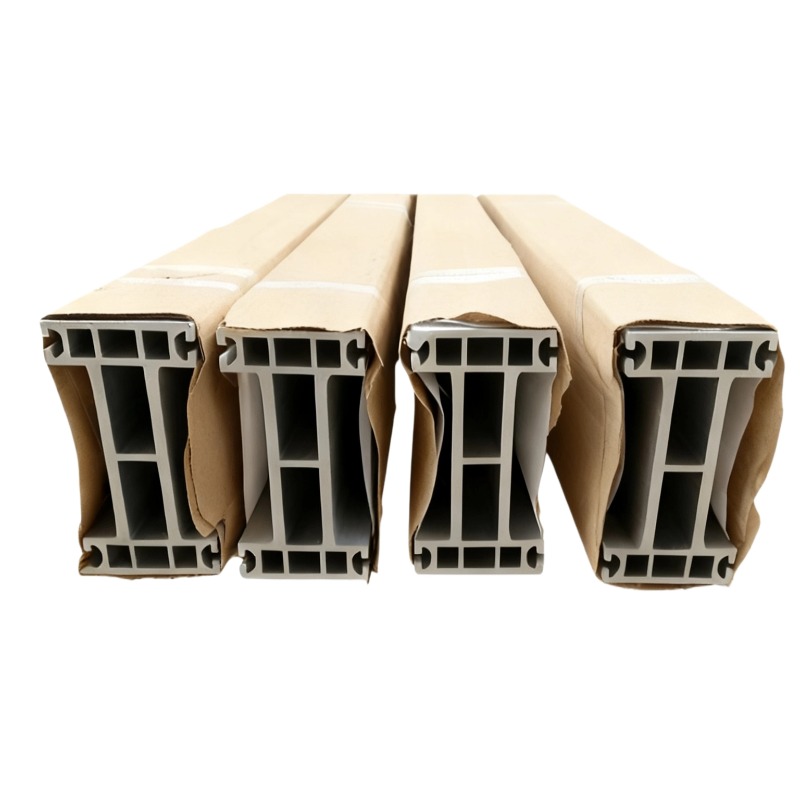
Stereoscopic Warehouse Ground Rails
Is the stacker crane running unstably in the rack aisle, with large positioning deviation causing inaccurate fork pickup? Are steel ground rails rusting and wearing, with maintenance costs rising? Is the stereoscopic warehouse operating efficiency always
Product Details
Is the stacker crane running unstably in the rack aisle, with large positioning deviation causing inaccurate fork pickup? Are steel ground rails rusting and wearing, with maintenance costs rising? Is the stereoscopic warehouse operating efficiency always failing to meet design targets?
The root cause of these problems often lies in ground rail accuracy.
The stacker crane is the core handling equipment of the automated stereoscopic warehouse, responsible for storing and retrieving goods in rack aisles. The stacker crane ground rail is the 'road' of the stacker - rail accuracy directly determines whether the stacker runs stably, positions accurately and has a long service life.
Material Selection6061-T6 high-strength aluminum alloy, after T6 heat treatment its yield strength≥240MPa, with strong impact resistance, suitable for500kg-1000kgclass stacker cranes and heavy-load RGV operating requirements. Custom reinforced heavy-load cross-section rails are available, integrating guide grooves, mounting fixation positions, sensor card slots and other functional structures. Five-axis CNC integrated precision machining,straightness ≤1.5mm/10m,dual-rail parallelism ≤±0.8mm/10m, dimensional tolerance±0.02mm to ±0.04mm,travel positioning accuracy ≤±2mm. The rail working surface can receive hard anodizing wear-resistant treatment, suitable for high-frequency reciprocating handling. Aluminum alloy rails weigh only 1/3 of steel, effectively reducing driving force, saving energy and greatly lowering ground foundation load requirements.
Core advantages at a glance:
| Advantage Dimension | Technical Indicator | Customer Value |
|---|---|---|
| 🏗️ Heavy Load Bearing | yield≥240MPa, suitable for500kg-1000kg | Meets heavy stacker crane operating requirements |
| 🎯 Ultra-High Positioning Accuracy | ≤±2mm | Forks accurately align to cargo positions, reliable storage and retrieval |
| 📐 High Straightness | ≤1.5mm/10m | Stable long-distance high-speed travel |
| 🔧 Dual-Rail Parallelism | ≤±0.8mm/10m | Eliminates lateral force, reduces wheel set wear |
| 🛡️ Hard Anodizing | Wear and corrosion resistant | Long-term use in humid/acid/alkali environments |
| 🪶 Lightweight | Weight only [of] steel1/3 | Reduces energy consumption, lowers ground load |
| ⚡ Fast Delivery | 7-10 days for sampling of standard sizes, MOQ from 50kg | Controllable project cycle |
Stereoscopic warehouse ground rail vs ordinary RGV heavy-load rail:
| Comparison Dimension | Stereoscopic Warehouse Ground Rail | Ordinary RGV Heavy-Load Rail |
|---|---|---|
| Applicable Equipment | Stacker cranes (rack aisle storage and retrieval) | RGV trolleys (floor travel) |
| Positioning Accuracy | ≤±2mm | ±3-5mm |
| Straightness | ≤1.5mm/10m | ≤2.0mm/10m |
| Dual-Rail Parallelism | ≤±0.8mm/10m | ≤±1.0mm/10m |
| Accuracy Requirements | Extremely high | General |
| Applicable Scenarios | Automated stereoscopic warehouses | General heavy-load conveying |
Aluminum alloy stacker ground rail vs steel heavy-load ground rail:
| Comparison Dimension | Aluminum Alloy Ground Rail | Steel Ground Rail |
|---|---|---|
| Density | 2.7g/cm³ | 7.8g/cm³ |
| Weight | Light (1/3 of steel) | Heavy |
| Yield Strength | ≥240MPa | 235-355MPa |
| Corrosion Resistance | Excellent(hard anodized) | Poor (requires regular oiling for rust prevention) |
| Maintenance Cost | Low(maintenance-free) | High (regular rust prevention) |
| Installation Convenience | High | Low (requires lifting equipment) |
| Full Life-Cycle Cost | Low | High |
Applicable scenarios (pick your match):
| Application Field | Typical Use | Suitable Load Capacity | Key Requirements |
|---|---|---|---|
| Heavy-duty stereoscopic warehouses | Stacker ground rail systems | 500-1000kg | Positioning accuracy ≤±2mm |
| RGV rail-guided vehicles | Automated warehousing rails | 500-1000kg | Straightness, parallelism |
| Large logistics sorting centers | Heavy-load conveying rails | 500-1000kg | High-frequency operation, wear resistance |
| New energy warehousing logistics | Heavy-load conveying rails | 500-1000kg | Corrosion resistance, lightweight |
| Automotive final assembly lines | Heavy-load conveying rails | 500-1000kg | High strength, long-term stability |
01 A00 Primary Aluminum Ingot - Source Guarantee of Ground Rail Quality
Produced fromA00-grade primary aluminum ingot, containing no scrap aluminum, with uniform material and stable mechanical properties, ensuring the fatigue strength and long-term dimensional stability of stacker ground rails under high-frequency heavy-load conditions.
02 CAE Simulation-Optimized Mold Design - Accuracy Guaranteed at the Source
The mold is optimized byCAE metal flow simulation, formed by H13 hot-work die steel vacuum heat treatment, ensuring uniform cross-section wall thickness and stable dimensions. Temperature and extrusion speed are closed-loop controlled during extrusion, paired with artificial aging to release internal stress; rail straightness and flatness are controllable.
03 Five-Axis CNC Integrated Precision Machining - Unified Overall Accuracy
Five-axis CNC integrated precision machining ensures the rail'sunified overall accuracy, with small joint gaps between single profiles; the stacker runs smoothly and quietly, and positioning accuracy is guaranteed.
-
Straightness≤1.5mm/10m
-
Dual-Rail Parallelism≤±0.8mm/10m
-
Dimensional Tolerance±0.02mm to ±0.04mm
-
travel positioning accuracy up to≤±2mm
04 Hard Anodizing Wear-Resistant Treatment - No Worries Under High-Frequency Heavy Load
The rail working surface can receivehard anodizingtreatment, with high surface hardness, good wear resistance and strong corrosion resistance.
-
Can be used long-term in humid, acidic and alkaline environments
-
Suitable for high-frequency reciprocating handling
-
Low long-term wear, low maintenance cost
05 Full-Process One-Stop Delivery - Deal With Only One Window
From mold development, extrusion to CNC precision machining and hard anodizingone-stop delivery, customers deal with only one supplier. Supports custom cross-section dimensions, rail lengths and mounting holes from drawings, reducing on-site machining.
Complete machining capability parameters:
| Item | Parameter / Description |
|---|---|
| Applicable Scenarios | Heavy-duty stereoscopic warehouses, stacker ground rail systems, large logistics sorting centers |
| Alloy Material | 6061-T6 high-strength aluminum alloy |
| Yield Strength | ≥240MPa(T6 heat treated) |
| Applicable Load | 500kg-1000kg(heavy load) |
| Rail Type | Reinforced heavy-load straight ground rails, stacker ground rails |
| Straightness | ≤1.5mm/10m |
| Dual-Rail Parallelism | ≤±0.8mm/10m |
| Dimensional Tolerance | ±0.02mm to ±0.04mm |
| Travel Positioning Accuracy | ≤±2mm |
| Travel Speed | 0-210m/min |
| Applicable Running Speed | ≤2.5m/s |
| Surface Treatment | Anodizing, hard anodizing (working surface wear-resistant treatment) |
| Installation Method | Floor fixation, embedded installation |
| Customization Range | Rail length, mounting holes and cross-section dimensions all customizable |
| Extrusion Length | Max.20M |
| Extrusion Equipment | 600T-12000T (partner production lines) |
| Machining Equipment | Five-axis CNC machining centers |
| Executive Standard | GB/T 6892-2023, ISO9001 |
| MOQ | 50kg |
| Production Location | Qingpu, Shanghai |
Typical application scenarios:
-
Heavy-duty stereoscopic warehouse stacker ground rail systems
-
RGV rail-guided vehicle rails
-
Automated stereoscopic warehousing rails
-
Large logistics sorting center rails
-
New energy warehousing logistics conveying rails
-
Automotive final assembly line heavy-load conveying rails
FAQ (Frequently Asked Questions)
Q1: What is the difference between stereoscopic warehouse ground rails and ordinary RGV heavy-load rails?
A: Stereoscopic warehouse ground rails are dedicated travel rails for stacker cranes, which run in rack aisles and impose extremely high requirements on rail straightness, dual-rail parallelism and travel positioning accuracy (positioning accuracy ≤±2mm). RGV heavy-load rails are rails for RGV trolleys traveling on the floor, with slightly lower accuracy requirements than stacker ground rails. Both use 6061-T6 material, but stacker ground rails have stricter accuracy control. We can customize both according to customer warehousing equipment selection.
Q2: Why does stereoscopic warehouse ground rail positioning accuracy need to be ±2mm?
A: The stacker must precisely position to each cargo position in the rack aisle and store/retrieve goods through the fork telescoping mechanism. The relative position between cargo positions and the rail is fixed, and stacker travel positioning accuracy directly determines whether the fork can accurately align to the cargo position. A positioning accuracy of ±2mm is the standard requirement for automated stereoscopic warehouses; insufficient accuracy causes the fork to fail to accurately store or retrieve goods, and may even cause collision accidents.
Q3: Why is dual-rail parallelism required to be so high?
A: The stacker has traveling wheel sets at the bottom, with wheels on both sides running on two parallel ground rails respectively. Excessive dual-rail parallelism error causes lateral force during stacker travel, increasing wheel set wear and reducing travel stability; in severe cases it causes the stacker to jam or derail. Parallelism control of ≤±0.8mm/10m is the basic guarantee for long-term stable stacker operation.
Q4: What advantages do aluminum alloy ground rails have over steel rails?
A: Aluminum alloy ground rails weigh only 1/3 of steel rails, making transport and installation easier, effectively reducing driving force and saving energy. At the same time, aluminum alloy has strong corrosion resistance and can be used long-term in humid, acidic and alkaline environments without regular oiling for rust prevention. After hard anodizing, surface hardness is high, wear resistance is good, long-term wear is low and maintenance cost is low. Overall full life-cycle cost is lower than steel rails.
Q5: What travel speed can stereoscopic warehouse ground rails achieve?
A: Travel speed 0-210m/min, applicable running speed ≤2.5m/s. The stacker runs at high speed on straight sections to improve inbound/outbound efficiency, and decelerates for precise positioning near cargo positions. Speed settings can be adjusted according to the customer's stereoscopic warehouse operating rhythm requirements.
Q6: What should be noted when installing stereoscopic warehouse ground rails?
A: Ground rails are the foundational accuracy guarantee of automated stereoscopic warehouses and have high installation requirements. Before installation, ensure the ground foundation flatness meets requirements; during installation, use a laser alignment instrument to calibrate straightness and dual-rail parallelism; rail joints must be flat without steps (gap ≤0.5mm); ground rail and floor fixing bolts must be tightened per design requirements; after installation, conduct a stacker trial run to verify rail accuracy. We recommend professional installation teams perform the work.
Q7: What are the sample and bulk lead times for stereoscopic warehouse ground rails?
A: Standard cross-sections take 7-10 days for sampling, bulk delivery 10-15 days after sample approval. Supports small-batch trial (MOQ 50kg); customers can sample first to validate before bulk orders. Large cross-section ground rails (e.g. 200x100mm) have a slightly longer mold development period, determined by cross-section complexity.
Get Your Solution Now
Call Manager Du:13611846009
Provide stereoscopic warehouse layout drawings or stacker specifications; our engineering teamwithin 2 hourswill give a ground rail solution assessment.
Free technical consultation | Stacker ground rail solution design | Direct from source factory

GET A QUOTE
Once you have submitted your requirements, we will contact you as soon as possible regarding your product inquiry.:Stereoscopic Warehouse Ground Rails