
Automated logistics
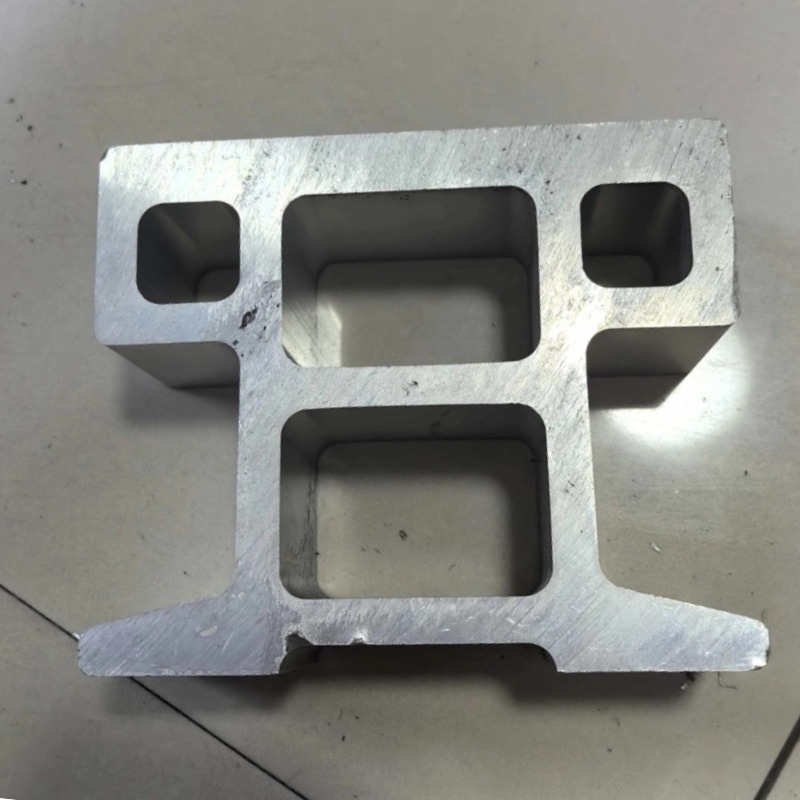
3C Electronics AGV Light-Duty Rail Aluminum Profiles
3C electronics AGV light-duty rail aluminum profiles — 3C electronics production lines are compact, AGV trolleys shuttle frequently, and heavy rails are difficult to install? SMT workshops have high cleanliness requirements, and ordinary rails rust and fl
Product Details
3C electronics AGV light-duty rail aluminum profiles — 3C electronics production lines are compact, AGV trolleys shuttle frequently, and heavy rails are difficult to install? SMT workshops have high cleanliness requirements, and ordinary rails rust and flake, contaminating the environment? Light-duty trolleys transfer at high frequency, and insufficient rail precision causes positioning deviations?
Choosing the right rail for light-duty scenarios allows trolleys to run fast, stop accurately, and operate cost-effectively.
RGV (rail-guided vehicle) and AGV (automated guided vehicle) are the core handling equipment in intelligent warehousing and automated logistics systems. Light-duty RGV/AGV rails are the road for these equipment — rail precision directly determines whether trolleys run smoothly, position accurately, and achieve long service life.
Material is 6063-T5 aluminum alloy, combining lightweight construction, high precision, and wear resistance. Aluminum profile density is only 1/3 of steel, suitable for light-duty RGV/AGV low-frequency, high-speed operation. Integrated CNC finishing, straightness ≤1.0mm/10m, dimensional tolerance ±0.02mm to ±0.04mm, repeat positioning accuracy ±3mm. Surface anodizing provides dust and corrosion resistance, low friction coefficient, suitable for clean production conditions. Rail cross-sections are produced per customer drawings, integrating guide grooves, mounting positions, and other functional structures. Customers provide drawings, and we develop molds for production.
Core advantages at a glance:
| Advantage dimension | Technical specification | Customer value |
|---|---|---|
| 🪶 Extreme lightweight | Density only 1/3 of steel | Reduces trolley inertial load, improves acceleration performance |
| 🎯 High precision | Straightness ≤1.0mm/10m, repeat positioning ±3mm | Light-duty trolleys position accurately |
| 🧹 Cleanroom adaptation | Anodizing, dust and corrosion resistant | Suitable for SMT / pharmaceutical cleanrooms |
| 📐 Production per drawings | Customer provides drawings, mold development per drawings | Adapted to different production line layouts |
| 🔧 Integrated functionality | Guide groove / mounting position integrated in one-piece extrusion | Reduces secondary machining, easy installation |
| ⚡ Fast delivery | 7 days for conventional specification samples, 50kg minimum order | Controllable project timeline |
Light-duty AGV guide rail vs. heavy-duty RGV track:
| Comparison dimension | Light-duty AGV guide rail | Heavy-duty RGV track |
|---|---|---|
| Applicable load capacity | ≤300kg | ≥500kg |
| Alloy material | 6063-T5 | 6061-T6 |
| Yield strength | ≥170MPa | ≥240MPa |
| Cross-section specification | 100×50mm | 200×100mm |
| Surface treatment | Anodizing | Hard anodizing |
| Running speed | ≤1.5m/s | ≤2.5m/s |
| Applicable scenarios | 3C electronics / SMT / pharmaceutical cleanrooms | Heavy-duty stereoscopic warehouses / stacker cranes |
Aluminum alloy light-duty guide rail vs. steel guide rail:
| Comparison dimension | Aluminum alloy light-duty guide rail | Steel guide rail |
|---|---|---|
| Density | 2.7g/cm³ | 7.8g/cm³ |
| Weight | Light (easy to install) | Heavy |
| Surface treatment | Anodizing (dust and corrosion resistant) | Requires oiling for rust prevention |
| Cleanroom suitability | Suitable (low particle generation) | Not suitable |
| Installation convenience | High | Low |
| Maintenance cost | Low (maintenance-free) | High |
Applicable scenarios (choose accordingly):
| Application field | Typical use | Key requirements |
|---|---|---|
| 3C electronics production lines | Light-duty RGV/AGV rails | High precision, low friction, compact layout |
| SMT workshops | Material conveying guide rails | Clean surface, low particle emission |
| Pharmaceutical cleanrooms | AGV guide rails | Dust and corrosion resistant, easy to clean |
| Small stereoscopic warehousing | Shuttle car tracks | Lightweight, high-frequency operation |
| Laboratory automated transfer | Equipment guide rails | High precision, low noise |
| Light-duty curved conveying | Curved rails | Smooth curvature, flat joints |
Typical application scenarios:
3C electronics production line RGV/AGV rails
SMT workshop material conveying guide rails
Pharmaceutical cleanroom AGV guide rails
Small stereoscopic warehousing shuttle car tracks
Laboratory automated transfer equipment guide rails
Light-duty automated conveyor line tracks
Electronic assembly line AGV/RGV running rails
FAQ (Frequently Asked Questions)
Q1: What is the core difference between light-duty AGV rails and heavy-duty rails?
A: Light-duty rails have an applicable load capacity of ≤300kg, use 6063-T5 material, and are suitable for light-duty scenarios such as 3C electronics, SMT workshops, and pharmaceutical cleanrooms. Heavy-duty rails have an applicable load capacity of ≥500kg, use 6061-T6 material, and are suitable for heavy-duty scenarios such as stereoscopic warehouses and automotive assembly lines. The two differ in alloy grade, wall thickness, and cross-section dimensions; selection is based on AGV/RGV trolley load and operating frequency. We provide both solutions and can produce per customer drawings.
Q2: How long do 6063-T5 light-duty rails last?
A: After natural-color anodizing, 6063-T5 aluminum alloy has improved surface hardness, strong corrosion resistance, and low friction coefficient. Under normal conditions in indoor cleanrooms (ambient temperature, no strong acid/alkali corrosion), service life can reach 10 years or more. Regular cleaning of the rail surface and avoiding hard object scratching can further extend service life.
Q3: What is the minimum turning radius for light-duty rails?
A: Light-duty curved rails support a minimum turning radius of 1000mm, and larger or smaller radii can be produced according to customer production line layout requirements. The smaller the turning radius, the higher the requirements for rail machining precision and RGV/AGV trolley steering systems. Customers provide turning radius and angle drawings, and production is per drawings.
Q4: What does the customer need to provide for light-duty rail production?
A: Customers need to provide rail cross-section drawings (CAD format preferred) with cross-section dimensions, guide wheel dimensions, installation methods, and other parameters. If customers do not yet have cross-section drawings, they can provide AGV/RGV brand/model and installation requirements, and we can assist with a cross-section proposal for customer confirmation before production.
Q5: What is the minimum order quantity and lead time for light-duty rails?
A: The minimum order quantity is 50kg. Conventional cross-sections take 7 days for samples, and batch delivery is 10-15 days after sample confirmation. Small-batch trial samples are supported; customers can first verify rail-to-AGV/RGV trolley compatibility with samples before placing bulk orders.
Get a solution now
📞 Contact Manager Du: 13611846009
Provide AGV/RGV light-duty rail cross-section drawings or equipment parameters; the engineering department will provide production assessment and solution within 2 hours.
Free technical consultation | Light-duty rail production per drawings | Direct from source factory
GET A QUOTE
Once you have submitted your requirements, we will contact you as soon as possible regarding your product inquiry.:3C Electronics AGV Light-Duty Rail Aluminum Profiles