
Automated logistics
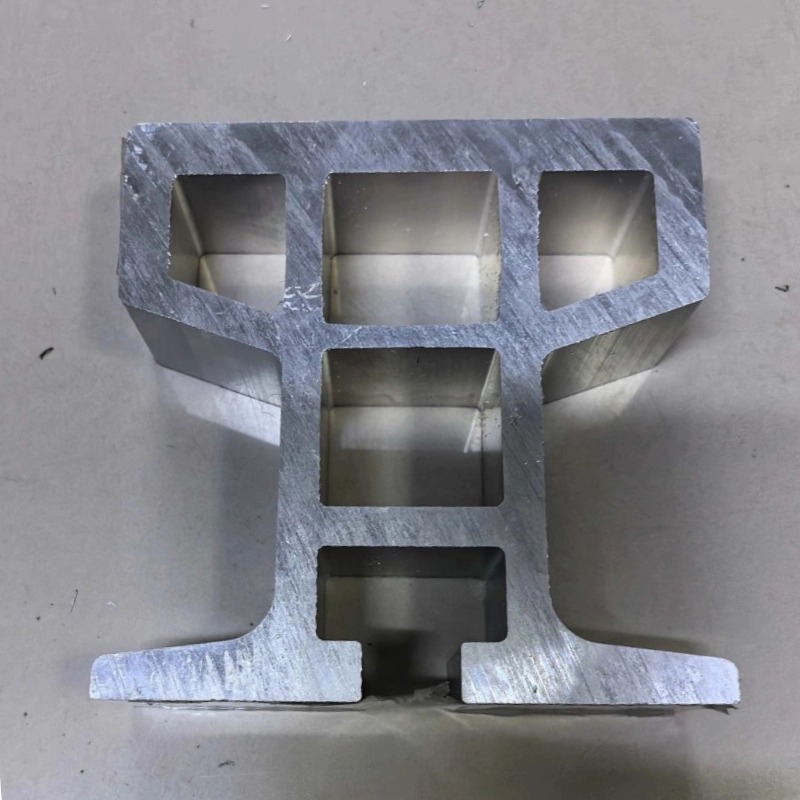
Automated Warehouse RGV Heavy-Load Floor-Rail Aluminum Profiles
Heavy-load RGV floor-rail aluminum profiles for automated warehouses - heavy-load RGV trolleys carrying hundreds of kilograms to ton-level materials, deforming because the rail lacks strength? Insufficient rail precision at high speed causing trolley wobb
Product Details
Heavy-load RGV floor-rail aluminum profiles for automated warehouses - heavy-load RGV trolleys carrying hundreds of kilograms to ton-level materials, deforming because the rail lacks strength? Insufficient rail precision at high speed causing trolley wobble and large positioning deviation? Ordinary anodizing not wear-resistant, with the rail working surface wearing out quickly?
Choose the right heavy-load rail and the trolley runs steadily, stops accurately and lasts well.
RGV (rail-guided vehicle) and AGV (automated guided vehicle) are the core handling equipment of intelligent warehousing and automated logistics systems. Heavy-load RGV/AGV rails carry materials ranging from hundreds of kilograms to ton level, and rail precision and strength directly determine whether the trolley runs steadily, positions accurately and has a long equipment life.
Made of high-strength 6061-T6 aluminum alloy, with yield strength ≥240MPa after T6 heat treatment, strong impact resistance, suited to the running needs of 500kg-1000kg class heavy RGV/AGV and stacker cranes. We can produce thickened heavy-load cross-section rails (e.g., 200×100mm) per customer drawings, integrating guide slots, mounting/fixing positions and other functional structures. Five-axis CNC one-piece finishing, straightness ≤1.5mm/10m, dual-rail parallelism ≤±0.8mm/10m, dimensional tolerance ±0.02mm to ±0.04mm, repeat positioning accuracy ≤±3mm. The rail working surface can be hard-anodized, suited to 2.5m/s high-speed running and high-frequency reciprocating handling. The aluminum-alloy rail weighs only 1/3 of steel, effectively reducing propulsion force, saving energy and greatly lowering the load-bearing requirements on the floor foundation. The customer provides drawings and we develop the mold and produce to drawing.
Core Advantages at a Glance:
| Advantage Dimension | Technical Indicator | Customer Value |
|---|---|---|
| 💪 Heavy-Load Bearing | Yield ≥240MPa, suited to 500kg-1000kg | Meets heavy stacker/RGV running needs |
| 🎯 High Precision | Straightness ≤1.5mm/10m, repeat positioning ≤±3mm | Heavy-load trolley positions accurately |
| 🔧 Dual-Rail Parallelism | ≤±0.8mm/10m | Eliminates lateral force, reduces wheel-set wear |
| 🚀 High-Speed Adaptation | Running speed ≤2.5m/s | Meets high-efficiency logistics scenarios |
| 🛡️ Hard Anodizing | High film thickness, high hardness, good wear resistance | Long life under high-frequency heavy-load conditions |
| 📐 Large Cross-Section | 200×100mm thickened heavy-load cross-section | Strong load-bearing, ample rigidity |
| ⚡ Fast Delivery | Standard specifications sampled in 7-10 days, MOQ from 50kg | Project timeline under control |
Heavy-Load RGV Rail vs. Light-Load RGV Rail:
| Comparison Dimension | Heavy-Load RGV Rail | Light-Load RGV Rail |
|---|---|---|
| Applicable Load | 500kg-1000kg | ≤300kg |
| Alloy Material | 6061-T6 | 6063-T5 |
| Yield Strength | ≥240MPa | ≥170MPa |
| Cross-Section Specification | 200×100mm thickened heavy-load cross-section | 40×40mm/60×60mm |
| Surface Treatment | Hard anodizing | Ordinary anodizing |
| Running Speed | ≤2.5m/s | ≤1.5m/s |
| Application Scenarios | Heavy automated warehouses/stacker cranes/heavy-load conveying | Light shuttle vehicles/electronic assembly lines |
Aluminum-Alloy Heavy-Load Rail vs. Steel Heavy-Load Rail:
| Comparison Dimension | Aluminum-Alloy Heavy-Load Rail | Steel Heavy-Load Rail |
|---|---|---|
| Density | 2.7g/cm³ | 7.8g/cm³ |
| Weight | Light (1/3 of steel) | Heavy |
| Yield Strength | ≥240MPa (rivaling steel) | 235-355MPa |
| Corrosion Resistance | Excellent (hard anodizing) | Poor (requires regular oiling to prevent rust) |
| Installation Convenience | High | Low (requires lifting equipment) |
| Maintenance Cost | Low (maintenance-free) | High (regular rust prevention) |
| Full Life-Cycle Cost | Low | High |
Application Scenarios (match your case):
| Application Field | Typical Use | Key Requirements |
|---|---|---|
| Heavy automated warehouse RGV | Stacker/shuttle vehicle rails | Yield ≥240MPa, repeat positioning ≤±3mm |
| Stacker floor-rail systems | Automated warehouse floor rails | Dual-rail parallelism ≤±0.8mm/10m |
| Heavy-load automated conveyor lines | Heavy-load material conveying rails | High speed 2.5m/s, hard anodizing |
| Large logistics sorting centers | Heavy-load sorting/conveying rails | High-frequency operation, good wear resistance |
| New energy battery warehousing logistics | Heavy-load conveying rails | Corrosion resistant, lightweight |
| Automotive final assembly lines | Heavy-load conveying rails | High strength, long-term stability |
Typical Application Scenarios:
Heavy automated warehouse RGV shuttle vehicle rails
Stacker floor-rail systems
Heavy-load automated conveyor lines
Rails for large logistics sorting centers
New energy battery warehousing logistics conveying rails
Heavy-load conveying rails for automotive final assembly lines
FAQ (Frequently Asked Questions)
Q1: Why use 6061-T6 rather than 6063-T5 for heavy-load rails?
A: After T6 heat treatment, 6061-T6 has a yield strength ≥240MPa, with impact resistance and fatigue strength significantly better than 6063-T5 (yield strength about 170MPa). Heavy-load RGV/AGV and stacker cranes run with large loads (500kg-1000kg) and strong impact; using 6061-T6 effectively resists deformation and fatigue damage from long-term running. 6063-T5 is more suited to light-load scenarios (≤300kg); 6061-T6 is the standard choice for heavy-load scenarios.
Q2: What is the difference between hard anodizing and ordinary anodizing?
A: Hard anodizing is an oxidation process carried out at low temperature and high current density, producing an oxide film up to 40-60μm thick (ordinary anodizing is 10-15μm), with surface hardness HV≥300 (ordinary is HV100-150) and over 3x improvement in wear resistance. After the rail working surface is hard-anodized, it can adapt to 2.5m/s high-speed running and high-frequency reciprocating handling, with significantly extended service life.
Q3: What is the service life of the heavy-load rail?
A: Under normal conditions (load ≤1000kg, speed ≤2.5m/s, regular maintenance), a 6061-T6 heavy-load rail with hard anodizing has a service life of over 10 years. The wear resistance of the hard-anodized layer on the rail working surface is the key factor determining life; we recommend regularly inspecting working-surface wear.
Q4: What does the customer need to provide for heavy-load rail production?
A: The customer needs to provide the rail cross-section drawings (CAD format preferred), marked with cross-section dimensions, tolerance requirements, load parameters and mounting method. If the customer does not yet have cross-section drawings, they can provide the equipment parameters and rail requirements, and we can assist by proposing a cross-section solution for customer confirmation before production.
Q5: What is the MOQ and lead time for the heavy-load rail?
A: The MOQ is 50kg. Standard specifications are sampled in 7-10 days, and mass production delivery is 10-15 days after sample approval. Large-cross-section heavy-load rails require CAE simulation optimization; we recommend discussing load requirements and cross-section dimensions in advance.
Get Your Solution Now
📞 Contact Manager Du: 13611846009
Provide the heavy-load rail cross-section drawings or equipment parameters, and our technical department will deliver a production assessment and solution within 2 hours.
Free technical consultation | heavy-load rails produced to drawing | direct supply from the source factory
GET A QUOTE
Once you have submitted your requirements, we will contact you as soon as possible regarding your product inquiry.:Automated Warehouse RGV Heavy-Load Floor-Rail Aluminum Profiles