
Automated logistics
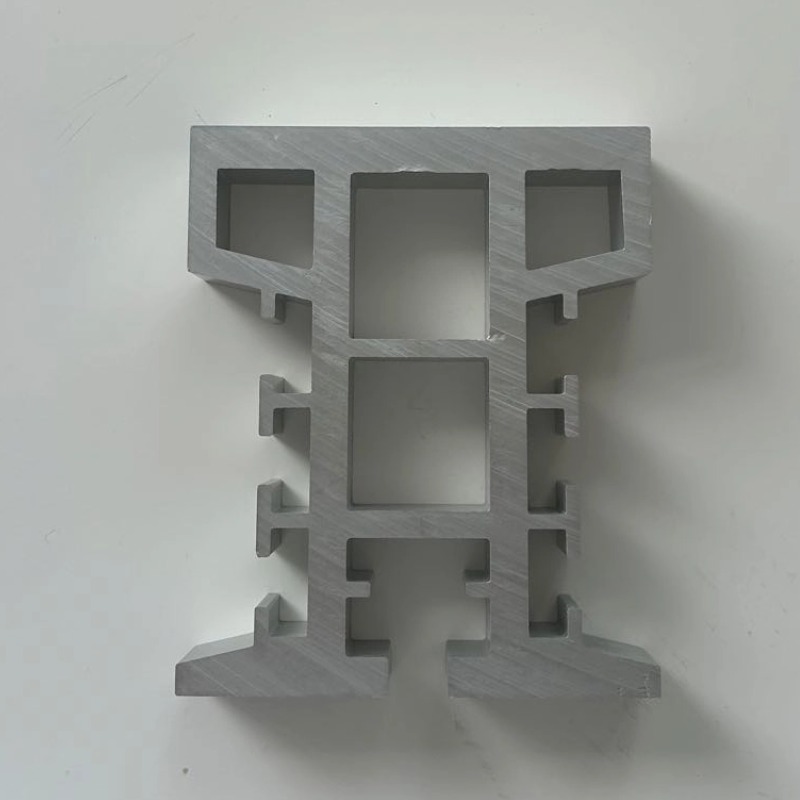
Stereoscopic Warehouse Stacker Floor Rail Aluminum Profiles
Stereoscopic warehouse stacker floor rail aluminum profiles — does the stacker crane run unstably in rack aisles, with large positioning deviations causing inaccurate fork pickup? Do steel floor rails rust and wear, with maintenance costs rising? Does ste
Product Details
Stereoscopic warehouse stacker floor rail aluminum profiles — does the stacker crane run unstably in rack aisles, with large positioning deviations causing inaccurate fork pickup? Do steel floor rails rust and wear, with maintenance costs rising? Does stereoscopic warehouse operating efficiency always fall short of design targets?
These problems often stem from floor rail precision.
The stacker crane is the core handling equipment of the automated stereoscopic warehouse, responsible for storing and retrieving goods in rack aisles. The stacker floor rail is the road for the stacker crane — rail precision directly determines whether the stacker runs smoothly, positions accurately, and achieves long service life.
Material is 6061-T6 high-strength aluminum alloy, with yield strength ≥240MPa after T6 heat treatment, strong impact resistance, suitable for 500kg-1000kg class stacker cranes and heavy-duty RGV operation. Custom thickened heavy-duty cross-section tracks are available, integrating guide grooves, mounting positions, and sensor card slots. Five-axis CNC integrated finishing, straightness ≤1.5mm/10m, dual-rail parallelism ≤±0.8mm/10m, dimensional tolerance ±0.02mm to ±0.04mm, running positioning accuracy ≤±2mm. The running surface can be hard anodized, suitable for high-frequency reciprocating handling. Aluminum alloy track weight is only 1/3 of steel, effectively reducing propulsion force, saving energy, and greatly reducing ground foundation load requirements.
Core advantages at a glance:
| Advantage dimension | Technical specification | Customer value |
|---|---|---|
| 💪 Heavy-duty load bearing | Yield ≥240MPa, suitable for 500kg-1000kg | Meets heavy-duty stacker crane operating requirements |
| 🎯 Ultra-high positioning accuracy | ≤±2mm | Fork accurately aligns with storage locations, reliable storage and retrieval |
| 📐 High straightness | ≤1.5mm/10m | Stable long-distance high-speed running |
| 🔧 Dual-rail parallelism | ≤±0.8mm/10m | Eliminates lateral forces, reduces wheel wear |
| 🛡️ Hard anodizing | Wear and corrosion resistant, suitable for humid/acid/alkali environments | Long service life under high-frequency heavy-duty conditions |
| 🪶 Lightweight | Weight only 1/3 of steel | Reduces energy consumption, lowers ground load |
| ⚡ Fast delivery | 7-10 days for conventional specification samples, 50kg minimum order | Controllable project timeline |
Stacker floor rail vs. RGV heavy-duty track:
| Comparison dimension | Stacker floor rail | RGV heavy-duty track |
|---|---|---|
| Applicable equipment | Stacker crane (rack aisle storage/retrieval) | RGV trolley (ground running handling) |
| Positioning accuracy | ≤±2mm | ±3-5mm |
| Straightness | ≤1.5mm/10m | ≤2.0mm/10m |
| Dual-rail parallelism | ≤±0.8mm/10m | ≤±1.0mm/10m |
| Precision requirements | Extremely high | Standard |
| Applicable scenarios | Automated stereoscopic warehouses | General heavy-duty conveying |
Aluminum alloy stacker floor rail vs. steel heavy-duty floor rail:
| Comparison dimension | Aluminum alloy floor rail | Steel floor rail |
|---|---|---|
| Density | 2.7g/cm³ | 7.8g/cm³ |
| Weight | Light (1/3 of steel) | Heavy |
| Yield strength | ≥240MPa | 235-355MPa |
| Corrosion resistance | Excellent (hard anodized) | Poor (requires regular oiling for rust prevention) |
| Maintenance cost | Low (maintenance-free) | High (regular rust prevention) |
| Installation convenience | High | Low (requires lifting equipment) |
| Total lifecycle cost | Low | High |
Selection guide:
| Application scenario | Recommended cross-section | Key requirements |
|---|---|---|
| Heavy-duty stereoscopic warehouse stacker crane | Thickened heavy-duty cross-section | Positioning accuracy ≤±2mm |
| RGV rail-guided trolley | Thickened heavy-duty cross-section | Straightness, parallelism |
| Large logistics sorting center | Thickened heavy-duty cross-section | High-frequency operation, wear-resistant |
| New energy warehousing logistics | Thickened heavy-duty cross-section | Corrosion-resistant, lightweight |
| Automotive assembly line heavy-duty conveying | Non-standard custom | High strength, long-term stability |
Typical application scenarios:
Heavy-duty stereoscopic warehouse stacker floor rail systems
RGV rail-guided trolley tracks
Automated stereoscopic warehousing tracks
Large logistics sorting center tracks
New energy warehousing logistics conveying tracks
Automotive assembly line heavy-duty conveying tracks
FAQ (Frequently Asked Questions)
Q1: What is the difference between stacker floor rails and RGV heavy-duty tracks?
A: Although both are used in heavy-duty scenarios, they serve different equipment. Stacker floor rails are dedicated to stacker cranes in automated stereoscopic warehouses; the stacker runs along aisles to store and retrieve goods between racks, with extremely high requirements for rail straightness and dual-rail parallelism, and running positioning accuracy ≤±2mm. RGV heavy-duty tracks serve rail-guided trolleys that transport materials on warehouse floors or between conveyor lines, with slightly lower precision requirements than stacker floor rails. Both use 6061-T6 material, but stacker floor rails have stricter precision control.
Q2: Why does stacker floor rail positioning accuracy require ±2mm?
A: The stacker crane must precisely position at every storage location in the rack aisle, using a telescopic fork to store and retrieve goods. The relative position between storage locations and rails is fixed, and stacker running positioning accuracy directly determines whether the fork can accurately align with storage locations. ±2mm positioning accuracy is the standard requirement for automated stereoscopic warehouses; insufficient accuracy causes the fork to fail to store/retrieve accurately and may even cause collision accidents.
Q3: Why is dual-rail parallelism required to be so high for stacker floor rails?
A: The stacker crane has running wheel sets at the bottom, with wheels on both sides running on two parallel floor rails. Excessive dual-rail parallelism error causes lateral forces during stacker running, increasing wheel wear, reducing running stability, and in severe cases causing the stacker to jam or derail. Parallelism control of ≤±0.8mm/10m is the basic guarantee for long-term stable stacker operation.
Q4: What advantages do aluminum alloy stacker floor rails have over steel rails?
A: Aluminum alloy stacker floor rails weigh only 1/3 of steel rails, making transportation and installation easier and effectively reducing propulsion force and energy consumption. Aluminum alloy also has strong corrosion resistance and can be used long-term in humid, acidic, and alkaline environments without regular oiling for rust prevention. After hard anodizing, the surface has high hardness, good wear resistance, low long-term wear, and low maintenance costs. Total lifecycle cost is lower than steel rails.
Q5: What running speed can stacker floor rails achieve?
A: Running speed is 0-210m/min, with applicable running speed ≤2.5m/s. The stacker runs at high speed on straight sections to improve in/out efficiency and decelerates for precise positioning near storage locations. Speed settings can be adjusted according to the customer's stereoscopic warehouse operating cycle requirements.
Q6: What should be noted during stacker floor rail installation?
A: Stacker floor rails are the foundational precision guarantee for automated stereoscopic warehouses and have high installation requirements. Before installation, ensure the ground foundation flatness meets requirements; use a laser alignment instrument to calibrate straightness and dual-rail parallelism during installation; rail joints must be flat without steps (gap ≤0.5mm); floor rail-to-ground fixing bolts must be tightened per design requirements; after installation, conduct stacker trial runs to verify rail precision. Professional installation teams are recommended.
Q7: What is the minimum order quantity and lead time for stacker floor rails?
A: The minimum order quantity is 50kg. Conventional specifications take 7-10 days for samples, and batch delivery is 10-15 days after sample confirmation. Large cross-section stacker floor rails require CAE simulation optimization; early communication of load requirements and cross-section dimensions is recommended.
Get a solution now
📞 Contact Manager Du: 13611846009
Provide stereoscopic warehouse layout drawings or stacker specifications; the engineering department will provide floor rail solution assessment within 2 hours.
Free technical consultation | Stacker floor rail solution design | Direct from source factory
GET A QUOTE
Once you have submitted your requirements, we will contact you as soon as possible regarding your product inquiry.:Stereoscopic Warehouse Stacker Floor Rail Aluminum Profiles