
Automated logistics
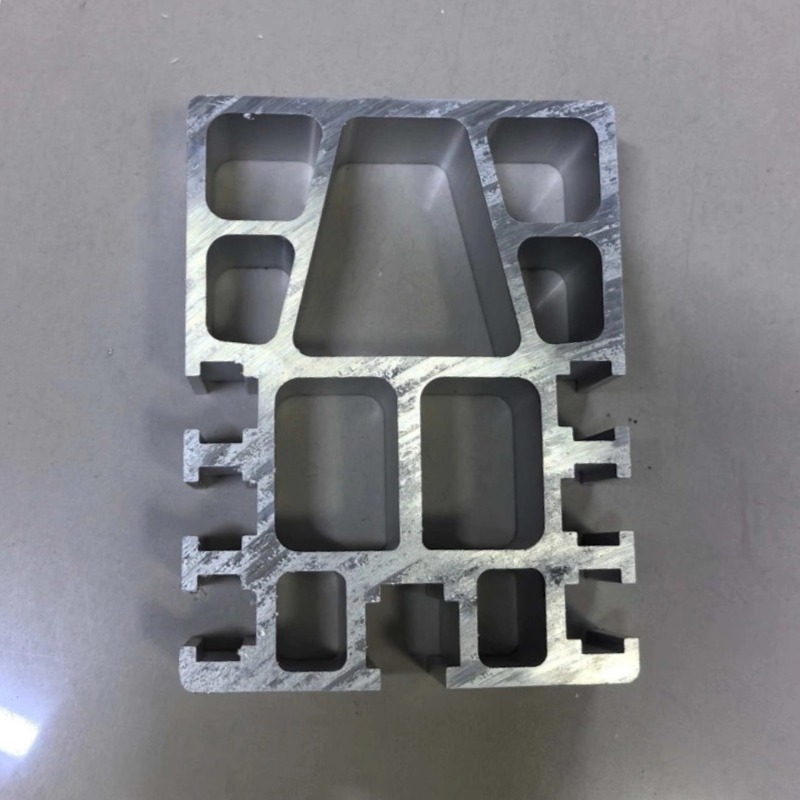
Semiconductor OHT Rail Aluminum Profile
Semiconductor OHT rail aluminum profiles—in a 12-inch fab, the AMHS system handles over 100,000 FOUP transfers per day on OHT overhead hoist vehicles. A slight drop in rail accuracy or a little extra vibration as the vehicles run accumulates into broken w
Product Details
Semiconductor OHT rail aluminum profiles—in a 12-inch fab, the AMHS system handles over 100,000 FOUP transfers per day on OHT overhead hoist vehicles. A slight drop in rail accuracy or a little extra vibration as the vehicles run accumulates into broken wafers, tool downtime, and plummeting yield.
The accuracy and cleanliness of the OHT rail directly determine the fab's throughput and yield.
OHT (Overhead Hoist Transport) is the core equipment of the AMHS (Automatic Material Handling System) automated material transport system in semiconductor fabs. The OHT system runs suspended from a cleanroom ceiling rail, directly picking up and carrying FOUPs (front-opening unified pods) or glass transmission cassettes to process tools via a lifting mechanism, achieving fully automated overhead "Tool-to-Tool" logistics. The OHT system effectively uses the space above process equipment without occupying cleanroom floor space, and can be introduced in a building height of about 2.7 meters. Rail length can extend from hundreds of meters to tens of kilometers, and can be configured per customer needs to connect transport across process zones or between fabs.
The OHT rail is the core load-bearing component of this system. The rail is extruded from 6063-T5 or 6061-T6 high-strength aluminum alloy, offering lightweight, high precision, and wear resistance; surface anodizing effectively reduces particle generation, meeting cleanroom Class100-1000 requirements. The rail cross-section can integrate functional structures such as sliding-contact power supply mounting slots, communication waveguide mounting positions, and guide slots, formed in one extrusion. Straight-section running speed ≤3.5m/s, curved-section speed ≤0.7m/s, minimum turning radius R500mm (45°/90° turns), positioning accuracy ≤±3mm, load capacity ≤40kg (for 12-inch FOUP). Suitable for AMHS systems in semiconductor wafer fabs, overhead transport in panel fab cleanrooms, OHT overhead hoist rails in 12-inch fabs, and FOUP overhead transport systems.
Core advantages at a glance:
| Advantage dimension | Technical index | Customer value |
|---|---|---|
| 🏗️ High-speed operation | Straight section ≤3.5m/s | Ensures fab AMHS transport efficiency |
| 🔄 Small turning radius | Minimum R500mm (45°/90°) | Fits compact cleanroom layouts |
| 🎯 High positioning accuracy | ≤±3mm | FOUP precisely docked to process tools |
| 🧹 Cleanroom suitable | Class100-1000 | Anodized, low particle generation |
| 📦 FOUP compatible | Load capacity ≤40kg | Fits overhead transport of 12-inch FOUP pods |
| 🔌 Functional integration | Sliding-contact power slot / communication waveguide / guide slot | Integrated power supply and communication for vehicle running |
| ⚡ Fast delivery | Samples in 10-15 days for standard specs, MOQ 50kg | Project timeline under control |
OHT rail vs ordinary overhead rail / EMS hoist rail:
| Comparison dimension | OHT rail | Ordinary overhead rail / EMS hoist rail |
|---|---|---|
| Cleanliness requirements | Class100-1000 cleanroom | No special requirements |
| Positioning accuracy | ≤±3mm | ±5-10mm |
| Straight-line speed | ≤3.5m/s | ≤2m/s |
| Turning radius | Minimum R500mm | R1500mm and above |
| Load range | ≤40kg (FOUP pod) | 500kg-2000kg |
| Functional integration | Sliding-contact power + communication waveguide + guide slot | Sliding-contact power supply |
| Applicable industry | Semiconductor wafer fabs / panel fabs | General industry |
Aluminum alloy OHT rail vs steel rail:
| Comparison dimension | Aluminum alloy OHT rail | Steel rail |
|---|---|---|
| Density | 2.7g/cm³ | 7.8g/cm³ |
| Weight | Light | Heavy |
| Particle generation | Low (anodized) | High (rust and flaking) |
| Cleanroom suitable | Suitable | Not suitable |
| Corrosion resistance | Excellent | Poor |
| Ease of installation | High | Low |
| Maintenance cost | Low | High |
Applicable scenarios (find your match):
| Application field | Typical use | Key requirements |
|---|---|---|
| Semiconductor wafer fabrication | AMHS OHT overhead hoist rail | Cleanliness Class100-1000, positioning accuracy ±3mm |
| 12-inch wafer fab | OHT overhead hoist rail | Speed 3.5m/s, turning radius R500mm |
| FOUP overhead transport | Wafer pod automatic transport rail | Low particle, high precision |
| Panel fab cleanroom | Overhead transport rail | Cleanliness, small turning radius |
| Semiconductor front-end and back-end processes | Inter-tool material transport rail | High precision, reliability |
Typical application scenarios:
AMHS systems in semiconductor wafer fabs
OHT overhead hoist rails in 12-inch wafer fabs
FOUP overhead transport systems
Inter-tool material transport in semiconductor front-end and back-end processes
Overhead transport in panel fab cleanrooms
Cross-zone connected transport of wafer pods / glass transmission cassettes
FAQ (Frequently Asked Questions)
Q1: What is the difference between OHT rail and ordinary overhead rail / EMS hoist rail?
A: OHT rail is an overhead rail system dedicated to the semiconductor industry, with three core differences from ordinary overhead rails and EMS hoist rails: first, cleanliness requirements—the OHT rail surface is anodized to reduce particle generation, suitable for cleanroom environments (Class100-1000); second, accuracy requirements—OHT rail positioning accuracy is ±3mm and straight-line speed 3.5m/s, far exceeding ordinary overhead rails; third, load characteristics—OHT rail load capacity is ≤40kg (for FOUP pods), belonging to the light-load, high-speed, high-precision scenario. We can custom-make all three rail types, with selection based on the customer's industry and scenario.
Q2: Why does OHT rail require such high positioning accuracy?
A: The OHT vehicle needs to travel along the rail to a designated process tool position, pick up the FOUP (wafer pod) via the lifting mechanism, and precisely place it into the tool. A 12-inch wafer pod holds 25 wafers and is extremely valuable; any positioning deviation could cause wafer damage or failed tool docking. The ±3mm positioning accuracy is the standard requirement of semiconductor AMHS systems.
Q3: What is the minimum turning radius achievable for OHT rails?
A: The minimum turning radius is R500mm (45°/90° turns). The OHT system needs to lay out a rail network within limited cleanroom space; the R500mm minimum turning radius effectively reduces rail footprint and improves space utilization, allowing the rail to be flexibly laid out above the narrow aisles between process tools.
Q4: Why does OHT rail require anodizing?
A: The OHT rail is installed on the cleanroom ceiling, and cleanrooms have strict limits on airborne particle concentration (Class100-1000). Untreated aluminum alloy surfaces shed trace amounts of oxidized powder over long-term operation, contaminating the clean environment. Anodizing forms a dense oxide film on the rail surface, effectively reducing particle generation and shedding, while improving corrosion and wear resistance.
Q5: What is the running speed of the OHT rail?
A: Straight-section running speed is ≤3.5m/s, and curved-section running speed ≤0.7m/s. The OHT system runs at high speed on straight sections to improve transport efficiency and slows down on curved sections for safe, stable running. Speed settings can be adjusted according to the customer's AMHS system takt requirements.
Q6: Which OHT vehicle brands is the OHT rail compatible with?
A: It is compatible with mainstream OHT vehicle brands such as Japan's Daifuku, Murata, and SFA, as well as domestic AMHS system brands. The customer provides OHT vehicle technical parameters or rail interface drawings, and we custom-match the rail cross-section dimensions and mounting interfaces according to brand specifications.
Q7: What special cleanroom environment requirements are there for OHT rail installation?
A: Before installation, the rail profiles must be wiped with cleanroom-grade detergent to remove surface oil and particles. Installers must wear cleanroom suits, clean gloves, and clean masks, and use clean tools. Rail splicing is recommended to be done in a clean booth or a local Class100 clean environment. After installation, the rail surface must be wiped with a lint-free cloth dipped in isopropyl alcohol to ensure particle counts meet Class100-1000 cleanroom requirements. We can support the customer's cleanroom management requirements by providing clean packaging and transport solutions for the rails before dispatch.
Get a solution now
📞 Contact Manager Du: 13611846009
Provide AMHS layout drawings or OHT vehicle specs, and the engineering department will give an OHT rail solution assessment within 2 hours.
Free technical consultation | OHT rail solution design | Direct from source factory
GET A QUOTE
Once you have submitted your requirements, we will contact you as soon as possible regarding your product inquiry.:Semiconductor OHT Rail Aluminum Profile