
Automated logistics
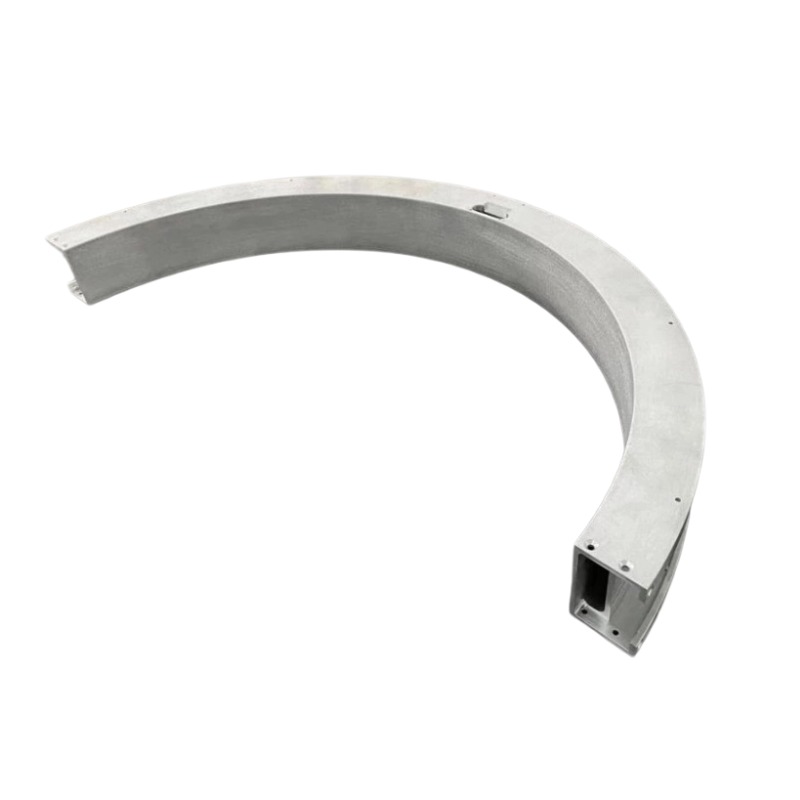
Closed-Loop Circulating Ring Guide Rail Aluminum Profile
Closed-loop circulating ring guide rail aluminum profiles - ring shuttle cars run continuously in a loop on the closed-loop track, passing through all joint positions every cycle. Joints with steps? The car jolts once every lap. Large closed-loop roundnes
Product Details
Closed-loop circulating ring guide rail aluminum profiles - ring shuttle cars run continuously in a loop on the closed-loop track, passing through all joint positions every cycle. Joints with steps? The car jolts once every lap. Large closed-loop roundness deviation? The car generates lateral force in some sections, wheel set wear accelerates, and positioning accuracy drops.
The core indicators of a ring guide rail are the full-circle closed-loop error and joint smoothness.
In fields such as intelligent warehousing, automated logistics, and electronics manufacturing, circulating conveyor systems are core equipment for improving production line efficiency. As the closed-loop track of circulating conveyor systems, the ring guide rail's full-circle accuracy, joint smoothness, and running stability directly determine whether cars can circulate continuously, without jamming, on the closed-loop path.
Made of 6063-T5 or 6061-T6 high-strength aluminum alloy, the complete closed-loop ring is formed in one pass by CNC precision roll bending, with full-circle closed-loop error ≤ ±0.4mm and curvature accuracy ≤0.5 degrees. A single profile can be rolled into a complete closed-loop track, reducing splicing points. Joints are precision-treated, flat and step-free, so cars can circulate continuously and smoothly without jamming or jolting. The track cross-section can integrate functional structures such as guide grooves and mounting fixing positions, formed by integral extrusion. Multiple closed-loop trajectories are supported, including single-ring, multi-ring, and S-shaped compound rings. The track working surface can be hard-anodized for wear resistance, adapting to high-frequency continuous cyclic operation conditions.
Core advantages at a glance:
| Advantage dimension | Technical indicator | Customer value |
|---|---|---|
| 🔄 High-precision closed loop | Full-circle closed-loop error ≤ ±0.4mm | Cars run smoothly across the entire path, with no lateral force |
| 🎯 High curvature accuracy | Curvature accuracy ≤0.5 degrees | Smooth turning without jamming |
| 🔧 Seamless joints | Joints flat and step-free | No impact as cars pass through every lap |
| 📐 Multi-trajectory customization | Single-ring / multi-ring / S-shaped compound ring | Adapted to various circulating conveyor scenarios |
| 🛡️ Wear-resistant reinforcement | Hard anodizing treatment | Low loss from high-frequency continuous circulation |
| ⚡ Fast delivery | Samples of conventional rings in 10-15 days, MOQ from 50kg | Controllable project cycle |
Ring guide rail vs. arc bent rail:
| Comparison dimension | Ring guide rail | Arc bent rail |
|---|---|---|
| Function | Complete closed-loop track system | Arc connecting section between straight segments |
| Operation mode | Cars run in continuous circulation | Car direction change |
| Core indicators | Full-circle closed-loop error, joint smoothness | Curvature accuracy, splicing accuracy |
| Splicing points | Multiple (multiple segments combined into a closed loop) | 2 (connecting straight segments) |
| Applicable scenarios | Ring shuttle cars / closed-loop conveyor lines | Curve conveying / direction change |
Aluminum alloy ring guide rail vs. steel ring guide rail:
| Comparison dimension | Aluminum alloy ring guide rail | Steel ring guide rail |
|---|---|---|
| Density | 2.7g/cm³ | 7.8g/cm³ |
| Weight | Light | Heavy |
| Full-circle error | ≤±0.4mm | ±1-2mm |
| Splicing gap | ≤0.3mm | Visible weld seams |
| Running noise | Low | High |
| Corrosion resistance | Excellent | Poor |
| Installation convenience | High | Low |
What does a full-circle closed-loop error of ≤ ±0.4mm mean:
The full-circle closed-loop error refers to the roundness deviation after the ring guide rail forms a complete closed loop - the maximum deviation between the spliced full circle and the theoretical design circle is ≤ ±0.4mm. This indicator directly determines whether cars can run continuously and smoothly on the closed-loop path. Excessive closed-loop error causes cars to generate lateral force in some sections, increasing wheel set wear and affecting running stability and positioning accuracy.
Closed-loop trajectory selection reference:
| Trajectory type | Applicable scenarios | Features |
|---|---|---|
| Single-ring | Single closed-loop circulating conveyor line | Simple structure; cars circulate along a single ring path |
| Multi-ring | Multi-station cyclic assembly lines | Multi-ring combination; cars can switch between different rings |
| S-shaped compound ring | Complex-path continuous circulation | S-shaped trajectory + ring combination, adapted to flexible production lines |
Typical application scenarios:
Ring intelligent warehousing systems
Closed-loop circulating conveyor lines
Electronic cyclic production lines
Ring sorting systems
Ring assembly lines
Continuous cyclic automated production lines
Ring shuttle car systems
FAQ (Frequently Asked Questions)
Q1: What is the difference between a ring guide rail and an arc bent rail?
A: The arc bent rail is a component of the track, an arc connecting section between straight segments used to change the travel direction of RGV cars. The ring guide rail is a complete closed-loop track system, combining multiple arc bent rails and straight segments into a complete closed-loop path on which cars can run continuously in a cycle. The core indicators of the ring guide rail are the full-circle closed-loop error and joint smoothness - full-circle closed-loop error ≤ ±0.4mm, joints flat and step-free, so cars can circulate continuously without jamming.
Q2: What does a full-circle closed-loop error of ≤ ±0.4mm mean?
A: The full-circle closed-loop error refers to the roundness deviation after the ring guide rail forms a complete closed loop. The ring guide rail is spliced from multiple bent rails and straight segments into a complete closed loop, and the maximum deviation between the spliced full circle and the theoretical design circle is ≤ ±0.4mm. This indicator directly determines whether cars can run continuously and smoothly on the closed-loop path. Excessive closed-loop error causes cars to generate lateral force in some sections and increases wheel set wear.
Q3: Why must the joints of a ring guide rail be flat and step-free?
A: Cars run continuously in a cycle on the closed-loop track, passing through all joint positions every lap. If joints have steps or excessive gaps, every time the car passes through it will generate impact and vibration; long-term operation leads to accelerated wheel set wear, increased running noise, and in severe cases affects car positioning accuracy. Flat, step-free joints are a core quality indicator of ring guide rails.
Q4: What is the difference between single-ring, multi-ring, and S-shaped compound rings?
A: The single-ring is the most basic closed-loop form, consisting of a single ring track along which cars circulate, suitable for simple cyclic conveyor lines. The multi-ring is composed of two or more ring tracks connected by direction-change tracks, so cars can switch between different rings. The S-shaped compound ring combines an S-shaped trajectory with rings, so cars switch between stations along the S-shaped path, adapting to the diverse path needs of flexible automated production lines.
Q5: How to choose the material for ring guide rails?
A: For conventional light-load ring guide rails (load capacity ≤300kg), 6063-T5 is selected - good formability and high surface finish; for heavy-load ring guide rails (load capacity 300kg-500kg) or high-speed running scenarios, 6061-T6 is selected - higher strength and better fatigue resistance. Under ring guide rail conditions, cars run continuously in a cycle, placing higher requirements on track fatigue strength than straight tracks; 6061-T6 is recommended for heavy-load or high-frequency scenarios.
Q6: How is closed-loop accuracy verified after ring guide rail installation?
A: After ring guide rail installation, accuracy acceptance mainly verifies three indicators: first, full-circle closed-loop error - measured with a total station or laser tracker, the deviation between the full circle and the theoretical design circle should be ≤ ±0.4mm; second, joint smoothness - height differences at all splices should be ≤0.3mm, gaps ≤0.5mm; third, track levelness - measured with a level gauge, the levelness deviation over the full track length should be ≤ ±2mm. We recommend a trial run of no fewer than 50 continuous cycles with an RGV car after installation.
Get the solution now
📞 Contact Manager Du: 13611846009
Provide ring system layout drawings or operating parameters, and our technical department will deliver a ring guide rail solution evaluation within 2 hours.
Free technical consultation | Ring guide rail solution design | Direct supply from source factory
GET A QUOTE
Once you have submitted your requirements, we will contact you as soon as possible regarding your product inquiry.:Closed-Loop Circulating Ring Guide Rail Aluminum Profile