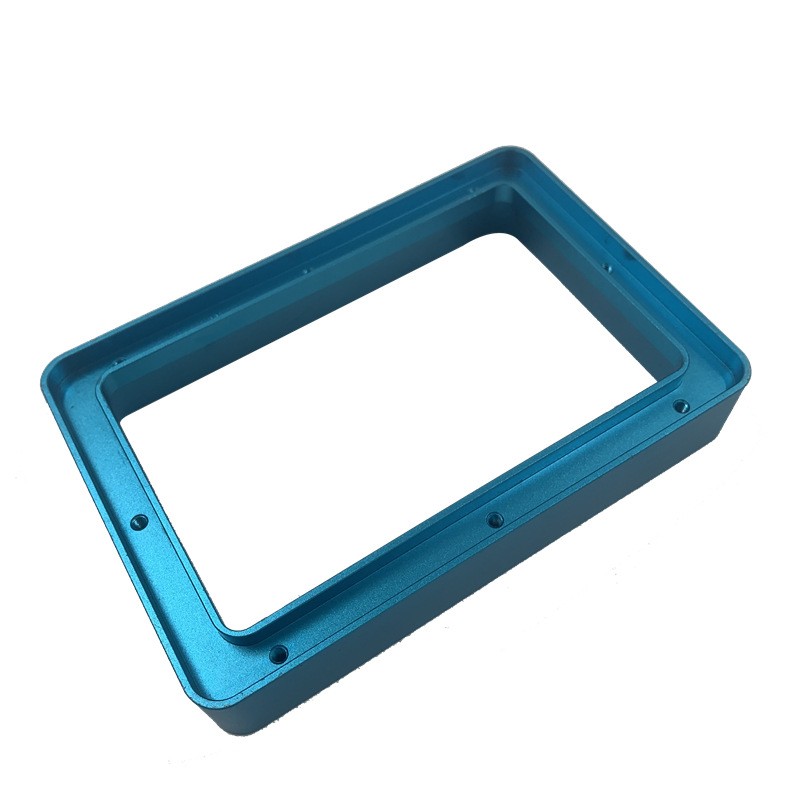
Aluminum product surface
Electrophoretic Coating (E-Coat) Aluminum Profiles
Electrophoretic coating (e-coat) aluminum profiles - coating thickness 15-35μm, gloss 60%-90% (high-gloss mirror), salt spray resistance ≥1000 hours, over 3 times that of ordinary anodizing. Supports transparent e-coat and colored e-coat (black, white, si
Product Details
Electrophoretic coating (e-coat) aluminum profiles - coating thickness 15-35μm, gloss 60%-90% (high-gloss mirror), salt spray resistance ≥1000 hours, over 3 times that of ordinary anodizing. Supports transparent e-coat and colored e-coat (black, white, silver, gold, etc.) customization; coating hardness 2H-4H, cross-hatch adhesion test grade 0, overall performance superior to powder coating. Shanghai Chuangsi Aluminum provides one-stop service from extrusion, CNC precision machining to electrophoretic coating, max. machining length 6500mm, applicable to 6063/6061 and other aluminum alloys; each batch is delivered with coating thickness and salt spray test reports.
Electrophoretic coating (e-coat) is a coating process in which a metal workpiece is immersed in water-based paint as the cathode, and direct current causes paint particles to uniformly deposit on the workpiece surface. Its working principle is that under an applied electric field, charged paint particles move toward the opposite electrode (the workpiece being coated) and deposit on the workpiece surface to form a uniform coating.
Electrophoretic coating features dense and uniform coating, high gloss, excellent corrosion resistance and high automation, with overall performance superior to powder coating; it is the ideal surface treatment solution for precision instruments, high-end equipment and medical device appearance parts.
Electrophoretic coating is one of the paint coating methods, on par with powder coating, liquid spraying, brush coating and roll coating; it has the characteristic of low environmental pollution, with paint utilization up to over 90%. The e-coat film is uniform and complete with almost no dead corners; the inside of workpieces, recessed areas and sharp edges all receive a uniform coating, making it especially suitable for complex-structure workpieces.
Core advantages at a glance:
| Advantage Dimension | Technical Indicator | Customer Value |
|---|---|---|
| Corrosion Resistance | Neutral salt spray ≥1000 hours | Over 3 times that of ordinary anodizing |
| High Gloss | Gloss 60%-90% | Mirror-smooth surface, premium feel |
| Uniform Coating | Thickness 15-35μm, dense and uniform | No dead corners on complex workpieces, uniform inside and out |
| Coating Hardness | Pencil hardness 2H-4H | Wear and scratch resistant, long-lasting |
| Strong Adhesion | Cross-hatch test grade 0 | Coating does not peel, high reliability |
| Diverse Colors | Transparent / black / white / silver / gold, etc. | Meets different appearance requirements |
| Environmental Friendly | Paint utilization over 90% | Low environmental pollution, low VOC |
| Fast Delivery | Standard sampling 3-5 days, bulk 5-7 days | Controllable project cycle |
01 Quality Starts From Raw Materials
High-quality aluminum profiles produced from A00 primary aluminum ingot, with clean and uniform substrate surface, ensuring excellent e-coat adhesion. 6xxx aluminum alloys (6063, 6061) give the best e-coat results, with uniform surface gloss and premium feel. Before e-coating, aluminum profiles must undergo degreasing, water rinsing, phosphating/passivation and other pretreatment to ensure the substrate is free of grease and oxide residue.
02 Professional E-Coat Process Control
Pretreatment: degreasing -> water rinse -> phosphating/passivation -> water rinse, removing surface oil and oxides
E-coating: workpiece immersed in the e-coat tank, direct current applied, paint particles uniformly deposited
Rinsing: ultrafiltration water rinse to remove surface floating paint
Curing: high-temperature baking to fully crosslink the coating
Cooling and inspection: unload and inspect after cooling
03 Excellent Coating Performance
The e-coat film has overall performance superior to powder coating; main advantages include:
Corrosion resistance: neutral salt spray ≥1000 hours, over 3 times that of ordinary anodizing
Gloss: 60%-90% (high gloss), mirror-smooth surface
Coating thickness: 15-35μm, uniform and dense
Hardness: 2H-4H (pencil hardness)
Adhesion: cross-hatch test grade 0 (no flaking by cross-cut method)
Environmental: e-coat water content is over 80%, low solvent content, low environmental pollution, paint utilization over 90%
04 Diverse Color Customization
Transparent e-coat: preserves the aluminum metallic texture while providing a high-gloss protective layer
Colored e-coat: black e-coat, white e-coat, silver e-coat, gold e-coat, etc.
Surface effects: high-gloss mirror, semi-gloss matte, metallic texture
05 Full-Process Quality Inspection
Strictly implements the ISO9001 quality management system; each batch is delivered with a coating thickness test report and salt spray test report. Key inspection indicators include: coating thickness (15-35μm), adhesion test (cross-hatch grade 0), pencil hardness (2H-4H), impact resistance, salt spray test (neutral salt spray ≥1000 hours), and gloss inspection.
Machining capability parameters:
| Item | Parameter / Description |
|---|---|
| Applicable Materials | 6063-T5, 6061-T6 and other mainstream aluminum alloy profiles |
| Executive Standard | GB/T 5237.5-2017, ISO9001 |
| Coating Thickness | 15-35μm |
| Gloss | 60%-90% (high gloss) |
| Pencil Hardness | 2H-4H |
| Adhesion | Cross-hatch test grade 0 |
| Salt Spray Resistance | ≥1000 hours (neutral salt spray) |
| Corrosion Resistance | Over 3 times that of ordinary anodizing |
| Color Choice | Transparent e-coat, black, white, silver, gold, etc. |
| Surface Effect | High-gloss mirror, semi-gloss, matte |
| Max. Machining Length | 6500mm |
| Supporting Machining | Extrusion, mold development, CNC precision machining |
| Production Location | Qingpu, Shanghai |
| MOQ | Supports small-batch customization |
E-coat vs powder coating vs anodizing:
| Comparison Item | Electrophoretic Coating (E-coat) | Powder Coating | Anodizing |
|---|---|---|---|
| Coating Thickness | 15-35μm | 60-120μm | 5-25μm |
| Gloss | High gloss (60%-90%) | Matte/semi-gloss/high gloss | Metallic luster |
| Salt Spray Resistance | ≥1000 hours | ≥500 hours | General |
| Appearance Texture | High-gloss mirror | Matte / textured / flat | Metallic texture |
| Color Richness | Limited (transparent/black/white/silver/gold) | Very rich (RAL color card) | Limited |
| Environmental | Excellent (low VOC) | Excellent (low VOC) | Excellent |
| Applicable Scenarios | Precision instruments / high-end appearance parts | General equipment / outdoor parts | General industrial parts |
Typical application scenarios:
Precision instrument housings e-coating
High-end inspection equipment appearance parts
Medical imaging equipment housings
Communication equipment panels
Optical instrument housings
High-end electronic equipment housings
Automotive interior aluminum profile surface treatment
Architectural decorative aluminum profiles
Rail transit interior parts
High-end consumer electronics housings
FAQ (Frequently Asked Questions)
Q1: What is the difference between e-coating and ordinary spraying?
A: E-coating is a process in which a metal workpiece is immersed in water-based paint as the cathode, and direct current causes paint particles to uniformly deposit on the workpiece surface; it is on par with powder coating, liquid spraying and brush coating. The core advantages of e-coating are: uniform and dense coating - the inside of workpieces, recessed areas and sharp edges all receive a uniform coating, especially suitable for complex-structure workpieces; paint utilization as high as over 90% with low environmental pollution; and overall coating performance superior to powder coating, with salt spray resistance ≥1000 hours, over 3 times that of ordinary anodizing. Ordinary spraying has problems such as dead corners, sagging and uneven thickness, which e-coating perfectly solves.
Q2: What standards can e-coating performance reach?
A: The e-coat film has excellent overall performance: coating thickness 15-35μm, gloss 60%-90% (high gloss, mirror-smooth surface), pencil hardness 2H-4H, adhesion cross-hatch test grade 0 (no flaking by cross-cut method), salt spray resistance ≥1000 hours (neutral salt spray), excellent weather resistance suitable for both indoor and outdoor use, and corrosion resistance over 3 times that of ordinary anodizing. The e-coat film has overall performance superior to powder coating; it is the ideal surface treatment solution for precision instruments, high-end equipment and medical device appearance parts.
Q3: What colors and surface effects can e-coating customize?
A: Supports transparent e-coat (preserving the aluminum metallic texture while providing a high-gloss protective layer), colored e-coat (black, white, silver, gold, etc.), and surface effects (high-gloss mirror, semi-gloss matte, metallic texture). Color choice is more limited than powder coating, but the high gloss and mirror effect of e-coating are difficult for powder coating to achieve, making it suitable for precision instruments and high-end appearance parts pursuing a high-gloss feel.
Q4: What are the requirements on aluminum alloy material for e-coating?
A: 6xxx aluminum alloys (6063, 6061) give the best e-coat results, with uniform surface gloss and premium feel. Before e-coating, aluminum profiles must undergo degreasing, water rinsing, phosphating/passivation and other pretreatment to ensure the substrate is free of grease and oxide residue. Pretreatment quality directly affects e-coat adhesion; we strictly implement pretreatment process specifications to ensure adhesion cross-hatch test grade 0 for every batch.
Q5: What advantages does e-coating have over anodizing?
A: E-coating and anodizing each have their own advantage areas. E-coating advantages: thicker coating (15-35μm vs 5-25μm), providing higher gloss (60%-90%) and richer surface effects (high-gloss mirror); salt spray resistance ≥1000 hours, over 3 times that of ordinary anodizing; and complete coverage of internal cavities and dead corners, suitable for complex-structure workpieces. Anodizing advantages: preserves metallic texture and has higher film hardness. The two are not substitutes but complementary depending on the application - choose e-coating for high gloss and protection, choose anodizing for metallic texture and hardness.
Q6: What is the MOQ and lead time for e-coating?
A: MOQ 50kg, supporting small-batch sampling and mass production. Standard e-coat sampling cycle 3-5 days, bulk delivery 5-7 days after sample approval. The e-coating process involves pretreatment, electrodeposition and curing steps, so the process cycle is slightly longer than ordinary spraying, but coating quality and overall performance are significantly superior, making it suitable for precision instruments and high-end appearance parts with high surface quality requirements.
Get Your Solution Now
Call Manager Du: 13611846009
Provide workpiece drawings or samples; our engineering team gives e-coating process assessment and quotation within 2 hours.
Free technical consultation | Free sample evaluation | One-stop delivery direct from source factory
GET A QUOTE
Once you have submitted your requirements, we will contact you as soon as possible regarding your product inquiry.:Electrophoretic Coating (E-Coat) Aluminum Profiles