
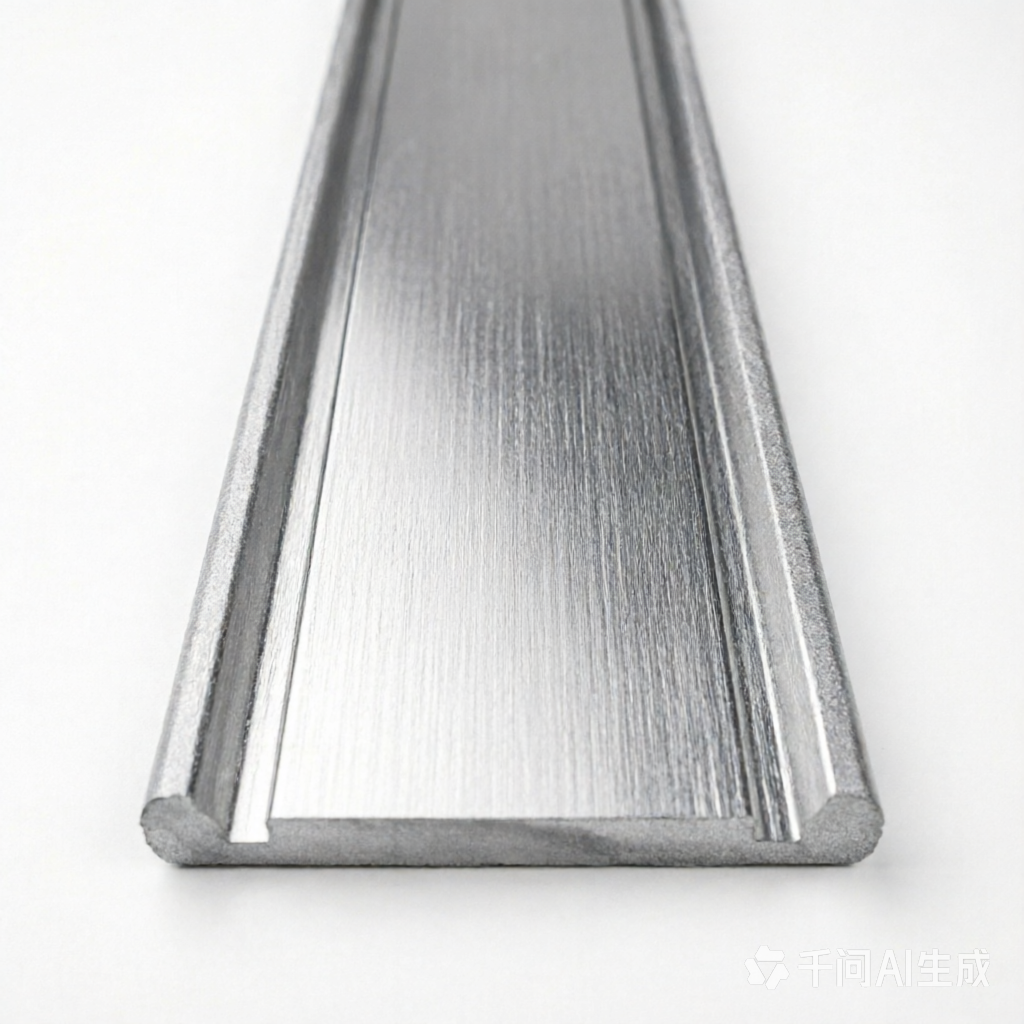
Aluminum product surface
Wire Drawing and Sandblasting Aluminum Profile
Aluminum profile wire drawing and sandblasting: wire drawing creates a delicate satin linear texture, while sandblasting creates a uniform matte frosted finish (Ra0.8-1.5μm), effectively concealing machining scratches and surface flaws and enhancing metal
Product Details
Aluminum profile wire drawing and sandblasting: wire drawing creates a delicate satin linear texture, while sandblasting creates a uniform matte frosted finish (Ra0.8-1.5μm), effectively concealing machining scratches and surface flaws and enhancing metallic texture and decorative appeal. Shanghai Chuangsi Aluminum Co., Ltd. provides one-stop service from extrusion and CNC finishing to wire drawing/sandblasting, with maximum machining length 6500mm, applicable to 6063/6061 and other aluminum alloys, and provides a surface roughness inspection report for each batch.
Wire drawing and sandblasting are the two most common mechanical surface treatment processes for aluminum profiles, belonging to physical processing and complementing chemical/electrochemical processes such as anodizing and electrophoretic coating. Both effectively conceal minor defects on aluminum alloy workpieces and enhance metallic texture and decorative appeal.
Wire drawing can eliminate abrasions, scratches and machining tool marks on aluminum alloy profiles, and the degree of elimination depends on drawing depth. Beyond eliminating surface defects on aluminum alloy workpieces, the more important role of wire drawing is to enhance the metallic texture and provide a strong decorative effect to improve product appearance. In recent years, wire drawing has been widely used for decorative housings of various electronic products, such as notebook panels, keyboards, phone panels and other digital product components.
Sandblasting uses the impact of high-speed sand flow to clean and roughen the substrate surface, giving the workpiece surface a certain cleanliness and different roughness. Sandblasting creates a uniform matte frosted finish, effectively removing machining marks and improving coating adhesion.
Core Advantages at a Glance:
| Advantage Dimension | Technical Indicator | Customer Value |
|---|---|---|
| Strong Decoration | Satin linear texture / uniform matte finish | Elevates product appearance |
| Conceals Defects | Effectively conceals abrasions, scratches and tool marks | Reduces defect rate, improves yield |
| Post-Processing Compatible | Can be paired with anodizing / powder coating | Obtain colored finishes or enhanced adhesion |
| Controllable Texture | Straight grain / random grain / sandblasting, multiple effects | Meets different appearance needs |
| Wide Machining Range | Maximum machining length 6500mm | Suited to long decorative profiles |
| Substrate Compatible | 6063/6061 aluminum alloy | Excellent machinability |
| Fast Delivery | Standard 2-3 day prototyping, 3-5 day bulk | Controllable project schedule |
01 Quality Starts with Raw Materials
High-quality aluminum profiles produced from A00 primary aluminum ingot have a clean, uniform substrate surface, ensuring clear wire drawing texture and even sandblasting effect. 6-series aluminum alloys (6063, 6061) have excellent machinability and are ideal substrates for wire drawing and sandblasting.
02 Professional Wire Drawing Process Control
Straight-grain drawing: uses flat-pressure belt sanders or roller brush drawing machines to pull a linear texture at uniform speed along a single direction. Belt grit is selectable from 80# to 600#; coarse grit produces a bold, tactile grain, while fine grit produces a delicate grain.
Random-grain drawing: uses scouring pads or irregular grinding wheels to create a non-directional texture.
Drawing depth control: the greater the drawing depth, the stronger the defect-concealing ability. After drawing, the surface presents a satin linear directional appearance with soft reflection.
03 Professional Sandblasting Process Control
Blasting pressure: generally 0.3-0.6MPa
Blasting distance: 10-30cm
Blasting angle: 45 to 90°
Abrasive selection: alumina sand, glass beads, garnet, etc.
Grain size: 80#-150#
Surface roughness: Ra0.8-1.5μm
04 Wire Drawing/Sandblasting with Post-Processing
After wire drawing/sandblasting, anodizing (natural color or colored) can be added on request; the drawing texture remains clearly visible under the anodic film, and the sandblasted matte finish becomes more uniform and delicate after anodizing.
After sandblasting, powder coating or painting can be added; the sandblasted surface has high cleanliness and uniform roughness, favoring paint flow and decoration, and coating adhesion is superior to smooth surfaces.
Wire drawing or sandblasting provides decoration while concealing surface defects on aluminum alloy workpieces.
05 Full-Process Quality Inspection
We strictly implement the ISO9001 quality management system and provide a surface roughness inspection report for each batch. Key inspection indicators include: surface texture consistency check, roughness measurement, surface defect detection and dimensional accuracy verification.
Machining capability parameters:
| Item | Parameter / Description |
|---|---|
| Applicable Materials | 6063-T5, 6061-T6 and other mainstream aluminum alloy profiles |
| Executive Standard | GB/T 5237.2-2017, ISO9001 |
| Wire Drawing Form | Straight-grain drawing, random-grain drawing |
| Drawing Belt Grit | 80#-600# (coarse -> bold tactile grain, fine -> delicate grain) |
| Blasting Pressure | 0.3-0.6MPa |
| Blasting Distance | 10-30cm |
| Blasting Angle | 45°-90° |
| Blasting Abrasive | Alumina sand, glass beads, garnet |
| Blasting Roughness | Ra0.8-1.5μm |
| Surface Effect | Matte frosted (sandblasting) / satin linear texture (wire drawing) |
| Maximum Machining Length | 6500mm |
| Supporting Treatment | Anodizing (natural/colored), powder coating, painting |
| Production Location | Qingpu, Shanghai |
| MOQ | Supports small-batch customization |
Wire Drawing vs. Sandblasting Effect Comparison:
| Comparison Item | Wire Drawing | Sandblasting |
|---|---|---|
| Surface Effect | Linear texture, satin finish | Uniform matte, frosted finish |
| Reflection Characteristic | Directional reflection, soft | Diffuse reflection, non-reflective |
| Texture Direction | Directional (straight/random grain) | Non-directional, uniformly distributed |
| Defect-Concealing Ability | Strong (deeper = stronger concealment) | Moderate (only minor scratches allowed) |
| Post-Processing Compatibility | Can be anodized / coated | Can be anodized / coated (better adhesion) |
| Typical Applications | Electronic product housings, panels, decorative parts | Equipment housings, chassis, industrial parts |
Typical Applications:
Premium electronic product housings (notebook panels, phone housings, keyboard panels)
Consumer electronics housings, digital product appearance parts
Medical device panels, precision instrument housings
Architectural decorative aluminum profiles, furniture decorative parts
Automotive interior panels, smart home product housings
Premium display equipment appearance parts
FAQ (Frequently Asked Questions)
Q1: What is the difference between wire drawing and sandblasting?
A: Wire drawing creates a linear texture on the aluminum profile surface through abrasive belts or drawing wheels, producing a satin linear directional appearance with soft, directional reflection (straight/random grain), effectively concealing surface scratches and machining flaws; the greater the drawing depth, the stronger the defect-concealing ability. Sandblasting uses high-speed sand flow impact on the aluminum surface to create a uniform matte finish, with diffuse reflection, non-reflective and non-directional, producing uniform roughness of Ra0.8-1.5μm. Wire drawing suits appearance parts seeking metallic texture, while sandblasting suits industrial and appearance parts seeking a uniform matte finish. Both effectively conceal minor defects on aluminum alloy workpieces and enhance metallic texture and decorative appeal.
Q2: How well does wire drawing conceal surface defects on aluminum profiles?
A: Wire drawing can eliminate abrasions, scratches and machining tool marks on aluminum alloy profiles, and the degree of elimination depends on drawing depth: the greater the drawing depth, the stronger the defect-concealing ability. Beyond eliminating surface defects, the more important role of wire drawing is to enhance metallic texture and provide a strong decorative effect to improve product appearance. In recent years, wire drawing has been widely used for decorative housings of various electronic products, such as notebook panels, keyboards, phone panels and other digital product components.
Q3: What surface effects can wire drawing and sandblasting produce?
A: Wire drawing supports straight-grain drawing (using flat-pressure belt sanders or roller brush drawing machines to pull a linear texture at uniform speed along a single direction, with belt grit selectable from 80# to 600#, coarse grit for a bold tactile grain and fine grit for a delicate grain) and random-grain drawing (using scouring pads or irregular grinding wheels to create a non-directional texture). Sandblasting achieves matte frosted effects of varying roughness by adjusting blasting pressure (0.3-0.6MPa), blasting distance (10-30cm), blasting angle (45 to 90°) and abrasive selection (alumina sand, glass beads, garnet). Wire drawing or sandblasting provides decoration while concealing surface defects on aluminum alloy workpieces.
Q4: What aluminum alloy material requirements apply to wire drawing and sandblasting?
A: 6-series aluminum alloys (6063, 6061) have excellent machinability and are ideal substrates for wire drawing and sandblasting. High-quality aluminum profiles produced from A00 primary aluminum ingot have a clean, uniform substrate surface, ensuring clear drawing texture and even sandblasting effect. Different materials show slightly different results after wire drawing and sandblasting: 6063-T5 has a delicate surface suited to fine drawing, while 6061-T6 has slightly higher hardness and is suited to maintaining dimensional accuracy after sandblasting. We recommend the most suitable material based on your texture and surface quality requirements.
Q5: What post-processing can follow wire drawing and sandblasting?
A: After wire drawing/sandblasting, the following can be added on request: anodizing (natural color or colored), where the drawing texture remains clearly visible under the anodic film and the sandblasted matte finish becomes more uniform and delicate after anodizing; powder coating or painting, where the sandblasted surface has high cleanliness and uniform roughness, favoring paint flow and decoration, with coating adhesion superior to smooth surfaces. Wire drawing or sandblasting provides decoration while concealing surface defects on aluminum alloy workpieces.
Q6: What is the MOQ and lead time for wire drawing and sandblasting?
A: MOQ is 50kg, supporting small-batch prototyping and bulk production. Standard wire drawing/sandblasting prototyping takes 2-3 days, and bulk lead time is 3-5 days after sample confirmation. Wire drawing and sandblasting are physical surface treatment processes with short process cycles, suited to projects with tight lead times.
Get Your Solution Now
Contact Manager Du: 13611846009
Provide workpiece drawings or samples, and our engineering department will deliver the wire drawing/sandblasting process assessment and quotation within 2 hours.
Free Technical Consultation | Free Sample Evaluation | One-Stop Delivery from Source Factory
GET A QUOTE
Once you have submitted your requirements, we will contact you as soon as possible regarding your product inquiry.:Wire Drawing and Sandblasting Aluminum Profile