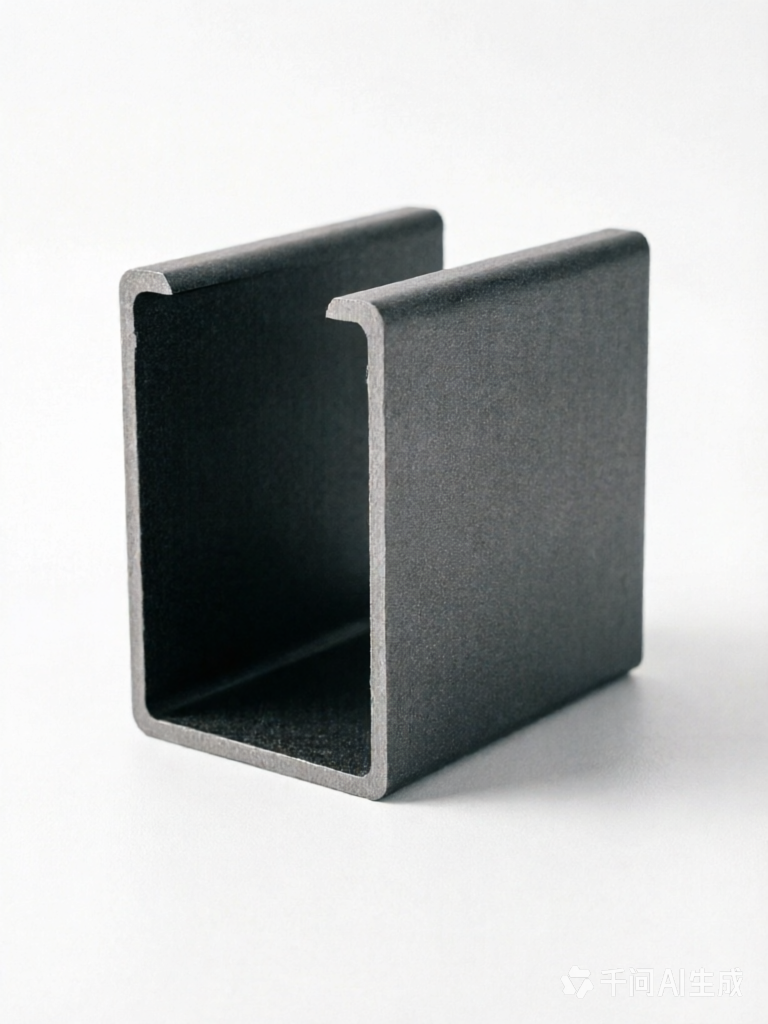
Aluminum product surface
Hard Anodizing Service
Hard anodizing - grows an extremely thick, extremely hard ceramic aluminum-oxide coating on the aluminum surface, with film hardness HV400-600, 3x or harder than ordinary anodizing, designed for high wear resistance, heat resistance, insulation, and corro
Product Details
Hard anodizing - grows an extremely thick, extremely hard ceramic aluminum-oxide coating on the aluminum surface, with film hardness HV400-600, 3x or harder than ordinary anodizing, designed for high wear resistance, heat resistance, insulation, and corrosion resistance. Shanghai Chuangsi Aluminum provides a one-stop service from extrusion and CNC finishing to hard anodizing, max. machining length 6500mm, suitable for 6061/6063/7075/2A12 and other alloys, with film-thickness and hardness inspection reports each batch.
Core advantages at a glance:
| Advantage dimension | Technical metric | Customer value |
|---|---|---|
| Super-high hardness | HV400-600 | 3x or harder than ordinary anodizing, excellent wear resistance |
| Dielectric breakdown voltage | ≥1500V | Good insulation performance, suited to electrical insulation |
| Heat resistance | Melting point as high as 2050 C | Performance stays stable under high-temperature conditions |
| Self-lubricating | Friction coefficient 0.1-0.3 | Operates normally under oil-free lubrication |
| Controllable film thickness | ≥25μm, standard 50-80μm, special up to 250μm | Choose the right film thickness by working conditions |
| Dimensional effect | Film growth is about 50% of the formed film thickness | Allow for growth in finishing to ensure assembly precision |
| Fast delivery | Standard 3-5 days, batch 5-7 days | Predictable project timeline |
01 Quality Starts from Raw Materials
High-quality aluminum profiles produced from A00 primary aluminum ingot. Note: hard-anodized film hardness is closely tied to the base material - on pure aluminum it can reach HV1500, while on alloy aluminum it is somewhat lower (HV400-800).
02 Professional Hard-Anodizing Process Control
Bath temperature: 0-5 °C low-temperature electrolyte (standard DC process); the lower the temperature, the harder the oxide film
Bath concentration: sulfuric acid concentration <15% (ordinary about 20%), low film solubility
Current density: 2-5A/dm² (standard DC)
Working voltage: above 25V (far above the under-18V of ordinary anodizing)
Additives: organic acids such as oxalic or tartaric acid added to sulfuric acid
Power supply: pulsed or special-waveform supply; applied voltage should be ramped up gradually
03 Core Performance Parameters
Film thickness: ≥25μm (standard 50-80μm, special up to 250μm)
Film hardness: HV≥350 (up to 400-600HV on industrial profiles)
Dielectric breakdown voltage: ≥1500V
Salt-spray resistance: up to thousands of hours after sealing
Appearance: gray-brown, dark gray to black (thicker film = deeper color)
Dimensional effect: film growth is about 50% of the formed film thickness
Melting point: as high as 2050 C
04 Full-Process Quality Inspection
We strictly apply the ISO9001 quality system and GB/T 19822-2024 "Specifications for hard anodic oxide coatings on aluminum and aluminum alloys". Each batch comes with oxide-film thickness and hardness inspection reports. Key inspection items include film thickness (≥25μm), micro-hardness (HV≥350), dielectric breakdown voltage, and salt-spray testing.
Machining capability parameters:
| Item | Parameter/Description |
|---|---|
| Applicable alloys | 6061-T6, 6063-T5, 7075-T6, 2A12, and other aluminum alloys |
| Executive standard | GB/T 19822-2024, ISO9001 |
| Film thickness | ≥25μm (standard 50-80μm, special up to 250μm) |
| Film hardness | HV≥350 (up to 400-600HV on industrial profiles) |
| Dielectric breakdown voltage | ≥1500V |
| Salt-spray resistance | Up to thousands of hours after sealing |
| Appearance | Gray-brown, dark gray to black (thicker film = deeper color) |
| Electrolyte temperature | 0-5 °C (low-temperature process) |
| Current density | 2-5A/dm² |
| Working voltage | ≥25V |
| Max. machining length | 6500mm |
| Supporting processing | Extrusion, mold development, CNC finishing |
| Production location | Qingpu, Shanghai |
| MOQ | Small-batch customization supported |
Hard anodizing vs. ordinary anodizing:
| Comparison item | Hard anodizing | Ordinary anodizing |
|---|---|---|
| Film thickness | ≥25μm (standard 50-80μm) | 5-25μm |
| Film hardness | HV≥350 (up to 400-600HV) | HV200-350 |
| Dielectric breakdown voltage | ≥1500V | <500V |
| Salt-spray resistance | Thousands of hours | General |
| Appearance | Gray-brown / dark gray / black | Silver-white / champagne / colored |
| Electrolyte temperature | 0-5 °C low temperature | 19-21 °C room temperature |
| Current density | 2-5A/dm² | About 1.5A/dm² |
| Working voltage | ≥25V | ≤18V |
| Application | Function-focused (wear/heat/insulation) | Decoration-focused |
| Surface flatness | Somewhat lower | Flat |
Typical applications:
Hydraulic and pneumatic systems: hydraulic cylinder bores, pneumatic cylinder bores, piston rods, metering products
Automation and robotics: robot arms, linear guide rails, slides, bearing housings, tooling jigs and fixtures
Precision machinery: die guide pillars and bushes, precision sliding parts, wear-resistant components
Aerospace: structural parts, landing gear components, satellite components, airborne equipment brackets
Semiconductor equipment: equipment components, precision motion platforms
Defense equipment: weapon equipment components
Medical devices: precision instrument moving parts, medical device aluminum parts
FAQ (Frequently Asked Questions)
Q1: What is the difference between hard anodizing and ordinary anodizing?
A: Hard anodizing (hard anodic oxidation) differs from ordinary anodizing in six core ways: (1) Film thickness - hard anodizing ≥25μm (standard 50-80μm), ordinary only 5-25μm; (2) Film hardness - hard anodizing HV≥350 (up to 400-600HV on industrial profiles), far exceeding ordinary (HV200-350); (3) Electrolyte temperature - hard anodizing at 0-5 °C, ordinary at 19-21 °C; (4) Working voltage - hard anodizing ≥25V, ordinary ≤18V; (5) Dielectric breakdown voltage - hard anodizing ≥1500V, ordinary <500V; (6) Application - hard anodizing is function-focused (wear/heat/insulation), ordinary is decoration-focused. The hard-anodized film is essentially alpha-phase aluminum oxide, with micro-hardness up to HV400-600, far beyond hardened steel and hard-chrome plating, and a melting point as high as 2050 °C.
Q2: What film thickness and hardness can hard anodizing reach?
A: Film thickness ≥25μm, standard process up to 50-80μm, special up to 250μm. Film hardness HV≥350, up to 400-600HV on industrial profiles. Note: hard-anodized film hardness is closely tied to the base material - on pure aluminum up to HV1500, on alloy aluminum somewhat lower (HV400-800). Dielectric breakdown voltage ≥1500V, and salt-spray resistance up to thousands of hours after sealing. Appearance is gray-brown, dark gray to black; thicker film = deeper color.
Q3: What are the aluminum alloy requirements for hard anodizing?
A: Alloys suited to hard anodizing include 6061-T6, 6063-T5, 7075-T6, and 2A12. Note: hard-anodized film hardness is closely tied to the base material - on pure aluminum up to HV1500, on alloy aluminum somewhat lower (HV400-800). Higher-copper alloys (such as 2A12) produce a darker film after hard anodizing, with slightly lower hardness but still excellent wear resistance. The film has good self-lubrication, with a friction coefficient as low as 0.1-0.3, operating normally under oil-free lubrication.
Q4: How is hard anodizing priced?
A: Priced by workpiece surface area, film-thickness requirement, and material. Standard thickness 25-50μm is priced by area; special thickness (above 80μm) requires extra evaluation. Free evaluation and quotation on samples; welcome to send drawings for consultation.
Q5: What effect does hard anodizing have on workpiece dimensions?
A: The hard-anodized film grows half inward and half outward, so the dimensional growth is about 50% of the formed film thickness - i.e. a 100μm film adds about 50μm to the workpiece size. For high-precision mating parts (such as hydraulic cylinder bores and slide guide rails), allow film-growth allowance in CNC finishing to ensure post-anodizing dimensions meet assembly. We can calculate the allowance per customer drawings.
Q6: What are typical applications of hard anodizing?
A: Mainly used in hydraulic and pneumatic systems (hydraulic cylinder bores, pneumatic cylinder bores, piston rods, metering products - the hard-anodized layer is wear- and corrosion-resistant and heat-resistant; hydraulic cylinder bores last 3-5x longer after hard anodizing), automation and robotics (robot arms, linear guide rails, slides, bearing housings, jigs and fixtures - the film's friction coefficient is as low as 0.1-0.3 and works under oil-free lubrication, suiting robot joints and precision sliding parts), precision machinery (die guide pillars and bushes, precision sliding parts, wear-resistant components), aerospace (structural parts, landing gear components, satellite components, airborne equipment brackets), semiconductor equipment (equipment components, precision motion platforms), defense equipment (weapon components), and medical devices (precision instrument moving parts, medical device aluminum parts). Hard anodizing suits functional applications requiring high wear, heat, and insulation performance.
Q7: What are the MOQ and lead time for hard anodizing?
A: MOQ is 50kg, supporting small-batch prototyping and batch production. Standard hard anodizing takes 3-5 days, and batch lead time is 5-7 days after sample confirmation. The process involves low-temperature electrolyte (0-5 °C) and high current density (2-5A/dm²), so the cycle is slightly longer than ordinary anodizing; we recommend discussing film thickness and hardness requirements in advance.
Get a solution now
Call Manager Du: 13611846009
Provide workpiece drawings or samples, and our engineering team gives a hard-anodizing process assessment and quotation within 2 hours.
Free technical consultation | Free evaluation on samples | One-stop delivery from source factory
GET A QUOTE
Once you have submitted your requirements, we will contact you as soon as possible regarding your product inquiry.:Hard Anodizing Service