Aluminum product surface
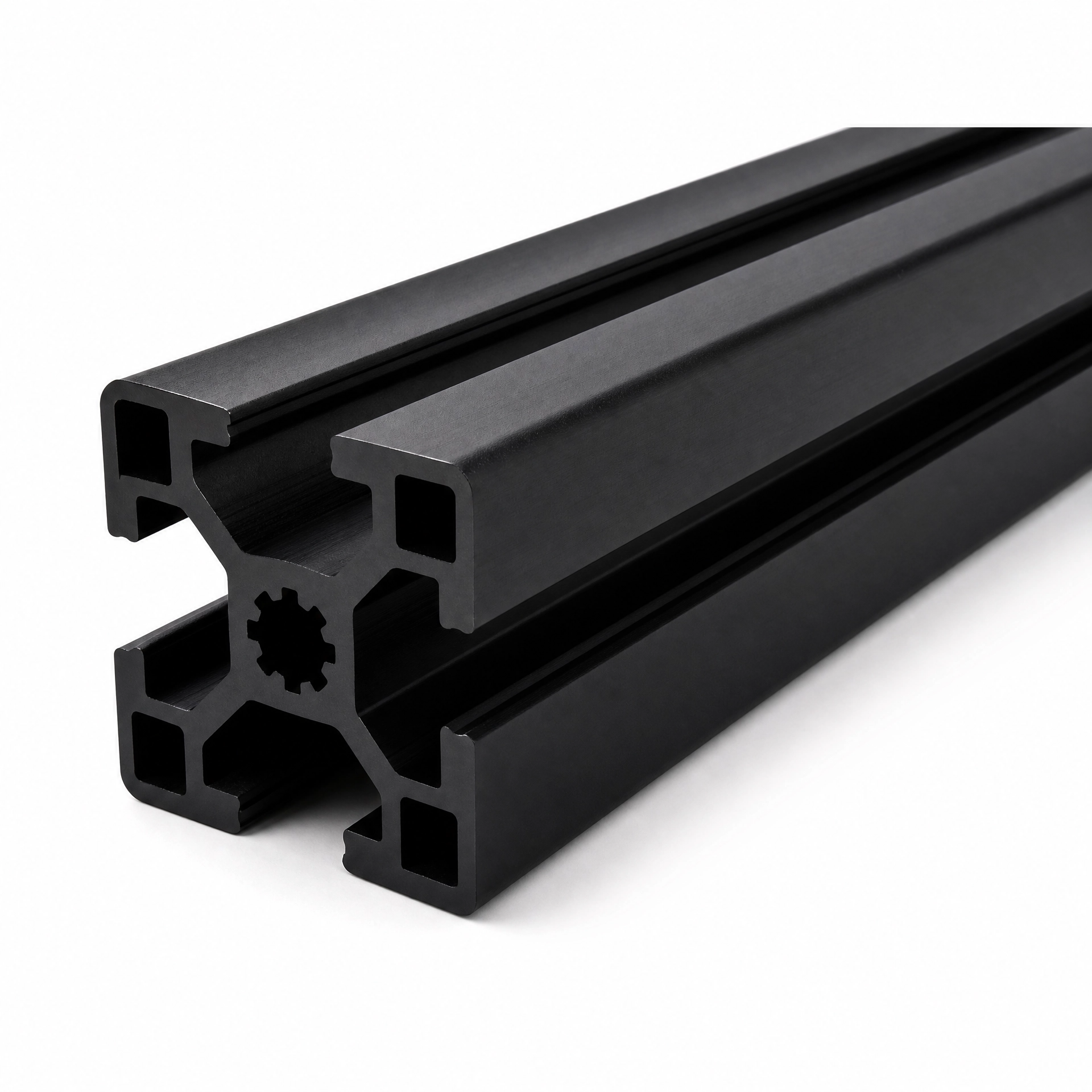
Anodized Aluminum Profile
Anodized aluminum profiles - oxide film thickness 5-25μm, surface hardness 200-300HV, supporting customization of various colors including natural color (silver-white), champagne, black, bronze, and gold; surface textures available in sandblasted anodizin
Product Details
Anodized aluminum profiles - oxide film thickness 5-25μm, surface hardness 200-300HV, supporting customization of various colors including natural color (silver-white), champagne, black, bronze, and gold; surface textures available in sandblasted anodizing, brushed anodizing, polished anodizing, and matte anodizing. Shanghai Chuangsi Aluminum Co., Ltd. provides one-stop service from extrusion and CNC precision machining to anodizing and sealing, with maximum machining length of 6500mm, applicable to 6-series aluminum alloys such as 6063/6061, with oxide film thickness and salt spray test reports provided for each batch.
Anodizing is an electrochemical oxidation surface treatment process for aluminum alloys. Using the aluminum profile as the anode and passing direct current through the electrolyte, a dense porous oxide film (Al2O3) is formed on the aluminum profile surface. This oxide film consists of a dense barrier layer and a porous layer, effectively improving the profile surface's oxidation resistance, hardness, and mechanical properties.
Core advantages at a glance:
| Advantage dimension | Technical indicator | Customer value |
|---|---|---|
| 🛡️ Corrosion-resistant | Excellent salt spray resistance after sealing | Suitable for various indoor and outdoor environments |
| 💪 Surface hardness | 200-300HV | Good wear resistance, not easily worn after long-term use |
| 🎨 Rich colors | Silver-white / champagne / black / bronze / gold | Meets different appearance requirements |
| ✨ Diverse surface textures | Sandblasted / brushed / polished / matte | Meets different decorative effects |
| 📏 Controllable film thickness | 5-25μm adjustable | Film thickness selected according to usage environment |
| 🌿 Environmental friendly | No VOC emissions | Meets environmental requirements |
| ⚡ Fast delivery | Sampling in 2-3 days for standard specs, batch in 3-5 days | Controllable project cycle |
01 Quality Starts With Raw Materials
Premium aluminum profiles produced from A00 primary aluminum ingot; 6-series aluminum alloys (6063, 6061) easily yield colorless, transparent, uniform and dense oxide films, making them the preferred material for anodizing. Oxide film uniformity is guaranteed from the source.
02 Professional Anodizing Process Control
Pre-treatment: degreasing -> alkaline etching -> neutralization, removing surface oil and natural oxides to obtain a uniform pre-treated surface
Anodizing: 19-21C electrolyte, sulfuric acid concentration 50-65g/L, current density 130-150A/m2
Coloring: electrolytic coloring (silver-white, champagne, bronze, black, etc.) or chemical dyeing
Sealing: high-temperature sealing treatment to ensure oxide film corrosion resistance and color persistence
03 Diverse Colors and Surface Textures
Color options: natural color (silver-white), champagne, black, bronze, gold, etc.
Surface textures: sandblasted anodizing, brushed anodizing, polished anodizing, matte anodizing
Color difference control: oxidation bath temperature and concentration are strictly managed to ensure batch product color consistency
04 Full-Process Quality Inspection
Strictly implementing the ISO9001 quality management system; oxide film thickness inspection reports and salt spray test reports are provided for each batch, ensuring products meet GB/T 5237.2-2017 standard requirements.
Processing capability parameters:
| Item | Parameter/Description |
|---|---|
| Applicable materials | 6063-T5, 6061-T6 (6-series aluminum alloys have the best anodizing effect) |
| Execution standards | GB/T 5237.2-2017, ISO 7599 |
| Oxide film thickness | 5-25μm |
| Surface hardness | 200-300HV |
| Color options | Natural color (silver-white), champagne, black, bronze, gold |
| Surface texture | Sandblasted anodizing, brushed anodizing, polished anodizing, matte anodizing |
| Maximum machining length | 6500mm |
| Supporting machining | Extrusion, mold development, CNC precision machining, sandblasting, brushing |
| Sealing method | High-temperature sealing |
| Production location | Qingpu, Shanghai |
| MOQ | Small-batch customization supported |
Anodizing vs. hard anodizing vs. powder coating:
| Comparison item | Anodizing | Hard anodizing | Powder coating |
|---|---|---|---|
| Film thickness | 5-25μm | ≥25μm (standard 50-80μm) | 60-120μm |
| Surface hardness | 200-300HV | HV≥350 (up to 400-600HV) | 2H-4H (pencil hardness) |
| Salt spray resistance | Excellent after sealing | ≥96 hours | ≥500 hours |
| Color options | Silver-white / champagne / black / bronze / gold | Gray-brown / dark gray / black | Full RAL/Pantone color range |
| Surface texture | Metallic texture | Function-oriented | Smooth / textured / hammer-tone, etc. |
| Applicable scenarios | General industrial / appearance parts | High-frequency wear / heavy load | General equipment / outdoor parts |
| Cost | Moderate | Relatively high | Moderate |
Anodizing color and texture selection reference:
| Color/texture | Process characteristics | Applicable scenarios |
|---|---|---|
| Natural color (silver-white) anodizing | Preserves the natural metallic luster of aluminum, classic and durable | General industrial equipment, automation frames |
| Champagne anodizing | Elegant warm tone, anodizing electrolytic coloring | High-end equipment enclosures, architectural decoration |
| Black anodizing | Calm and stately, good light shielding, dirt-resistant and wear-resistant | Optical equipment, electronic products, instruments and meters |
| Bronze/gold anodizing | Retro/luxurious texture | Decorative components, high-end consumer goods |
| Sandblasted anodizing | Fine matte surface, good hand feel, fingerprint-resistant | Handheld devices, electronic product enclosures |
| Brushed anodizing | Clear metallic texture, high-end feel | High-end equipment panels, consumer electronics |
Typical application scenarios:
Anodizing of industrial aluminum profile enclosures
Surface treatment for automated equipment frames
Oxidation of electronic product enclosures (phones, computers, smart hardware)
Surface treatment for architectural decorative aluminum profiles
Oxidation of heat sink aluminum profiles (improving heat dissipation efficiency and appearance)
Surface treatment for aluminum medical device components
Oxidation of communication equipment aluminum profiles
Surface treatment for automotive aluminum parts
FAQ (Frequently Asked Questions)
Q1: What is the difference between anodizing and hard anodizing?
A: Anodizing and hard anodizing are essentially the same electrochemical process, but with different process parameters and application scenarios. Anodizing is performed in a 19-21C room-temperature electrolyte, with oxide film thickness 5-25μm, surface hardness 200-300HV, rich colors (natural color, champagne, black, bronze, gold, etc.), primarily for decoration and protection. Hard anodizing is performed in a 0-5C low-temperature electrolyte, with oxide film thickness ≥25μm (standard 50-80μm), hardness HV≥350 (up to 400-600HV for industrial aluminum profiles), primarily functional (wear/heat resistance/insulation). The two are not substitutes; they are chosen based on application scenarios - choose anodizing for diverse colors and appearance texture, choose hard anodizing for ultimate wear resistance and functionality.
Q2: What standards can anodized film properties achieve?
A: Anodized film thickness is normally controlled at 5-25μm, surface hardness 200-300HV. The oxide film consists of a dense barrier layer and a porous layer; the porous layer can adsorb dyes for coloring, making aluminum products both protective and decorative. Anodizing not only provides protection but is also wear-resistant and corrosion-resistant; the oxide film has high hardness and wear resistance, extremely strong adhesion, strong adsorption capacity, good corrosion resistance, and electrical insulation. After sealing treatment, salt spray corrosion resistance is excellent, meeting GB/T 5237.2-2017 standard requirements.
Q3: Which colors and surface textures can be customized for anodizing?
A: Colors support natural color (silver-white, preserving the natural metallic luster of aluminum, classic and durable), champagne (elegant warm tone, anodizing electrolytic coloring), black (calm and stately, good light shielding, dirt-resistant and wear-resistant), bronze, gold, etc. Surface textures include sandblasted anodizing (fine matte surface, good hand feel, fingerprint-resistant), brushed anodizing (clear metallic texture, high-end feel), polished anodizing (high-gloss mirror effect), and matte anodizing (soft matte texture). 6-series aluminum alloys (6063, 6061) easily yield colorless, transparent, uniform and dense oxide films, making them the preferred material for anodizing.
Q4: What are the aluminum alloy material requirements for anodizing?
A: 6-series aluminum alloys (6063, 6061) easily yield colorless, transparent, uniform and dense oxide films, making them the preferred material for anodizing. Before anodizing, aluminum profiles require strict pre-treatment including degreasing (removing residual surface oil), alkaline or acid etching (removing natural oxides), and neutralization, to obtain a better profile surface state and make the electrolytically formed oxide film more uniform. Base material quality directly affects oxide film uniformity and color consistency; the premium aluminum profiles we produce from A00 primary aluminum ingot guarantee oxide film quality from the source.
Q5: What advantages does anodizing have compared with powder coating?
A: Anodizing and powder coating each have their own advantage areas. Anodizing advantages: preserves metallic texture - the oxide film is transparent and the natural metallic luster of aluminum is clearly visible; higher film hardness (200-300HV vs. powder coating 2H-4H); better wear resistance; UV resistance without fading (the oxide film is inorganic, with no aging/fading issues). Powder coating advantages: extremely high color richness (full RAL/Pantone range + special effects) and thicker coating (60-120μm). The two are not substitutes but complementary based on application scenarios - choose anodizing for metallic texture and wear resistance, choose powder coating for rich colors and heavy coatings.
Q6: What are the MOQ and lead time for anodizing?
A: The MOQ is 50kg, supporting small-batch sampling and batch production. The standard anodizing sampling cycle is 2-3 days, and batch delivery is 3-5 days after sample confirmation. The anodizing process is mature and stable with a short lead time, suitable for projects with tight schedules.
Get the solution now
📞 Contact Manager Du: 13611846009
Provide workpiece drawings or samples, and our technical department will deliver an anodizing process evaluation and quotation within 2 hours.
Free technical consultation | Free sample evaluation | One-stop delivery from source factory
GET A QUOTE
Once you have submitted your requirements, we will contact you as soon as possible regarding your product inquiry.:Anodized Aluminum Profile