
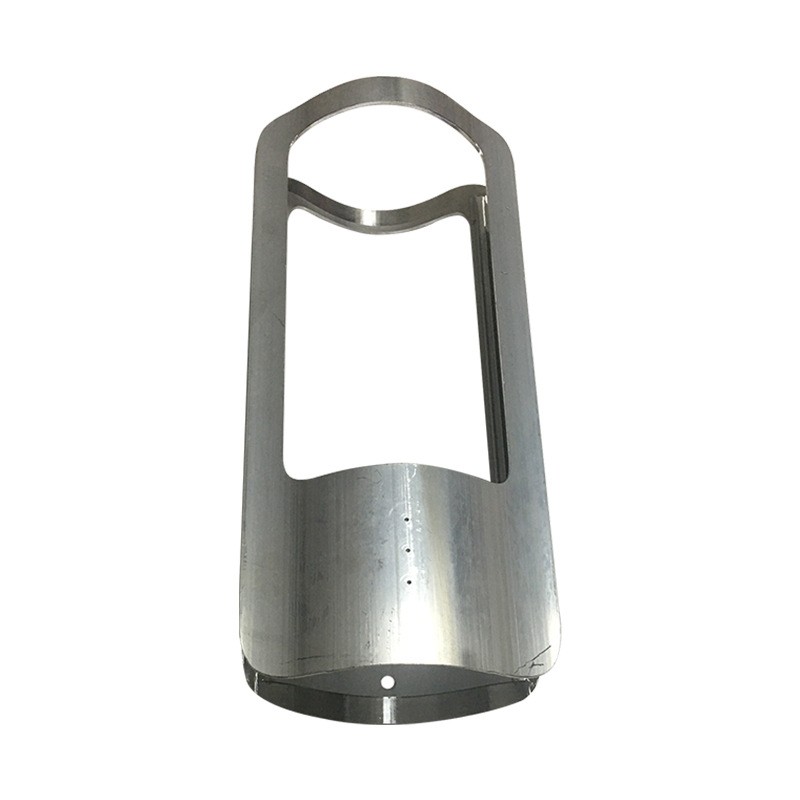
Aluminum Product Processing
Aluminum Profile CNC Cavity Machining
Aluminum profile CNC cavity machining is a high-precision CNC machining service for aluminum alloy cavity-type parts, targeting fields such as 5G communications, RF and microwave, semiconductor equipment, medical devices and military electronics. Cavity p
Product Details
Aluminum profile CNC cavity machining is a high-precision CNC machining service for aluminum alloy cavity-type parts, targeting fields such as 5G communications, RF and microwave, semiconductor equipment, medical devices and military electronics. Cavity parts are core structural components in electronic equipment, communication devices and precision instruments, typically featuring deep cavities, thin walls, complex internal contours and multiple mounting holes, with strict requirements for machining accuracy, surface quality and cavity cleanliness.
Cavity machining is one of the most difficult categories in CNC milling. Unlike ordinary face milling or profile milling, cavity machining requires digging a cavity of a certain depth and complex shape inside the profile, while ensuring the accuracy of the cavity bottom and sidewalls, the internal finish of the cavity, and the dimensional stability of thin-wall areas. The deeper the cavity, the thinner the wall and the more complex the internal features, the higher the machining difficulty and precision control requirements.
Shanghai Chuangsi Aluminum Co., Ltd. is located in Qingpu, Shanghai, with its own factory equipped with five-axis/three-axis CNC machining centers, adopting dedicated deep-cavity milling processes and minimum quantity lubrication technology. To address common deep-cavity challenges such as difficult chip evacuation, long tool overhang and accumulated cutting heat, we optimize tool paths, use dedicated deep-cavity milling tools and employ high-pressure internal cooling to effectively control machining deformation and thermal effects, ensuring cavity machining accuracy. Cavity dimensional accuracy is stably controlled at ±0.01-0.02mm, cavity bottom flatness is ≤0.02mm, cavity sidewall perpendicularity is ≤0.02mm, and surface roughness is Ra ≤1.6μm. Machinable materials include 6061-T6, 6063-T5, 6063 high-thermal-conductivity aluminum and 7075-T5. Maximum cavity machining size is 1200mm x 600mm x 300mm, capable of multi-cavity, stepped cavity and irregular cavity structures.
Core Machining Capabilities:
1. High-precision deep-cavity milling: Using dedicated deep-cavity milling tools and optimized cutting parameters, cavity depth can reach 300mm, cavity bottom flatness ≤0.02mm, cavity sidewall perpendicularity ≤0.02mm, and cavity dimensional accuracy ±0.01-0.02mm.
2. Multi-cavity and stepped cavity machining: Machining multiple independent cavities on a single profile, or stepped structures of different depths within one cavity. Wall thickness accuracy between cavities is ±0.02mm, and stepped surface height accuracy is ±0.02mm.
3. Thin-wall cavity precision machining: Cavity wall thickness can be as thin as 1.5mm. Dedicated fixturing and process optimization control milling deformation, and thin-wall dimensional accuracy is stably controlled at ±0.02mm.
4. Irregular and curved-surface cavity machining: Five-axis linkage machining of circular cavities, elliptical cavities, irregular cavities and curved-bottom cavities, with angular accuracy ±0.02°.
5. Cavity surface finishing and deburring: Internal cavity surface roughness is Ra ≤1.6μm, and high-precision requirements can reach Ra ≤0.8μm. Post-machining deburring ensures the cavity interior is free of burrs and sharp edges.
Machining capability parameters:
| Item | Parameter / Description |
|---|---|
| Equipment Type | Five-axis / three-axis CNC machining center |
| Cavity Dimensional Accuracy | Plus or minus 0.01mm to ±0.02mm |
| Cavity Bottom Flatness | ≤0.02mm |
| Cavity Sidewall Perpendicularity | ≤0.02mm |
| Surface Roughness | Ra ≤1.6μm (high precision Ra ≤0.8μm) |
| Maximum Cavity Size | 1200mm × 600mm × 300mm |
| Minimum Cavity Wall Thickness | 1.5mm |
| Cavity Type | Single cavity, multi-cavity, stepped cavity, irregular cavity, curved-surface cavity |
| Available Materials | 6061-T6, 6063-T5, 6063 high-thermal-conductivity aluminum, 7075-T5 |
| Machining Method | Custom from drawings, custom from samples |
| Surface Treatment | Anodizing, hard anodizing, conductive oxidation, sandblasting, wire drawing |
| Executive Standard | GB/T 6892-2023 high-precision grade |
| MOQ | 50kg |
| Sample Lead Time | 3-7 days (depending on complexity) |
| Bulk Lead Time | 7-15 days after sample confirmation |
| Production Location | Qingpu, Shanghai |
Selection Reference:
| Application | Recommended Material | Key Machining Requirements |
|---|---|---|
| 5G communication filter cavity | 6063-T5 / 6063 high-thermal-conductivity aluminum | Dimensional accuracy ±0.01mm, sidewall perpendicularity ≤0.02mm |
| RF and microwave module cavity | 6061-T6 / 6063-T5 | Bottom flatness ≤0.02mm, roughness Ra ≤1.6μm |
| Semiconductor equipment vacuum cavity | 6061-T6 | Sealing surface flat, free of scratches and burrs |
| Medical imaging equipment cavity | 6061-T6 | Thin-wall accuracy ±0.02mm, biocompatible surface treatment |
| Military radar component cavity | 7075-T5 | High strength, high precision, hard anodizing |
| AI server heat dissipation cavity | 6063 high-thermal-conductivity aluminum | High-thermal-conductivity material, heat dissipation surface flatness ≤0.02mm |
Typical Applications:
-
5G base station filter cavities
-
RF and microwave module cavities
-
Semiconductor equipment vacuum cavities
-
Medical imaging equipment cavities
-
Military radar component cavities
-
Satellite communication cavities
-
AI server heat dissipation cavities
-
Optical communication module cavities
FAQ (Frequently Asked Questions)
Q1: What is the difference between aluminum profile cavity machining and ordinary CNC milling?
A: Cavity machining is one of the most difficult categories in CNC milling. Ordinary milling mostly performs face or profile machining on the surface or end face of profiles, with relatively simple tool paths. Cavity machining requires digging a cavity of a certain depth inside the profile; deep cavities suffer from difficult chip evacuation, long tool overhang that causes vibration, and accumulated cutting heat that causes thermal deformation, demanding much higher process skill and machine rigidity than ordinary milling.
Q2: What accuracy can cavity machining achieve?
A: Cavity dimensional accuracy ±0.01-0.02mm, cavity bottom flatness ≤0.02mm, cavity sidewall perpendicularity ≤0.02mm, surface roughness Ra ≤1.6μm (high precision can reach Ra ≤0.8μm). The exact accuracy must be comprehensively evaluated based on cavity depth, wall thickness and structure.
Q3: Why is deep-cavity machining difficult, and how is it solved?
A: Deep-cavity machining has three main difficulties: first, long tool overhang reduces rigidity and easily causes vibration and tool deflection; second, difficult chip evacuation means chips retained in the cavity affect surface quality; third, accumulated cutting heat easily causes dimensional thermal deformation. We address these by optimizing tool paths, using dedicated deep-cavity milling tools, and employing high-pressure internal cooling with minimum quantity lubrication, effectively solving the above issues and ensuring deep-cavity machining accuracy.
Q4: What is the maximum cavity depth that can be machined?
A: Maximum cavity depth is 300mm. The specific depth must be evaluated based on cavity cross-section size and structure: the larger the opening and the thicker the wall, the greater the machinable depth.
Q5: What is the minimum cavity wall thickness?
A: Minimum cavity wall thickness is 1.5mm. Thin-wall cavity machining requires dedicated fixturing and optimized cutting parameters to control milling deformation and ensure wall thickness accuracy.
Q6: What is the MOQ and lead time for cavity machining?
A: MOQ is 50kg, supporting single-piece prototyping and small-batch trial production. Sample lead time is 3-7 days (depending on cavity complexity), and bulk lead time is 7-15 days after sample confirmation. Complex deep cavities require dedicated tools and process validation, so we recommend discussing the cavity structure and accuracy requirements in advance.

GET A QUOTE
Once you have submitted your requirements, we will contact you as soon as possible regarding your product inquiry.:Aluminum Profile CNC Cavity Machining