
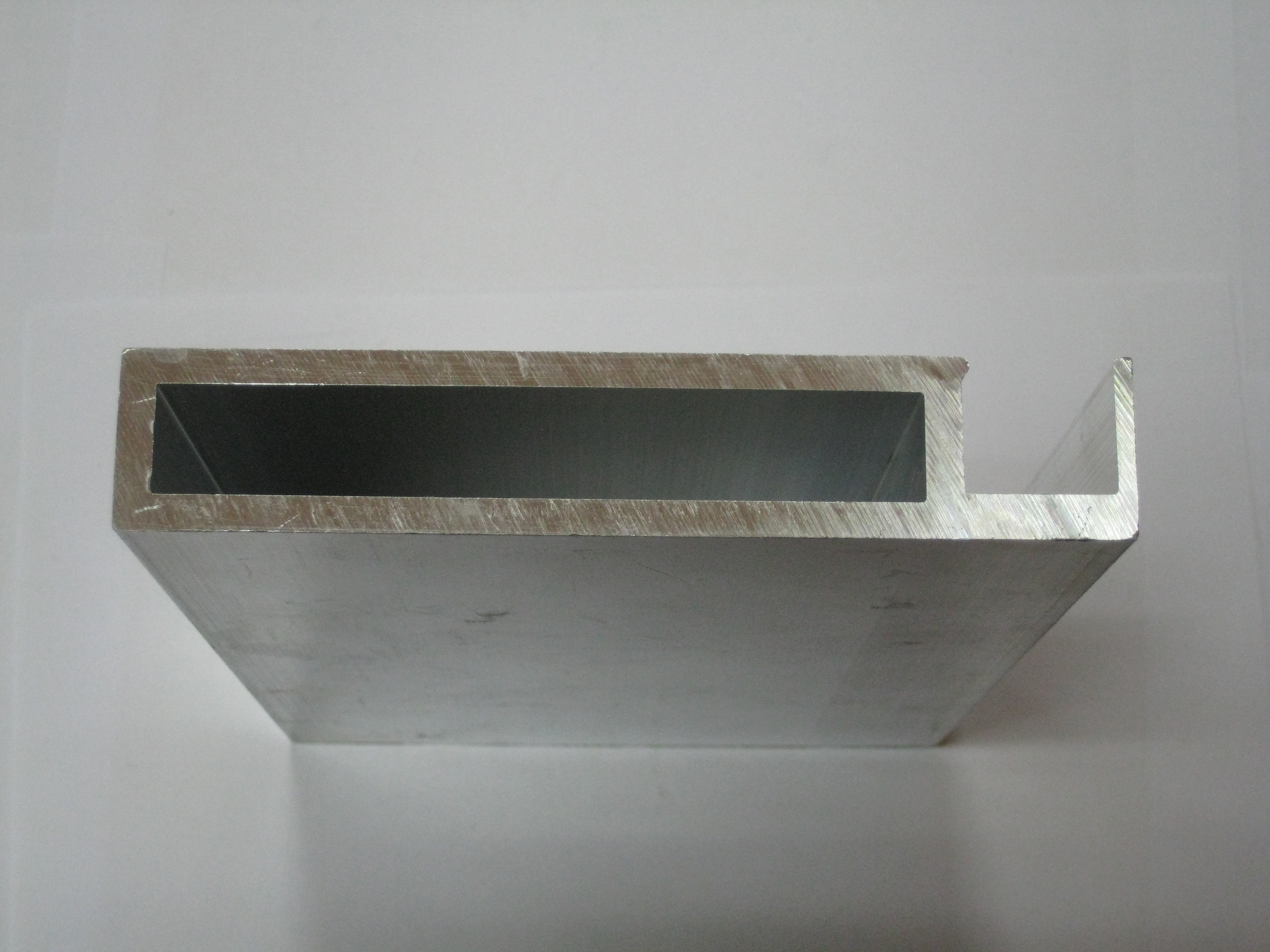
Aluminum Product Processing
Custom Mold Development of Aluminum Profiles for Special Equipment
Custom mold development of aluminum profiles for special equipment, serving aerospace, the defense industry, and other special-equipment fields with stringent requirements on material performance, machining precision, and quality systems. Aluminum alloy i
Product Details
Custom mold development of aluminum profiles for special equipment, serving aerospace, the defense industry, and other special-equipment fields with stringent requirements on material performance, machining precision, and quality systems. Aluminum alloy is currently the most widely used metallic structural material in the military industry, featuring low density, high strength, good corrosion resistance, and excellent machinability. In aerospace, aluminum alloy is an important material for launch vehicle and spacecraft structural parts; in the defense industry, aluminum alloy has been successfully applied to infantry fighting vehicles, armored personnel carriers, and other special equipment.
01 Quality Starts from Raw Materials
High-purity special aluminum alloys produced from A00 primary aluminum ingot, with no scrap aluminum, pure material, dense microstructure, and stable mechanical properties. Based on the service conditions of special equipment, 2-series high-strength aluminum alloy (2024/2A12) can be selected - with good fatigue resistance and fracture toughness, suited to fatigue-critical applications such as fuselage skin and wing ribs; 7-series ultra-high-strength aluminum alloy (7075/7050) - with tensile strength ≥524MPa, strength comparable to ordinary steel, suited to ultra-high-strength applications such as aircraft structural parts, wing main beams, and landing gear.
02 Dedicated Molds for Special Equipment and Precision Extrusion
Targeting the load characteristics and precision requirements of special-equipment structural parts, each cross-section gets an independently designed dedicated mold. Using high-end mold steel with slow-wire precision machining and mirror polishing, we ensure the forming precision of complex cross-sections. The extrusion process uses closed-loop control of temperature and speed; we produce ultra-large profiles with a circumscribed circle diameter of up to 600-700mm, with dimensional tolerances at key assembly positions stably controlled within ≤±0.02mm to ±0.03mm.
03 High-Precision CNC Machining
Equipped with precision equipment such as 5-axis linked CNC machining centers, we complete deep-processing on special-equipment profiles including precision cutting, end-face milling, precision boring, drilling and tapping. CNC machining precision is ±0.01-0.005mm; multiple imported machines and extra-long aluminum profile machining centers provide up to 6.5m travel, meeting the stringent assembly requirements of aerospace and defense structural parts.
04 Quality System and Flaw Detection
The special-equipment field has strict requirements on product quality and process control. We can support GJB (national military standard) and AS9100 aerospace quality system requirements. We can cooperate with ultrasonic flaw detection, penetrant testing, and other non-destructive testing methods to ensure profiles are free of internal cracks, porosity, and inclusions. Each batch comes with CMM full-dimension inspection reports, material reports, and mechanical property test reports.
Machining capability parameters:
| Item | Parameter/Description |
|---|---|
| Application | Aerospace structural parts, defense industry equipment, UAV/spacecraft, special vehicles |
| Available alloys | 2-series (2024/2A12), 7-series (7075/7050), 6061-T6 |
| Executive standard | GB/T 6892-2023 ultra-high-precision grade; GJB/AS9100 support available |
| Tolerance at key assembly positions | ≤±0.02mm to ±0.03mm |
| Standard dimensional tolerance | ±0.02mm to ±0.04mm |
| CNC machining precision | ±0.01-0.005mm |
| Max. circumscribed circle | 600-700mm |
| Max. machining length | 6500mm |
| Surface treatment | Anodizing, hard anodizing, chromate conversion coating |
| Supporting inspection | CMM inspection, ultrasonic flaw detection, penetrant testing (support available) |
| Extrusion equipment | 600T-12000T (cooperative production lines) |
| Mold development lead time | Samples in 8-12 days for standard structures |
| Batch lead time | 12-18 days after sample confirmation |
| MOQ | R&D prototyping from 50kg supported |
| Production location | Qingpu, Shanghai |
Special-equipment aluminum alloy selection reference:
| Alloy grade | Characteristics | Typical applications |
|---|---|---|
| 7075-T6 | Ultra-high strength, tensile ≥524MPa | Aircraft structural parts, wing main beams, landing gear |
| 2024/2A12 | Excellent fatigue resistance, good fracture toughness | Fuselage skin, wing ribs, fatigue-resistant structures |
| 7050 | Very high strength, stress-corrosion resistant | Aircraft structural extrusions, load-bearing structures |
| 6061-T6 | Excellent overall performance | UAV frames, general aviation structures |
Typical applications:
-
Aerospace: aircraft fuselage frames and wing rib profiles, landing gear support structures
-
UAVs: industrial UAV arms and landing gear
-
Spacecraft and launch vehicles: rocket load-bearing frames, cabin structural parts, satellite brackets
-
Defense industry: infantry fighting vehicles, armored personnel carrier structural parts, radar antenna structural parts
-
Special vehicles: light armored hull structural parts
-
Airborne equipment: airborne equipment frames, aviation ground support equipment structural parts
FAQ (Frequently Asked Questions)
Q1: What is the difference between special-equipment aluminum profiles and ordinary industrial aluminum profiles?
A: Special-equipment aluminum profiles serve aerospace, defense, and other fields with stringent requirements on material performance, machining precision, and quality systems, differing from ordinary industrial profiles in three ways: First, higher material requirements - using high-strength alloys such as 2-series (2024/2A12) and 7-series (7075/7050), with tensile strength up to 420-562MPa, far exceeding 6-series alloys. Second, stricter precision - dimensional tolerances at key assembly positions stably controlled within ±0.02mm, CNC machining precision ±0.01-0.005mm. Third, more complete quality systems - supporting GJB and AS9100 requirements, and cooperating with ultrasonic flaw detection, penetrant testing, and other non-destructive testing methods.
Q2: Which alloys are available for special-equipment aluminum profiles?
A: Based on service conditions, 2-series high-strength aluminum alloy (2024/2A12) can be selected - with good fatigue resistance and fracture toughness, suited to fatigue-critical applications such as fuselage skin and wing ribs; 7-series ultra-high-strength aluminum alloy (7075/7050) - with tensile strength ≥524MPa, strength comparable to ordinary steel, suited to ultra-high-strength applications such as aircraft structural parts, wing main beams, and landing gear; 6061-T6 - excellent overall performance, suited to UAV frames and general aviation structures.
Q3: What precision can special-equipment aluminum profiles achieve?
A: Dimensional tolerances at key assembly positions are stably controlled within ±0.02mm to ±0.03mm, standard dimensional tolerance ±0.02mm to ±0.04mm, and CNC machining precision ±0.01-0.005mm. Targeting the load characteristics and precision requirements of special-equipment structural parts, each cross-section gets an independently designed dedicated mold.
Q4: Which quality systems can special-equipment aluminum profiles support?
A: We can support GJB (national military standard) and AS9100 aerospace quality system requirements. We can cooperate with ultrasonic flaw detection, penetrant testing, and other non-destructive testing methods. Each batch comes with CMM full-dimension inspection reports, material reports, and mechanical property test reports.
Q5: What is the maximum cross-section possible for special-equipment aluminum profiles?
A: We produce ultra-large profiles with a circumscribed circle diameter of up to 600-700mm. The extrusion process uses closed-loop control of temperature and speed, with dimensional tolerances at key assembly positions stably controlled within ±0.02mm to ±0.03mm. One-piece forming of large special-equipment structural parts reduces splicing welds, improving structural integrity and reliability.
Q6: What are the MOQ and lead time for special-equipment aluminum profiles?
A: MOQ supports R&D prototyping at the 50kg level. Mold development for standard structures takes 8-12 days for samples, and batch delivery is 12-18 days after sample confirmation. Because special equipment involves special alloys (2-series/7-series are harder to extrude), stringent precision, and complete quality systems, lead times are longer than for ordinary industrial profiles; we recommend discussing alloy, cross-section complexity, and quality system requirements in advance.

GET A QUOTE
Once you have submitted your requirements, we will contact you as soon as possible regarding your product inquiry.:Custom Mold Development of Aluminum Profiles for Special Equipment