
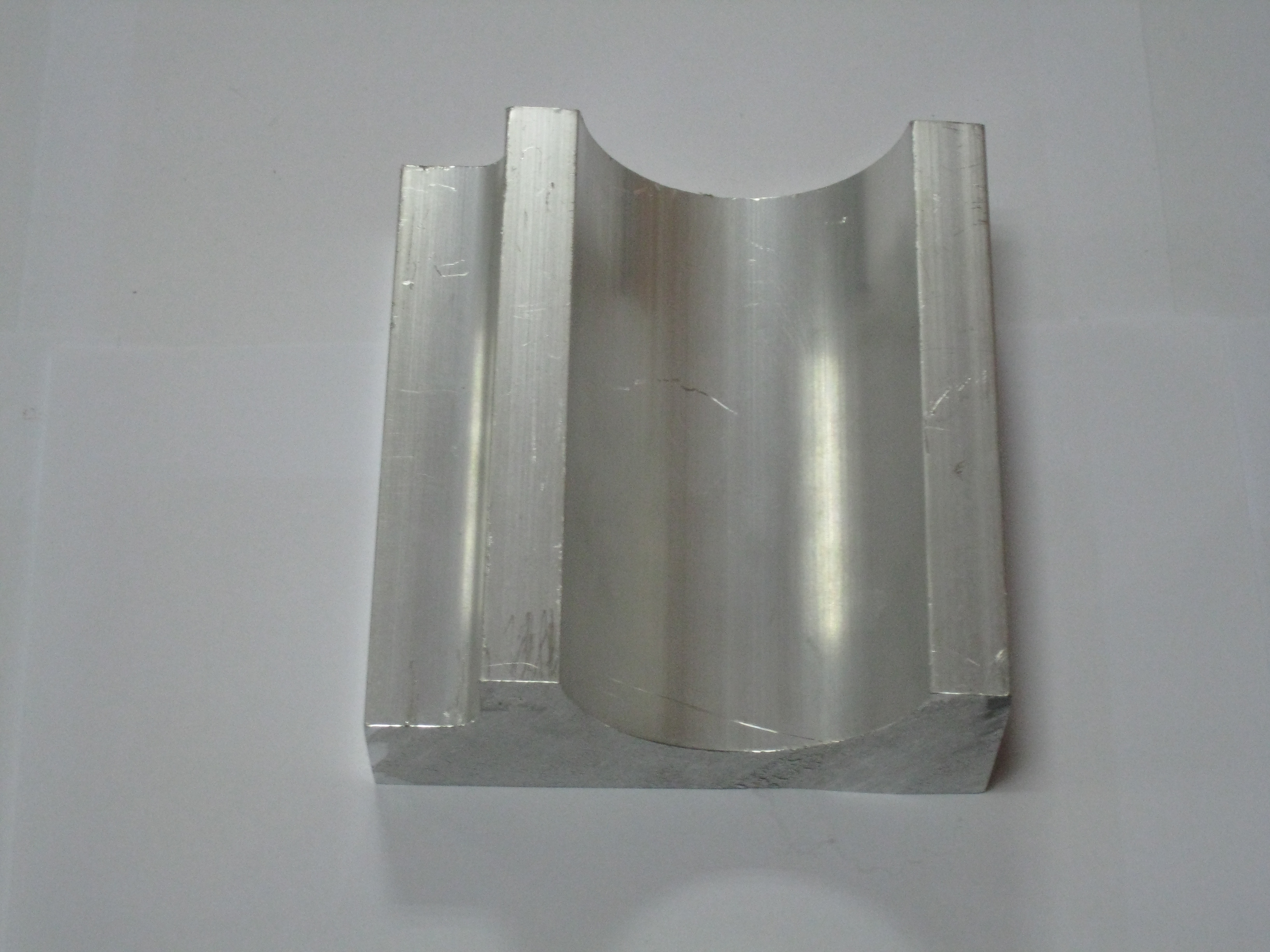
Aluminum Product Processing
Custom Mold Development for Special-Alloy Aluminum Profiles
Custom mold development for special-alloy aluminum profiles, serving aerospace, defense industry, high-end equipment and other fields with extreme requirements on material performance. The 7xxx (7075/7050) and 2xxx (2024/2A12) aluminum alloys are the high
Product Details
Custom mold development for special-alloy aluminum profiles, serving aerospace, defense industry, high-end equipment and other fields with extreme requirements on material performance. The 7xxx (7075/7050) and 2xxx (2024/2A12) aluminum alloys are the highest-strength aluminum series currently available commercially, widely used for aircraft structural parts, spacecraft, drones, defense equipment and other critical load-bearing components.
7075-T6 is an Al-Zn-Mg-Cu series ultra-high-strength aluminum alloy, known as the 'aerospace aluminum alloy', and is one of the strongest commercial aluminum alloys. After T6 solution treatment + artificial aging, its tensile strength at room temperature reaches 524MPa, the 0.2% yield strength is stable at 455MPa, elongation remains at 11%, and hardness is 150HB. The T6 temper offers the highest static strength, maintains high strength below 150°C, and has particularly good low-temperature strength. The strength of 7075-T6 is comparable to ordinary steel, making it the ideal material for ultra-high-strength applications such as aircraft structural parts, wing main beams and drone landing gear.
7050 aluminum alloy features high strength, high toughness, fatigue resistance and damage tolerance, and its manufacturing technology is regarded as the 'ceiling' among aluminum alloys. Its tensile strength can reach 500-562MPa and yield strength 434-490MPa. It has extremely high strength and excellent resistance to exfoliation corrosion and stress-corrosion cracking, and is commonly used for aircraft structural parts, medium-thick plate extrusions, open die forgings and die forgings. More than 50% of the aluminum used in the C919 large aircraft fuselage is 7050 aluminum alloy, mainly for critical load-bearing components such as wing beams and wall panels.
2A12 (2024) is an Al-Cu-Mg series hard aluminum alloy, with tensile strength ≥420MPa and yield strength ≥265MPa. 2A12 offers excellent fatigue performance; under alternating loads its fatigue strength is significantly higher than that of 6xxx and 5xxx series aluminum alloys, making it suitable for components subjected to long-term vibration or cyclic stress. This alloy has good heat resistance, with a working temperature<150℃. Above 125℃, the strength of 2024 alloy even exceeds that of 7075 alloy. 2A12 is an ideal material for fatigue-resistant structures such as aircraft skin and wing ribs.
01 Quality Starts From Raw Materials
High-purity special aluminum alloys produced from A00 primary aluminum ingot, containing no scrap aluminum, with pure material, dense structure and stable mechanical properties. Special alloys such as 7075, 7050 and 2A12 demand extremely high raw-material purity; primary aluminum ingot is the foundation for ensuring the forming quality of high-performance alloys.
02 Dedicated Extrusion Process for Special Alloys
The extrusion difficulty of 2xxx and 7xxx aluminum alloys is far higher than that of 6xxx alloys - the extrusion temperature window is narrow, deformation resistance is high, and die wear is severe. We optimize extrusion temperature, speed and cooling parameters according to the characteristics of each alloy grade. 7075-T6 adopts an 'on-line quenching + two-stage aging' process; 7050 uses a T74/T7351 special aging regime to guarantee stress-corrosion resistance; 2A12 uses solution treatment + artificial aging. Each special-alloy cross-section has its own dedicated mold design.
03 High-Precision CNC Machining
Equipped with precision equipment such as five-axis CNC machining centers, we can complete deep processing of special-alloy profiles including precision cutting, end-face milling, precision boring, drilling and tapping. Machining precision is ±0.01-0.005mm, and dimensional tolerance at critical assembly positions is stably controlled within ≤±0.02mm to ±0.03mm. Multiple imported machine tools and extra-long aluminum profile machining centers offer a travel up to 6.5 meters.
04 Quality System and Flaw Detection
We can comply with AMS (Aerospace Material Specifications) and GJB (national military standards) quality management system requirements. We support ultrasonic testing, penetrant testing and other non-destructive testing methods to ensure profiles are free of internal cracks, porosity, inclusions and other defects. Each batch is delivered with a CMM full-size inspection report, material test report and mechanical properties test report.
Machining capability parameters:
| Item | Parameter / Description |
|---|---|
| Available Materials | 7075-T6, 2A12 (2024) , 7050 |
| 7075-T6 Tensile Strength | ≥524MPa |
| 7075-T6 Yield Strength | ≥455MPa |
| 7075-T6 Hardness | 150HB |
| 7075-T6 Elongation | ≥11% |
| 2A12 Tensile Strength | ≥420MPa |
| 2A12 Yield Strength | ≥265MPa |
| 7050 Tensile Strength | 500-562MPa |
| Executive Standard | GB/T 6892-2023 ultra-high precision grade, compliant with AMS/GJB |
| Critical Assembly Position Tolerance | ≤±0.02mm to ±0.03mm |
| Standard Dimensional Tolerance | ±0.02mm to ±0.04mm |
| CNC Machining Precision | ±0.01-0.005mm |
| Max. Circumscribed Circle | 600-700mm |
| Max. Machining Length | 6500mm |
| Surface Treatment | Anodizing, hard anodizing, conductive oxidation, alclad treatment |
| Testing & Inspection | CMM inspection, ultrasonic testing, penetrant testing (available on request) |
| Extrusion Equipment | 600T-12000T (partner production lines) |
| Mold Development Lead Time | 8-12 days for sampling of standard structures |
| Bulk Lead Time | 12-18 days after sample approval |
| MOQ | Supports 50kg-level R&D sampling |
| Production Location | Qingpu, Shanghai |
Special-alloy aluminum profile selection guide:
| Alloy Grade | Tensile Strength | Hardness | Key Features | Typical Applications |
|---|---|---|---|---|
| 7075-T6 | ≥524MPa | 150HB | Highest strength, one of the strongest commercial aluminum alloys | Aircraft structural parts, wing main beams, landing gear, drones |
| 7050 | 500-562MPa | — | Excellent stress-corrosion and exfoliation corrosion resistance | Aircraft wing beams, wall panels, critical load-bearing components |
| 2A12 (2024) | ≥420MPa | 120HB | Outstanding fatigue performance, good heat resistance | Aircraft skin, wing ribs, fatigue-resistant structures |
Typical application scenarios:
-
Aerospace: aircraft fuselage frames and wing rib profiles, wing main beams, landing gear support structures
-
Drones: industrial drone arms, landing gear
-
Spacecraft and launch vehicles: rocket body load-bearing frames, cabin structural parts, satellite brackets
-
Defense industry: defense equipment structural parts, special vehicle body structures
-
High-end equipment: precision machine tool spindles, high-end mold guide pillars
-
High-end sports equipment: high-performance bicycle frames, golf club heads
-
Airborne equipment: radar antenna structural parts, airborne equipment frames, missile cabin and wing profiles
FAQ (Frequently Asked Questions)
Q1: What is the difference between special-alloy aluminum profiles and ordinary 6xxx series profiles?
A: Special-alloy aluminum profiles (7xxx/2xxx) are the highest-strength aluminum series available commercially. 7075-T6 has tensile strength ≥524MPa and yield strength ≥455MPa, with strength comparable to ordinary steel and far exceeding 6xxx alloys (6061-T6 tensile ≥260MPa). 7075 is called an ultra-high-strength aluminum alloy; its yield strength is close to its tensile strength, giving a high yield ratio and high specific strength. However, its extrusion difficulty is far higher than 6xxx alloys - the extrusion temperature window is narrow, deformation resistance is high, and die wear is severe. It is suitable for aerospace, defense industry, high-end equipment and other fields with extreme requirements on material performance.
Q2: How to choose among the three special alloys 7075-T6, 2A12 (2024) and 7050?
A: 7075-T6 is one of the strongest commercial aluminum alloys, with tensile strength ≥524MPa and hardness 150HB; it maintains high strength below 150°C and has particularly good low-temperature strength, making it the ideal material for ultra-high-strength applications such as aircraft structural parts, wing main beams and drone landing gear. 2A12 (2024) has tensile strength ≥420MPa, outstanding fatigue performance, fatigue strength under alternating loads significantly higher than 6xxx and 5xxx alloys, and good heat resistance (<150℃). Above 125℃, the strength of 2024 alloy even exceeds that of 7075, making it an ideal material for fatigue-resistant structures such as aircraft skin and wing ribs. 7050 offers tensile strength of 500-562MPa, with extremely high strength and excellent resistance to exfoliation corrosion and stress corrosion cracking. More than 50% of the aluminum used in the C919 airliner fuselage is 7050 aluminum alloy, mainly for key load-bearing components such as wing spars and panels. We recommend the most suitable material solution based on the application scenario and performance requirements.
Q3: Why is extrusion of special-alloy aluminum profiles more difficult than 6xxx alloys?
A: 7xxx and 2xxx aluminum alloys have a narrow extrusion temperature window, high deformation resistance and severe die wear. 6xxx alloys have a wide extrusion temperature window, good flowability and relatively low extrusion difficulty. Special alloys (especially 7075) require strict control of billet temperature, container temperature, die temperature and extrusion speed; any deviation causes uneven structure, substandard mechanical properties or early die failure. The manufacturing technology of 7050 is regarded as the 'ceiling' among aluminum alloys, and its extrusion and heat treatment processes demand extremely high precision. We optimize the extrusion process for each alloy grade: 7075-T6 uses an 'on-line quenching + two-stage aging' process; 7050 uses a T74/T7351 special aging regime to guarantee stress-corrosion resistance; 2A12 uses solution treatment + artificial aging.
Q4: What precision can special-alloy aluminum profiles achieve?
A: Dimensional tolerance at critical assembly positions is stably controlled within ≤±0.02mm to ±0.03mm, standard dimensional tolerance is ±0.02mm to ±0.04mm, and CNC machining precision is ±0.01-0.005mm. The fine grain of 7075 gives better deep-hole drilling performance and enhanced tool wear resistance. We can comply with AMS (Aerospace Material Specifications) and GJB (national military standards) quality management system requirements. Each batch is delivered with a CMM full-size inspection report, material test report and mechanical properties test report.
Q5: How is the corrosion resistance of 2A12 (2024) aluminum alloy?
A: 2A12 aluminum alloy has excellent machinability, but its corrosion resistance is relatively poor, and it is usually protected by anodizing, painting or an alclad layer. In aerospace applications, 2A12 sheet is typically supplied with an alclad layer (pure aluminum cladding) to improve corrosion resistance. We can provide matched surface treatment solutions such as anodizing, hard anodizing and alclad treatment according to customer requirements, to meet corrosion resistance needs under different operating environments.
Q6: What is the MOQ and lead time for special-alloy aluminum profiles?
A: The MOQ supports 50kg-level R&D sampling. The mold development lead time for standard structures is 8-12 days for sampling, and bulk delivery is 12-18 days after sample approval. Because special alloys have high extrusion difficulty and complex heat treatment processes (for example, 7050 requires a T74/T7351 special aging regime), their lead time is longer than ordinary 6xxx profiles. We recommend discussing material, cross-section complexity and inspection requirements in advance.

GET A QUOTE
Once you have submitted your requirements, we will contact you as soon as possible regarding your product inquiry.:Custom Mold Development for Special-Alloy Aluminum Profiles