
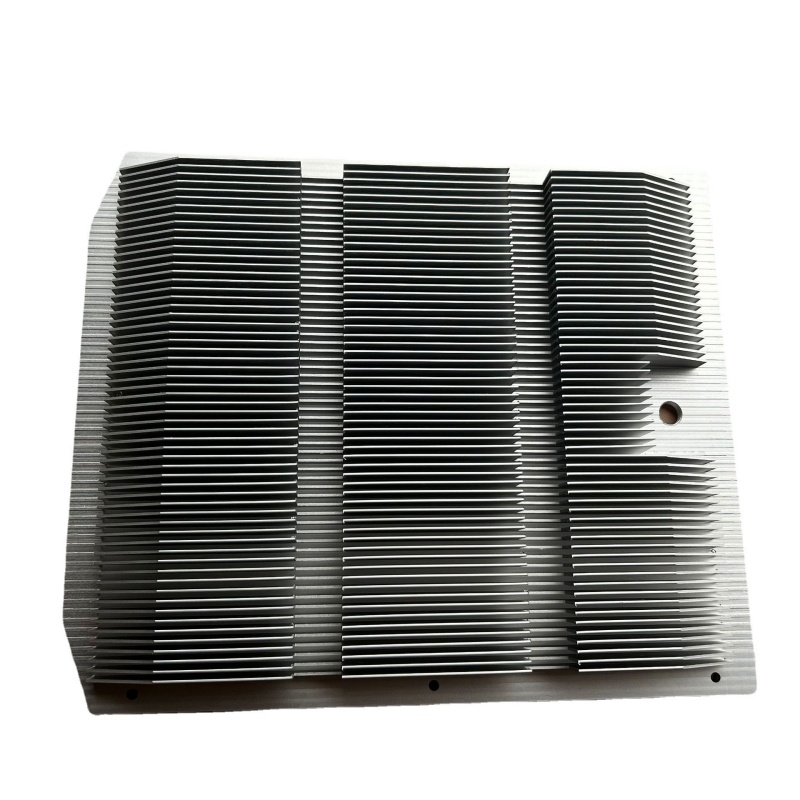
Aluminum profiles for radiators
Industrial VFD Heat Sink Aluminum Profiles
Industrial VFD heat sink aluminum profiles - variable frequency drives (VFD) are core equipment for industrial motor speed regulation and energy-saving control, widely used in factory automation, HVAC, water pumps and fans, elevators, hoisting machinery,
Product Details
Industrial VFD heat sink aluminum profiles - variable frequency drives (VFD) are core equipment for industrial motor speed regulation and energy-saving control, widely used in factory automation, HVAC, water pumps and fans, elevators, hoisting machinery, rail transit, new energy power generation and other fields. The IGBT power modules inside the VFD generate large amounts of heat during operation; untimely heat dissipation causes equipment derating, fault shutdown and shortened service life. Industrial equipment usually runs 24/7 continuously, imposing higher requirements on the long-term reliability, heat dissipation efficiency and structural strength of heat sinks.
Shanghai Chuangsi Aluminum develops heat-dissipating aluminum profiles specifically for industrial VFDs, servo drives, inverters and other industrial transmission and automation equipment, focusing on the core requirements of 'high thermal conductivity, long life, stable structure'. High-density fin or multi-fin heat dissipation structures are formed directly by profile extrusion, one-piece extrusion with no contact thermal resistance loss, giving heat dissipation efficiency far higher than assembled heat sinks.
Core advantages at a glance:
| Advantage Dimension | Technical Indicator | Customer Value |
|---|---|---|
| High-Thermal-Conductivity Material | 6063-T5 high-thermal-conductivity aluminum alloy, thermal conductivity about 201W/m·K | Stable heat dissipation consistency under long-term continuous operation |
| One-Piece Extrusion | High-density fin / multi-fin / comb-fin one-piece forming | No contact thermal resistance loss, high heat dissipation efficiency |
| High-Precision Fin Profile | Fin thickness deviation ±0.03mm | Ensures tight contact between fins and IGBT modules |
| High Base Flatness | ≤0.05mm/100mm | Reduces contact thermal resistance, improves heat dissipation efficiency |
| Integrated Mounting Structure | Mounting holes / positioning slots extruded in one piece | Reduces subsequent machining processes |
| Extra-Long Extrusion | Single profile extrudable length up to 20M | Suitable for multi-unit integrated heat dissipation needs |
| Full-Process Self-Management | Extrusion + CNC + surface treatment | No outsourced transit, quality controllable |
01 Quality Starts From Raw Materials
Produced from A00 primary aluminum ingot, containing no scrap aluminum, with stable thermal conductivity, ensuring heat dissipation consistency under long-term continuous operation. Standard scenarios use 6063-T5 high-thermal-conductivity aluminum alloy (thermal conductivity about 201W/m·K), cost-effective and with good extrusion formability.
02 High-Density Fin Precision Forming
Formed by high-precision die extrusion, directly producing various heat dissipation structures such as high-density fins, multi-fin and comb-fin. Fin thickness deviation controlled within ±0.03mm, base flatness ≤0.05mm/100mm, ensuring tight contact between fins and IGBT modules and effectively reducing contact thermal resistance.
03 VFD Mounting Requirements
Base width and thickness can be customized according to VFD power module dimensions; mounting holes and positioning slots can be formed in one piece during extrusion, reducing subsequent machining processes. Single profile extrudable length up to 20M, suitable for multi-unit integrated heat dissipation needs.
04 Full-Process Self-Management
The entire process from extrusion, CNC precision machining to surface treatment is completed in-house, with no outsourced transit. Supporting deep processing includes CNC precision base milling, drilling and tapping, fixed-length precision cutting, chamfering and deburring; finished products can be installed directly.
Machining capability parameters:
| Item | Parameter / Description |
|---|---|
| Applicable Scenarios | VFDs, servo drives, inverters, industrial power supplies |
| Available Materials | 6063-T5 high-thermal-conductivity aluminum alloy |
| Thermal Conductivity | About 201W/m·K |
| Executive Standard | GB/T 6892-2023 high precision grade |
| Heat Dissipation Structure | High-density fin, multi-fin, comb-fin, custom heat dissipation structures |
| Min. Fin Thickness | 0.5mm |
| Max. Fin Height | 60mm |
| Fin Thickness Tolerance | ±0.03mm |
| Base Flatness | ≤0.05mm/100mm |
| Surface Treatment | Anodizing, natural-color anodizing, black anodizing |
| Deep Processing | CNC precision base milling, drilling and tapping, fixed-length precision cutting |
| Mold Development Lead Time | 7-10 days for sampling of standard structures |
| Bulk Lead Time | 7-12 days |
| MOQ | 50kg |
| Production Location | Qingpu, Shanghai |
Industrial VFD heat sink vs ordinary electronic equipment heat sink:
| Comparison Dimension | Industrial VFD Heat Sink | Ordinary Electronic Equipment Heat Sink |
|---|---|---|
| Operating Conditions | 24/7 continuous operation | Mostly intermittent operation |
| Heat Dissipation Requirements | High requirements for long-term reliability, heat dissipation efficiency and structural strength | Relatively low |
| Material | 6063-T5 high-thermal-conductivity aluminum alloy (thermal conductivity about 201W/m·K) | Ordinary aluminum profile |
| Base Flatness | ≤0.05mm/100mm | General requirement |
| Applicable Scenarios | VFDs, servo drives, inverters | Consumer electronics, general electronic equipment |
Typical application scenarios:
Industrial VFD heat sinks
Servo drive heat sinks
Inverter heat dissipation profiles
Industrial power supply heat dissipation modules
Automation equipment heat dissipation structural parts
Factory transmission equipment heat dissipation components
FAQ (Frequently Asked Questions)
Q1: What is the difference between VFD heat sinks and ordinary electronic equipment heat sinks?
A: As core equipment for industrial motor speed regulation and energy-saving control, VFDs have internal IGBT power modules that generate large amounts of heat during operation; untimely heat dissipation causes equipment derating, fault shutdown and shortened service life. Industrial equipment usually runs 24/7 continuously, imposing higher requirements on heat sink long-term reliability, heat dissipation efficiency and structural strength. Ordinary electronic equipment heat sinks mostly run intermittently with relatively lower heat dissipation requirements. VFD heat sinks must use 6063-T5 high-thermal-conductivity aluminum alloy (thermal conductivity about 201W/m·K), and base flatness must be controlled within 0.05mm/100mm to ensure tight contact between fins and IGBT modules, effectively reducing contact thermal resistance.
Q2: What thermal conductivity can industrial VFD heat sinks achieve?
A: Standard scenarios use 6063-T5 high-thermal-conductivity aluminum alloy with thermal conductivity about 201W/m·K, cost-effective and with good extrusion formability. High-power scenarios can use 1070 pure aluminum series for higher thermal conductivity, improving heat dissipation performance by over 10%. Produced from A00 primary aluminum ingot, containing no scrap aluminum, with stable thermal conductivity, ensuring heat dissipation consistency under long-term continuous operation.
Q3: Why does industrial VFD heat sink base flatness need to be 0.05mm/100mm?
A: The contact thermal resistance between the IGBT module and the heat sink base directly affects heat dissipation efficiency. Base flatness ≤0.05mm/100mm ensures tight contact between fins and the IGBT module for minimum contact thermal resistance. Insufficient flatness causes local poor contact, heat accumulation and IGBT module temperature rise; in severe cases it triggers equipment derating protection or even fault shutdown.
Q4: What mounting structures can industrial VFD heat sinks integrate?
A: Base width and thickness can be customized according to VFD power module dimensions; mounting holes and positioning slots can be formed in one piece during extrusion, reducing subsequent machining processes. Single profile extrudable length up to 20M, suitable for multi-unit integrated heat dissipation needs. Mounting holes and positioning slots are formed in one piece, avoiding the impact of subsequent drilling and tapping on the heat dissipation structure.
Q5: What is the MOQ and lead time for industrial VFD heat sinks?
A: MOQ 50kg. Mold development lead time for standard structures is 7-10 days for sampling, bulk lead time 7-12 days. Since industrial VFD heat sinks need to match different IGBT module dimensions, we recommend discussing power module model and mounting dimensions in advance to quickly match the optimal cross-section solution.
Get Your Solution Now
Call Manager Du: 13611846009
Provide drawings or technical requirements; our engineering team gives feasibility assessment and mold development plan within 2 hours.
Free technical consultation | Complex cross-section evaluation | Direct from source factory
GET A QUOTE
Once you have submitted your requirements, we will contact you as soon as possible regarding your product inquiry.:Industrial VFD Heat Sink Aluminum Profiles