
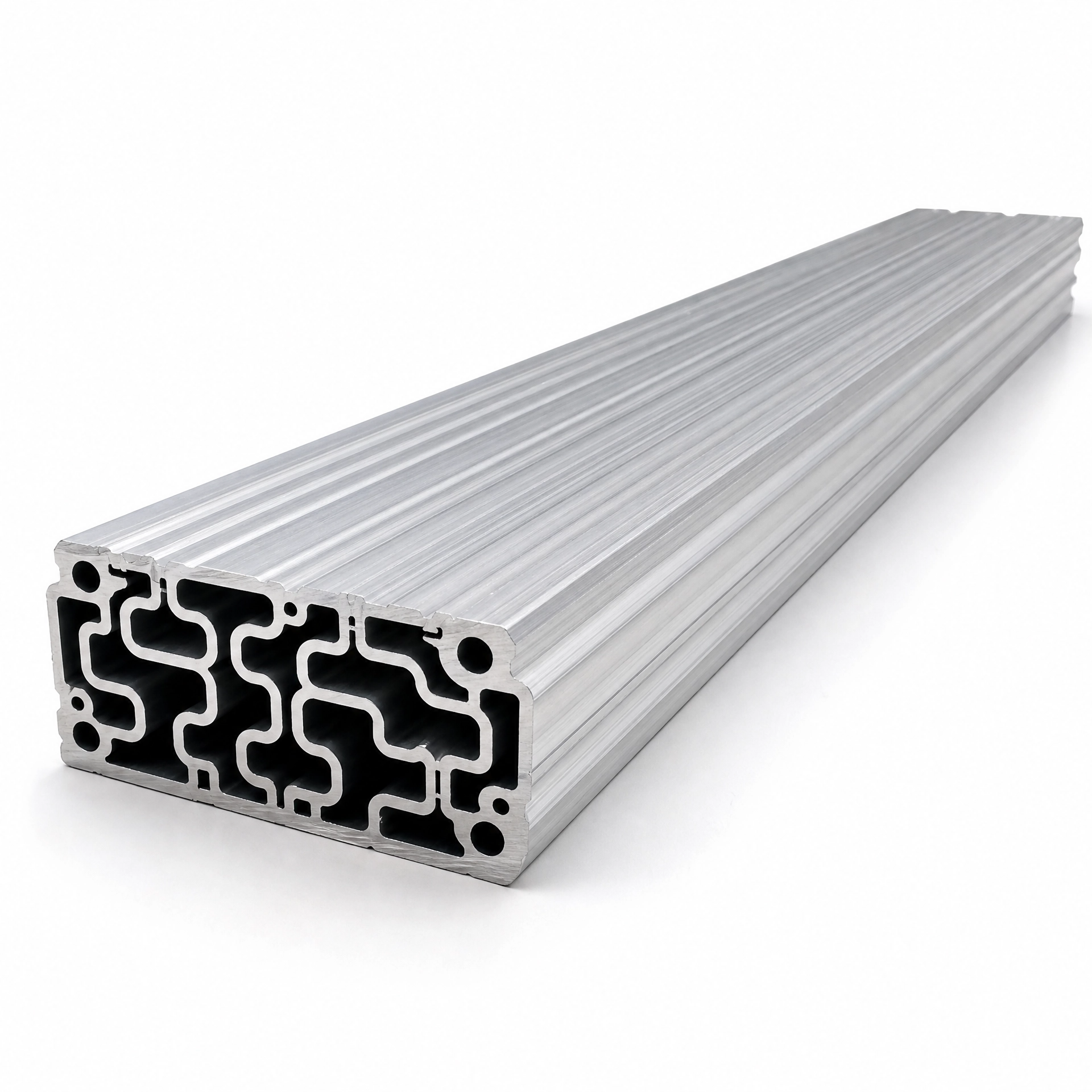
Aluminum profiles for radiators
Battery Liquid Cold Plate Aluminum Profiles
Battery liquid cold plate aluminum profiles — the thermal management of traction battery packs for new energy vehicles (NEVs) directly determines battery life, charging efficiency and safety. The temperature difference between cells inside a pack must be
Product Details
Battery liquid cold plate aluminum profiles — the thermal management of traction battery packs for new energy vehicles (NEVs) directly determines battery life, charging efficiency and safety. The temperature difference between cells inside a pack must be controlled within ≤3℃; otherwise it causes inconsistent cell charging/discharging, accelerated degradation and even thermal runaway. An aluminum profile liquid cold plate forms coolant channels directly by extrusion, fitting the bottom or side of the battery pack; leveraging the high thermal conductivity of aluminum alloy (about 201-237W/m·K), it rapidly conducts heat away and controls the cell temperature difference within ±2℃, effectively suppressing the risk of thermal runaway. Extruded liquid cold plates are currently one of the mainstream solutions for traction battery packs.
Shanghai Chuangsi Aluminum Co., Ltd. develops battery liquid cold plate aluminum profiles specifically for traction battery packs and energy-storage battery-pack liquid cooling systems, focusing on the core requirements of battery thermal management for "high thermal conductivity, high flatness, lightweight and corrosion resistance". Aluminum profile extrusion is used to directly form coolant channels; the channel cross-section can be customized into multi-channel parallel, serpentine and other structures to meet the heat-dissipation power and flow-resistance requirements of different battery packs.
Core advantages at a glance:
| Advantage Dimension | Technical Indicator | Customer Value |
|---|---|---|
| High-thermal-conductivity material | Aluminum alloy thermal conductivity about 201-237W/m·K | Rapid heat conduction, controlling cell temperature difference within ±2℃ |
| Integrally extruded channels | Channels integrally formed with the profile, no welding | No welded channels, reduced leakage risk |
| High flatness | Surface flatness ≤0.1mm/m | Tight fit against cell bottoms, reducing contact thermal resistance |
| Lightweight | Aluminum alloy density only 1/3 of steel | Effectively reduces the overall weight of the battery pack |
| Corrosion resistance | Anodizing / passivation treatment | Suitable for the 8-10 year service life of battery packs |
| Extra-long extrusion | Single profile extrusion length up to 20M | Reduced splicing welds, improved system reliability |
| Welding compatibility | Can be paired with friction stir welding | Supports splicing multiple cold plates into a whole |
01 Quality Starts with Raw Materials
Produced from A00 primary aluminum ingot; the material is uniform and its mechanical properties are stable. Common alloys are 3003 aluminum alloy (thermal conductivity about 201W/m·K, excellent corrosion resistance), 6063 aluminum alloy (thermal conductivity about 201W/m·K, good extrusion formability) or 6061 aluminum alloy. The thermal conductivity of aluminum-alloy liquid cold plates reaches 150-250W/(m·K), far higher than that of steel (about 50W/m·K).
02 Integrally Extruded Channel Forming
Aluminum profile extrusion is used to directly form coolant channels; the channels are integrally formed with the profile, with no need for welded channels. The channel cross-section can be customized into multi-channel parallel, serpentine and other structures, suiting the heat-dissipation needs of different-power battery packs. The single-profile extrusion length reaches 20M, reducing splicing welds and improving system reliability.
03 High Flatness and Lightweight
Profile surface flatness is ≤0.1mm/m, matching the installation accuracy requirements of battery modules and ensuring the thermal silicone pad fits tightly against the cell bottom, avoiding an air layer that would impede heat conduction. The density of aluminum alloy is only one third that of steel, effectively reducing the overall weight of the battery pack.
04 Corrosion Resistance and Welding Compatibility
The surface can be anodized or passivated to enhance corrosion resistance, suiting the long-term operating conditions of battery packs. The profile is compatible with friction stir welding, supporting the splicing of multiple cold plates into a whole and the welding of inlet/outlet ports.
05 In-House Control of All Processes
The full process from extrusion and CNC finishing to surface treatment is completed in-house, with no external transfers. CNC precision milling, drilling and tapping, fixed-length precision cutting and other deep processing are provided, so the product can be delivered directly to the battery-pack assembly line.
Machining capability parameters:
| Item | Parameter / Description |
|---|---|
| Application Scenarios | Traction battery packs for NEVs, energy-storage battery-pack liquid cooling systems |
| Available Materials | 3003 aluminum alloy, 6063-T5, 6061-T6 |
| Thermal Conductivity | About 150-250W/m·K (aluminum alloy) |
| Executive Standard | GB/T 6892-2023 high-precision grade |
| Channel Structure | Multi-channel parallel, serpentine channels, custom channel cross-section |
| Surface Flatness | ≤0.1mm/m |
| Cell Temperature-Difference Control | ≤±2℃ |
| Extrusion Length | Up to 20M (reduced splicing welds) |
| Supporting Processing | CNC precision milling, drilling and tapping, fixed-length precision cutting |
| Welding Process | Can be paired with friction stir welding |
| Surface Treatment | Anodizing, passivation treatment |
| Mold Development Lead Time | Sampling in 7-10 days for conventional structures |
| MOQ | 50kg |
| Production Location | Qingpu, Shanghai |
Battery liquid cold plate vs. AI server liquid cold plate:
| Comparison Dimension | Battery Liquid Cold Plate | AI Server Liquid Cold Plate |
|---|---|---|
| Application Scenario | Traction battery packs / energy-storage battery packs for NEVs | Chip-level heat dissipation |
| Channel Features | Large channel area, high flow | More precise channels, more compact structure |
| Core Focus | Inter-cell temperature-difference control (within ±2℃), corrosion resistance | Local hot-spot cooling, low flow-resistance design |
| Material Requirements | 3003/6063/6061 | High-purity aluminum alloy |
| Service Life Requirements | 8-10 years | 5-8 years |
Aluminum-alloy liquid cold plate vs. steel liquid cold plate:
| Comparison Dimension | Aluminum-Alloy Liquid Cold Plate | Steel Liquid Cold Plate |
|---|---|---|
| Density | 2.7g/cm³ | 7.8g/cm³ |
| Thermal Conductivity | About 150-250W/m·K | About 50W/m·K |
| Weight | Light (1/3 of steel) | Heavy |
| Corrosion Resistance | Excellent (anodizing / passivation) | Poor (requires regular rust prevention) |
| Ease of Installation | High | Low |
Typical Application Scenarios:
Liquid cold plates for NEV traction battery packs
Heat-dissipation bottom plates for battery modules
Liquid cooling systems for energy-storage battery packs
Inter-cell heat-dissipation structural parts
Bottom liquid cooling systems for battery packs
Integrated liquid cold plates for CTP/CTC batteries
FAQ (Frequently Asked Questions)
Q1: What is the difference between battery liquid cold plates and AI server liquid cold plates?
A: Battery liquid cold plates are used for NEV traction battery packs or energy-storage battery packs, with a large coolant channel area and high flow, and more focus on inter-cell temperature-difference control (must be within ±2℃) and long-term corrosion resistance (battery packs usually require an 8-10 year service life). AI server liquid cold plates are used for chip-level heat dissipation, with more precise channels and a more compact structure, and more focus on local hot-spot cooling and low flow-resistance design. The two differ in channel structure, sealing grade and material selection; our company can customize according to the specific application scenario.
Q2: Which materials can be selected for battery liquid cold plates?
A: Common alloys are 3003 aluminum alloy (thermal conductivity about 201W/m·K, excellent corrosion resistance, the common material for battery liquid cold plates), 6063 aluminum alloy (thermal conductivity about 201W/m·K, good extrusion formability) or 6061 aluminum alloy. The thermal conductivity of aluminum-alloy liquid cold plates reaches 150-250W/m·K, far higher than that of steel (about 50W/m·K), making it an ideal choice for battery thermal management systems. Our company recommends the most suitable material solution according to the coolant type, operating environment and service-life requirements.
Q3: Which channel structure types can be customized for battery liquid cold plates?
A: Customizable types include multi-channel parallel structures (low flow resistance, uniform flow, suitable for large-area battery-pack heat dissipation), serpentine channel structures (long coolant travel, sufficient heat exchange, suitable for high-power-density battery packs), and custom channel cross-sections (exclusive channel dimensions and layout designed per customer thermal-simulation data). The channels are integrally extruded with the profile, with no need for welded channels. The single-profile extrusion length reaches 20M, reducing splicing welds and improving system reliability.
Q4: Why does the flatness of battery liquid cold plates need to be ≤0.1mm/m?
A: Battery liquid cold plates must fit tightly against cell bottoms or thermal silicone pads. Profile surface flatness ≤0.1mm/m ensures the thermal silicone pad fits tightly against the cell bottom, avoiding an air layer that would impede heat conduction and effectively reducing contact thermal resistance. Insufficient flatness causes local poor contact and heat buildup; an inter-cell temperature difference exceeding ±3℃ leads to inconsistent charging/discharging, accelerated degradation and even thermal runaway.
Q5: How is long-term corrosion resistance ensured for battery liquid cold plates?
A: The surface can be anodized or passivated to enhance corrosion resistance, suiting the long-term operating conditions of battery packs (typically an 8-10 year service life is required). 3003 aluminum alloy itself has good corrosion resistance; with appropriate surface treatment it can effectively resist long-term corrosion by coolant (usually an ethylene glycol aqueous solution). The corrosion resistance of battery liquid cold plates directly affects the service life and safety of battery packs.
Q6: What is the MOQ and lead time for battery liquid cold plates?
A: The MOQ is 50kg. The mold-development lead time for conventional structures is 7-10 days for sampling, and batch delivery is 7-12 days. Battery liquid cold plate projects usually involve relatively large batches; it is recommended to discuss the cross-section design and project timeline in advance.
Get a solution now
📞 Contact Manager Du: 13611846009
Provide drawings or technical requirements, and the technical department will deliver a feasibility assessment and mold-development plan within 2 hours.
Free technical consultation | Complex cross-section evaluation | Direct supply from the source factory
GET A QUOTE
Once you have submitted your requirements, we will contact you as soon as possible regarding your product inquiry.:Battery Liquid Cold Plate Aluminum Profiles