
Aluminum profiles for radiators
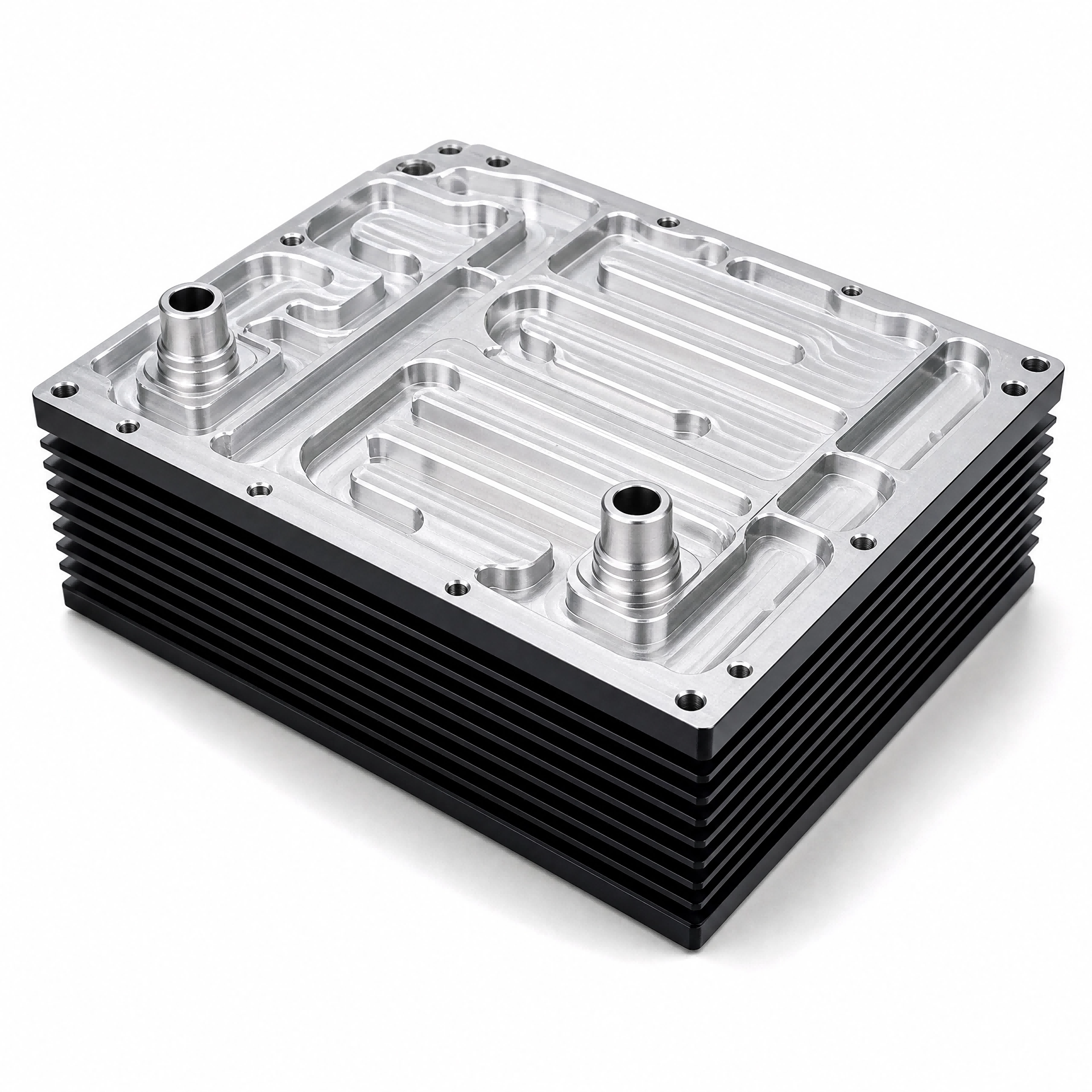
Motor Controller Heat Sink Housing Aluminum Profile
Motor controller heat sink housing aluminum profile: the motor controller is the core power electronic device of new energy vehicles. The IGBT or SiC power module inside the controller generates a large amount of heat during operation; when the IGBT chip
Product Details
Motor controller heat sink housing aluminum profile: the motor controller is the core power electronic device of new energy vehicles. The IGBT or SiC power module inside the controller generates a large amount of heat during operation; when the IGBT chip junction temperature exceeds 150°C, not only does switching efficiency drop by more than 30%, but thermal runaway may also burn out the module. Motor controllers are becoming increasingly compact, raising ever higher requirements for heat dissipation systems.
Extruded aluminum profile heat sink housings offer multiple advantages over die-cast aluminum solutions: the one-piece extruded profile has better thermal conductivity than traditional die-cast housings (about 201W/m·K vs 96W/m·K for die-cast aluminum), simple forming process and low manufacturing cost; smaller material volume and low mold cost help reduce product size and weight and improve power density; extruded aluminum profiles can be welded to other structural parts, avoiding redundant connection and sealing structures.
Shanghai Chuangsi Aluminum Co., Ltd. develops heat sink housing aluminum profiles specifically for core power electronic devices such as new energy vehicle motor controllers, electronic control units and inverters, integrating heat dissipation, load bearing and protection. Internal cooling fins or water flow channels are directly formed by aluminum profile extrusion, and mounting sliding grooves or positioning structures can be integrated on both sides to suit the assembly requirements of different electronic control platforms.
Core Advantages at a Glance:
| Advantage Dimension | Technical Indicator | Customer Value |
|---|---|---|
| High-Thermal-Conductivity Material | 6063-T5 aluminum alloy, thermal conductivity about 201W/m·K | Thermal conductivity about 2 times that of die-cast aluminum |
| Dual-Mode Cooling Structure | Compatible with air-cooled fins / water-cooled channels | Customers can select based on power density and space |
| High-Density Fins | Minimum fin thickness 0.5mm | Large heat dissipation area, high efficiency |
| Water Cooling Channel | Serpentine channels, multi-channel parallel | Suited to high power density electronic control solutions |
| High-Precision CNC Machining | ±0.01-0.005mm | Meets stringent mounting accuracy of electronic control systems |
| Insulation Withstand Voltage | Hard anodizing treatment | Meets insulation requirements of high-voltage electronic control systems |
| Sealing Compatibility | Machinable sealing grooves | Compatible with IP67/IP6K9K protection ratings |
01 Quality Starts with Raw Materials
Produced from A00 primary aluminum ingot with no scrap aluminum, the material is uniform with stable mechanical properties. We select 6063-T5 aluminum alloy, combining high thermal conductivity (about 201W/m·K) with good extrusion formability to meet the precision forming needs of complex internal structures.
02 Dual-Mode Cooling Structure Design
Internal cooling fins (air-cooled solution) or water flow channels (water-cooled solution) are directly formed by extrusion, and the housing structure is compatible with both cooling methods, allowing customers to select based on actual power density and installation space. Fins can be made in high-density structures (minimum fin thickness 0.5mm), and water channels can be serpentine or multi-channel parallel.
03 High-Precision CNC Machining
Equipped with five-axis CNC machining centers, we can complete precision cutting, end face milling flatting, mounting hole drilling and tapping, sealing groove milling, and water inlet/outlet machining. Machining accuracy is ±0.01-0.005mm, meeting the stringent mounting accuracy requirements of electronic control systems.
04 Surface Treatment and Sealing Compatibility
The surface receives hard anodizing, combining insulation and wear resistance to meet the insulation withstand voltage requirements of high-voltage electronic control systems. Profile end faces can be machined with sealing grooves compatible with O-rings or sealant, achieving IP67/IP6K9K protection ratings.
05 Fully In-House Process Control
The full process from extrusion and CNC finishing to surface treatment is completed in-house without external transfers. Supporting deep processing such as CNC precision milling, drilling and tapping, and precision cut-to-length allows direct delivery to electronic control assembly lines.
Machining capability parameters:
| Item | Parameter / Description |
|---|---|
| Applicable Scenarios | Heat sink housings for motor controllers, electronic control units, inverters |
| Available Materials | 6063-T5 high-thermal-conductivity aluminum alloy |
| Thermal Conductivity | About 201W/m·K |
| Executive Standard | GB/T 6892-2023 high-precision grade |
| Cooling Structure | Internal high-density fins (air-cooled) / water channels (water-cooled) |
| Minimum Fin Thickness | 0.5mm |
| Internal Flow Channels | Serpentine channels, multi-channel parallel |
| Machining Accuracy | ±0.01-0.005mm |
| Surface Treatment | Hard anodizing |
| Protection Rating Compatibility | IP67/IP6K9K (machinable sealing grooves) |
| Supporting Processing | CNC precision milling, drilling and tapping, end face milling flatting, sealing groove machining |
| Mold Development Lead Time | Samples in 7-10 days for standard structures |
| MOQ | 50kg |
| Production Location | Qingpu, Shanghai |
Extruded Aluminum Heat Sink Housing vs. Die-Cast Aluminum Heat Sink Housing:
| Comparison Dimension | Extruded Aluminum Heat Sink Housing | Die-Cast Aluminum Heat Sink Housing |
|---|---|---|
| Thermal Conductivity | About 201W/m·K | About 96W/m·K |
| Thermal Performance | Excellent (about 2x die-cast aluminum) | General |
| Forming Process | Simple, low manufacturing cost | Complex, high mold cost |
| Product Size/Weight | Small/light, improves power density | Relatively large/heavy |
| Welding Compatibility | Weldable to other structural parts | Difficult to weld |
| Shape Freedom | Suitable for long strips and internal channels | Suitable for complex irregular housings |
Cooling Solution Selection Notes:
| Cooling Method | Structural Features | Applicable Scenarios |
|---|---|---|
| Air Cooling | Internal high-density fins + air duct design | Lower power density, ample installation space |
| Water Cooling | Internal serpentine channels + water inlet/outlet | Higher power density, demanding cooling efficiency |
Typical Applications:
New energy vehicle motor controller heat sink housings
Electronic control unit heat sink housings
Inverter heat sink housings
On-board charger heat dissipation structural parts
DC-DC converter heat sink housings
Power module (IGBT/SiC) heat dissipation components
FAQ (Frequently Asked Questions)
Q1: Why does the motor controller heat sink housing need dedicated custom development?
A: The motor controller is the core power electronic device of new energy vehicles; the IGBT or SiC power module inside generates a large amount of heat during operation, and when the IGBT chip junction temperature exceeds 150°C, not only does switching efficiency drop by more than 30%, but thermal runaway may also burn out the module. The electronic control heat sink housing simultaneously performs three functions: heat dissipation, load bearing and protection, and must precisely match the electronic control platform. Standard profiles cannot meet requirements such as internal power module layout and sealing groove position, so dedicated mold development is required based on the specific electronic control solution.
Q2: Which is better, extruded aluminum or die-cast aluminum heat sink housing?
A: Extruded aluminum profile heat sink housings offer multiple advantages over die-cast aluminum: the one-piece extruded profile has better thermal conductivity than traditional die-cast housings (about 201W/m·K vs 96W/m·K for die-cast aluminum), roughly twice the thermal conductivity; simple forming process and low manufacturing cost; smaller material volume and low mold cost help reduce product size and weight and improve power density; extruded aluminum profiles can be welded to other structural parts, avoiding redundant connection and sealing structures. Die-cast aluminum offers higher shape freedom, suited to very complex irregular housings. Each has its strengths; we support both processes and can recommend the optimal solution based on your electronic control scheme.
Q3: What is the difference between air-cooled and water-cooled heat sink housings?
A: The air-cooled solution directly forms high-density fins (minimum fin thickness 0.5mm) inside the housing by extrusion, combined with an external fan for forced convection, suitable for electronic control solutions with lower power density and ample installation space. The water-cooled solution forms serpentine channels or multi-channel parallel structures inside the housing by extrusion, combined with an external coolant circulation system, offering higher thermal efficiency and suitable for electronic control solutions with higher power density and demanding cooling requirements. The housing structure is compatible with both methods, and customers can select based on actual power density and installation space.
Q4: Why does the motor controller heat sink housing need hard anodizing?
A: The motor controller is a high-voltage electronic control device (usually a 300-800V high-voltage platform), and the housing surface needs good insulation to meet safety requirements while also needing wear resistance to withstand vibration and abrasion during long-term operation. Hard anodizing forms a dense oxide film on the housing surface, combining insulation and wear resistance to meet the insulation withstand voltage requirements of high-voltage electronic control systems. At the same time, the hard anodized layer has strong corrosion resistance, adapting to the harsh in-vehicle operating conditions of new energy vehicles.
Q5: How does the motor controller heat sink housing achieve IP67/IP6K9K protection?
A: Profile end faces can be machined with sealing grooves compatible with O-rings or sealant. With a reasonable end cap design and fastening scheme, IP67 protection (fully dust-tight, short-term immersion) or even IP6K9K protection (high-pressure, high-temperature water jet protection) can be achieved. Achieving the protection rating for an electronic control system requires sealing cooperation between the heat sink housing and end caps, connectors, wiring harnesses and other parts; we recommend discussing the sealing solution with us at the design stage.
Q6: What is the MOQ and lead time for motor controller heat sink housings?
A: MOQ is 50kg. Standard structures take 7-10 days for mold development and samples, and bulk lead time is 7-12 days. New energy vehicle electronic control projects usually have tight lead times, and we support expedited scheduling, determined by project needs.
Get Your Solution Now
Contact Manager Du: 13611846009
Provide drawings or technical requirements, and our engineering department will deliver feasibility assessment and mold development plan within 2 hours.
Free Technical Consultation | Complex Cross-Section Evaluation | Direct from Source Factory
GET A QUOTE
Once you have submitted your requirements, we will contact you as soon as possible regarding your product inquiry.:Motor Controller Heat Sink Housing Aluminum Profile